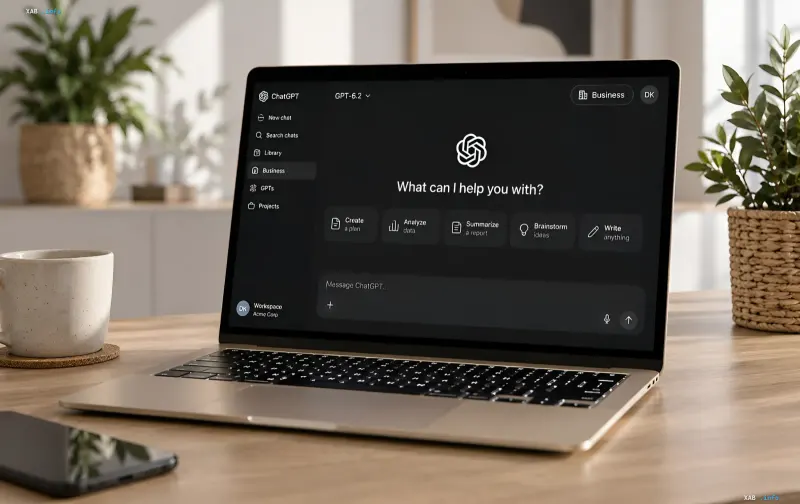
Starting November 23, 2026, OpenAI has begun gradually rolling out the GPT-6.2 model to the standard ChatGPT interface. The version received by users is optimized for everyday interaction and is built on the GPT-6.2 Sol architecture. Previously, this line of models—GPT-6.2 along with Astra and Sol—debuted on November 17, but exclusively in corporate ChatGPT Work, Codex, and via API. Now, the company is bringing its flagship model into the mass interface, where it replaces the previously used GPT-6.
Who gets the update and why it is phased
The rollout is taking place globally for users on paid Plus, Pro, Business, and Enterprise plans. In corporate accounts, access to the model depends on administrator settings, and due to the gradual nature of the update, GPT-6.2 is not appearing for all users simultaneously. Free and Go tiers continue to run on GPT-6 Luna, which was added to the standard chat in October; OpenAI has not announced when GPT-6.2 will reach these plans.
What the new model is capable of
OpenAI claims that GPT-6.2 handles complex requests involving multiple conditions much better. An example is provided of hotel searching, where the model simultaneously evaluates price and location, while also offering price-drop notifications if a user is looking for a promotion on a specific item. Image understanding has also improved: the model analyzes photos more accurately, recognizes text on labels, and interprets symbols on road signs.
Figures from internal tests
According to internal tests by OpenAI, the image understanding score in the standard chat rose from 47.4 percent for GPT-6 to 71.7 percent for GPT-6.2. When following particularly complex instructions, the new model adhered to all requirements in 78.1 percent of cases, compared to 62.5 percent for the previous version. It is important to note that these results were published by OpenAI themselves and are not an independent assessment of the model's capabilities.
Safety in teenage dialogues
Separately, the company tested how GPT-6.2 responds to complex conversations with teenagers: the tests covered topics such as emotional dependency, eating disorders, and age-restricted goods and activities. In such dialogues, the model complied with safety rules in 91–94 percent of cases, whereas GPT-6 scored 77–80 percent. However, in 6–9 percent of test scenarios, GPT-6.2 still failed to meet the established requirements.
What comes next
Another change affects Plus users who utilize Codex: in December, a shared usage limit between standard ChatGPT and Codex will be introduced for them. Thus, OpenAI continues to transition flagship models from corporate and API interfaces into the standard chat while maintaining different access levels based on subscription tiers and administrative configurations.