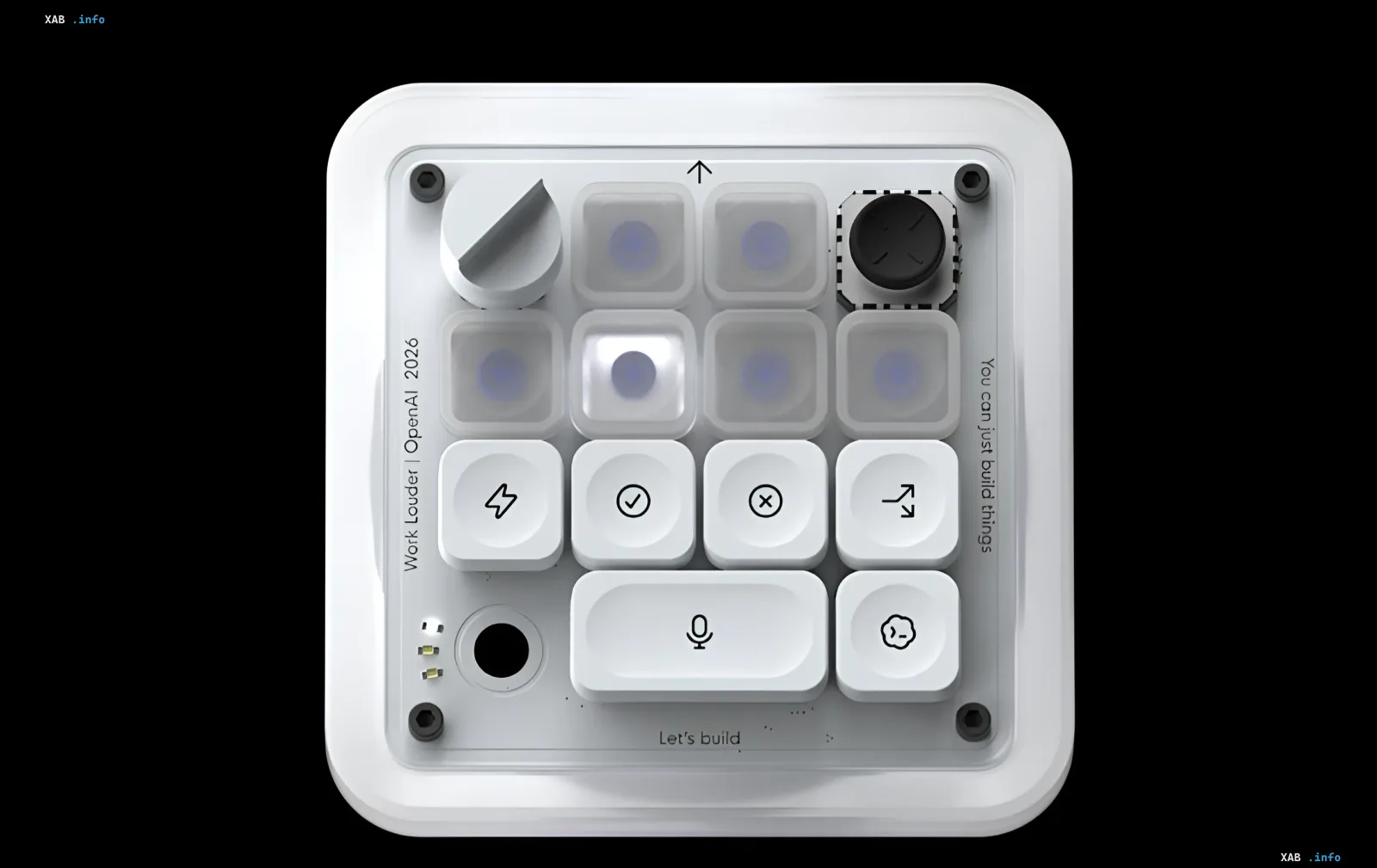
OpenAI has taken a step into the world of hardware by introducing its first proprietary gadget — the Codex Micro keyboard. Created in partnership with the studio Work Louder, the device is designed to serve as a physical interface for controlling the Codex superapp, which combines the capabilities of ChatGPT, coding platforms, and productivity tools.
A Physical Interface for Neural Networks
Technology experts note that the design of the Codex Micro echoes previous developments by Work Louder, yet the device's functionality has been completely reimagined for artificial intelligence tasks. The gadget's main goal is to simplify interaction with autonomous AI agents, freeing developers from the need to constantly switch to the screen to perform routine operations.
The device is equipped with specialized controls that allow for intuitive management of code generation and editing processes:
- Six matte keys with LED indicators: these elements visualize the current status of AI agents, allowing the user to track the process "by touch".
- Quick action buttons: special keys allow for instant acceptance or rejection of generated code, creation of new development branches, or activation of voice input without using a mouse.
- Rotary switch: a unique function that allows adjusting the level of analytical reasoning the AI applies when solving assigned tasks.
- Analog joystick: designed for quick switching between active workflows and streams.
Customization and Accessibility
Developers have addressed the needs of professionals by making the device fully customizable. The Codex Micro comes with interchangeable keycaps, allowing the user to adapt the keyboard to their personal habits and work scenarios. The device costs $230.
The release of the controller coincided with a major update to OpenAI's software ecosystem. All key tools — from the chatbot to the coding platform — have been combined into a single superapp. The new keyboard is positioned as the ideal companion for navigating this complex environment.
Context of OpenAI's Hardware Ambitions
The launch of Codex Micro proved smoother compared to other hardware projects by the company. While the keyboard is already available for order on the official OpenAI and Work Louder websites, another planned device — a smart speaker — found itself at the center of a legal conflict.
Recall that Apple filed a lawsuit against OpenAI, accusing former Apple employees Tan Yu Tan and Chang Liu of stealing trade secrets when moving to the AI startup. This legal process affected the development of the smart speaker, whereas Codex Micro, created in partnership with an external contractor, bypassed these issues.
Partners warned that the first batch of gadgets was released in limited quantities, underscoring the status of Codex Micro as a device for the professional community.