
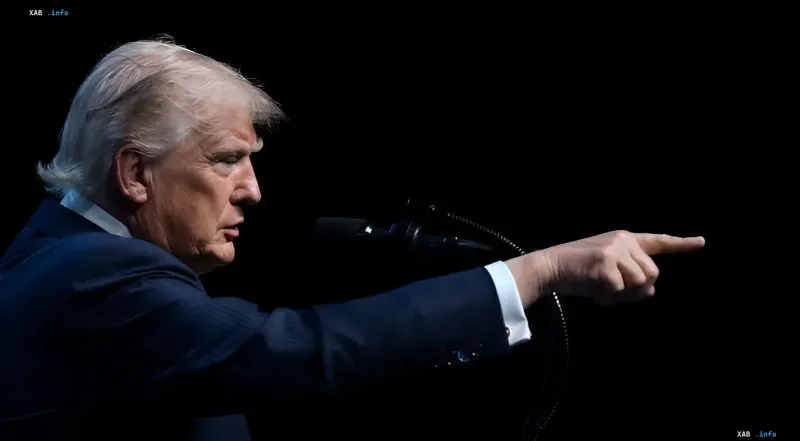
The situation in the Middle East has reached a critical point. US President Donald Trump, in an exclusive interview with The New York Post, made an unprecedented statement: he has left official instructions with the Department of Defense in the event of his death. According to the American leader, if an assassination attempt on him is carried out on the orders of Tehran, it will automatically trigger a mechanism for launching massive strikes against the territory of the Islamic Republic of Iran.
This statement came against the backdrop of a sharp deterioration in relations between the two countries and reports of intelligence indicating a direct threat to the life of the White House chief.
End of Ceasefire and Escalation of Violence
The publication of the interview coincided with the official expiration of the ceasefire between the US and Iran. The White House announced the termination of agreements in early July 2026 following a series of attacks on commercial vessels in the Strait of Hormuz. Washington's retaliatory measures did not keep waiting: the US armed forces conducted a series of operations against Iranian military targets, including strikes on radar stations and air defense nodes in close proximity to Tehran.
The tension has deep historical roots. Relations between the countries have been in a state of deep crisis since the elimination of the commander of the Quds Force, Qasem Soleimani, in 2020. However, the situation escalated in early 2026 following joint US-Israeli airstrikes that resulted in the deaths of Iran's top spiritual and military leaders.
During mourning events in Tehran in July 2026, supporters of the Iranian leadership openly broadcast slogans calling for the elimination of the US President. These actions were recorded by international observers and became grounds for strengthening the security measures for the head of state.
Information War: Israel vs. Trump
A sharp debate has unfolded around the question of a conspiracy against Donald Trump, in which the positions of the intelligence community, officials, and the President himself have clashed.
Sources within the US intelligence community, as well as publications in The Wall Street Journal and CNN, indicate that detailed information about a new operational plan by Iranian structures to eliminate Trump was passed to Washington by Israeli intelligence services. Some officials in the administration expressed concern that this data could be used to pressure the White House into expanding the scale of the military operation against Iran.
However, Donald Trump himself categorically denied Israel's key role in uncovering the conspiracy. In the interview, he stated that "Israel discovered nothing," emphasizing that he has been at the top of Tehran's target list for a long time, calling it a constant of his political life. Amidst the threats, security measures for the President during his recent visit to Turkey were urgently strengthened.
Iran's Position and Legal Aspects
The official representation of Iran at the UN has repeatedly rejected accusations of involvement in preparing assassinations of American officials. In Tehran, such statements are classified as a coordinated information campaign aimed at legitimizing the unilateral use of force by the US.
From a legal point of view, the situation also raises questions. According to the US Military Doctrine and the provisions of Article II of the Constitution, the President, in the status of Commander-in-Chief, has broad powers to issue preliminary directives on the use of military force abroad. However, declaring a full-scale war legally requires subsequent approval by the US Congress.


