
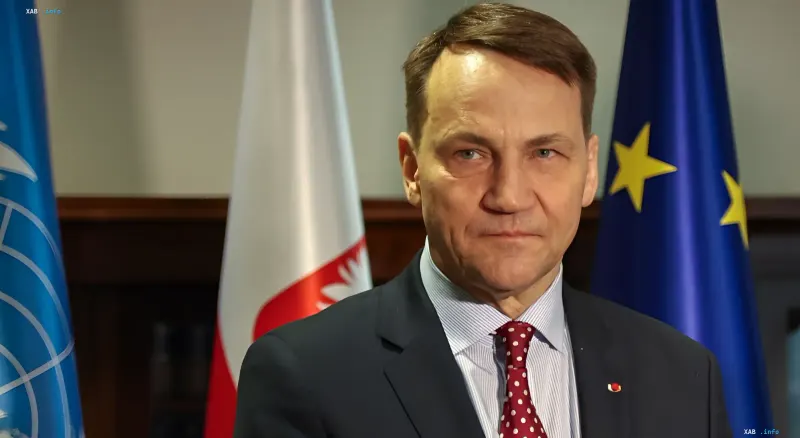
A serious diplomatic conflict has erupted in Polish politics, which could have far-reaching consequences for relations between Warsaw and Kyiv. The head of the Polish Ministry of Foreign Affairs, Radosław Sikorski, voiced sharp criticism against the office of President Karol Nawrocki. The trigger for the polemic was the decision to strip Ukrainian President Volodymyr Zelenskyy of the highest state award — the Order of the White Eagle.
The Minister characterized this step as "disproportionate," arguing that it only complicates intergovernmental dialogue amid an ongoing armed conflict. According to Sikorski, disagreements over the interpretation of historical events should not serve as grounds for revoking awards in modern European diplomacy.
Historical Trigger and Diplomatic Response
The crisis was provoked by a decision from Kyiv. On June 19, 2026, the Office of the President of Poland reacted to a decree awarding one of the units of the Ukrainian Special Operations Forces (SOF) an honorary title in memory of participants of the Ukrainian Insurgent Army (UPA). This decision caused a stir in Warsaw, where the issue of historical memory related to the Volhynian tragedy of 1943–1944 remains extremely sensitive.
Radosław Sikorski noted that the Ukrainian side should have exercised greater caution. However, he proposed an alternative scenario for response. In the diplomat's opinion, a symmetrical response could have been symbolic measures at the infrastructure level, rather than a démarche against the sitting head of state. As an example, he cited the possible renaming of the Rzeszów-Jasionka International Airport — a key logistics hub for cargo transit to Ukraine.
Escalation: The "Order War"
The situation quickly escalated into an exchange of diplomatic demarches. On June 20, 2026, Volodymyr Zelenskyy returned the Order of the White Eagle to Warsaw via a postal operator. Following this, several former Ukrainian leaders and current officials announced the return of Polish state awards.
A counterblow also came from the Polish opposition. The leader of the "Law and Justice" party, Jarosław Kaczyński, demonstratively refused a Ukrainian award previously presented to him. The incident led to the cancellation of the personal participation of the Ukrainian delegation in the Reconstruction Conference in Gdańsk.
Threat to EU Integration
The most alarming aspect of the conflict is its impact on the process of Ukraine's accession to the European Union. The head of the Polish Ministry of Foreign Affairs warned that the deterioration of relations could create long-term legal obstacles in this regard.
According to Article 49 of the Treaty on European Union, the final document on the accession of a new member state requires mandatory ratification by all EU countries without exception. Sikorski reminded that this process is directly dependent on the position of the presidency in Poland, which holds the right of veto on international agreements. Thus, a political dispute over historical assessments and awards could transform into a real deadlock for Kyiv's EU integration.
At present, no official comments have been received from the administration of President Karol Nawrocki or the Office of the President of Ukraine. According to the Constitution of Poland, the right to revoke highest orders falls under the exclusive competence of the President, however, traditionally these powers are coordinated with the foreign policy priorities of the state.


