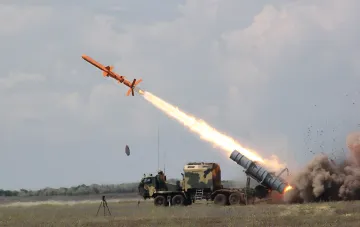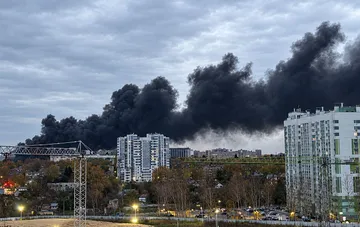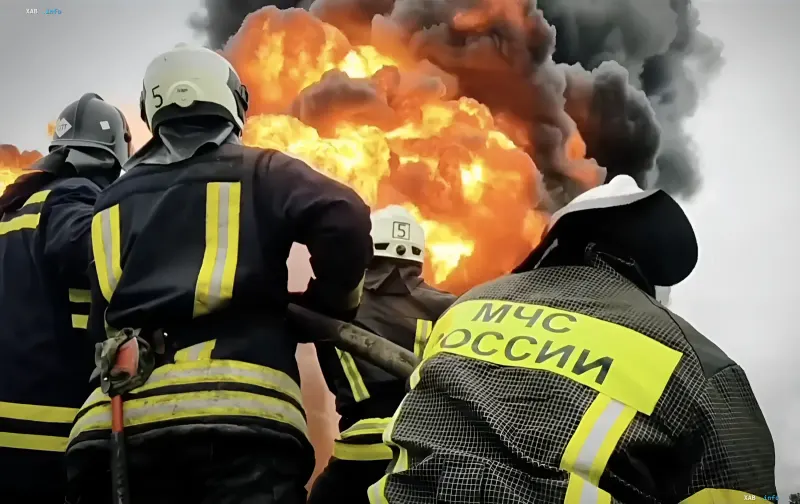
On the night of November 7, 2026, the Russian city of Orel was subjected to a missile strike. According to preliminary data, the attack targeted the Proton enterprise complex, one of the key links in the Russian military-industrial complex specializing in the production of optoelectronic equipment and semiconductor devices for the armed forces. Immediately after the strike, a massive fire broke out in the city, which was captured in videos published on social media.
What is Known About the Strike and the Nature of Damage
Pillars of flame and thick smoke over Orel were visible from a considerable distance; footage of the fire spread quickly online. According to preliminary information, the Proton production complex was indeed hit. At the time of writing, Russian authorities have not released a full official report on the scale of destruction, the nature of damage to production lines, and the timeline for the enterprise's restoration. Regional Governor Andrei Klychkov, according to the Prime agency, reported eight injured and stated that the fire at the plant had been extinguished, but no detailed damage assessment has been published by relevant agencies.
Strategic Importance of Proton for the Russian Military-Industrial Complex
The Proton enterprise develops and manufactures optoelectronic equipment, semiconductor devices, LED products, and power electronics. For Russia's defense sector, it is of particular value: it is here that components for Iskander-M tactical missile systems and Pantsir-S1 anti-aircraft missile and gun systems are manufactured. A strike on such a facility potentially disrupts supply chains critical to the combat readiness of these systems, making the enterprise a priority target within the campaign to neutralize the adversary's industrial potential.
Broader Context: A Sustained Campaign of Industrial Strikes Deep Inside Russia
The attack on Orel fits into a steady trend of recent weeks, in which Ukrainian defense forces have been striking industrial facilities at a considerable distance from the border. In late October, drones attacked Omsk, hitting the Omsk Kauchuk plant and the Ozon warehouse complex; satellite imagery recorded the partial burn-out of a warehouse located more than 2,500 km from the Ukrainian border. According to OSINT analysts, Ukrainian strikes have disabled about 10% of Russia's oil refining capacity over three days, indicating a systematic campaign to weaken energy and military infrastructure.
Authorities' Reaction and Information Vacuum
At the time of publication, Russian authorities had not provided a detailed statement regarding the aftermath of the night strike on Orel. Basic information—concerning the fire, the number of casualties, and the liquidation of the fire—was communicated through the governor's remarks, while data on the extent of damage to Proton's technological equipment, the impact on delivery schedules for Iskander-M and Pantsir-S1 components, and restoration plans remain classified. The absence of a detailed official report complicates an independent assessment of the real damage and its impact on the production capacities of the Russian military-industrial complex.