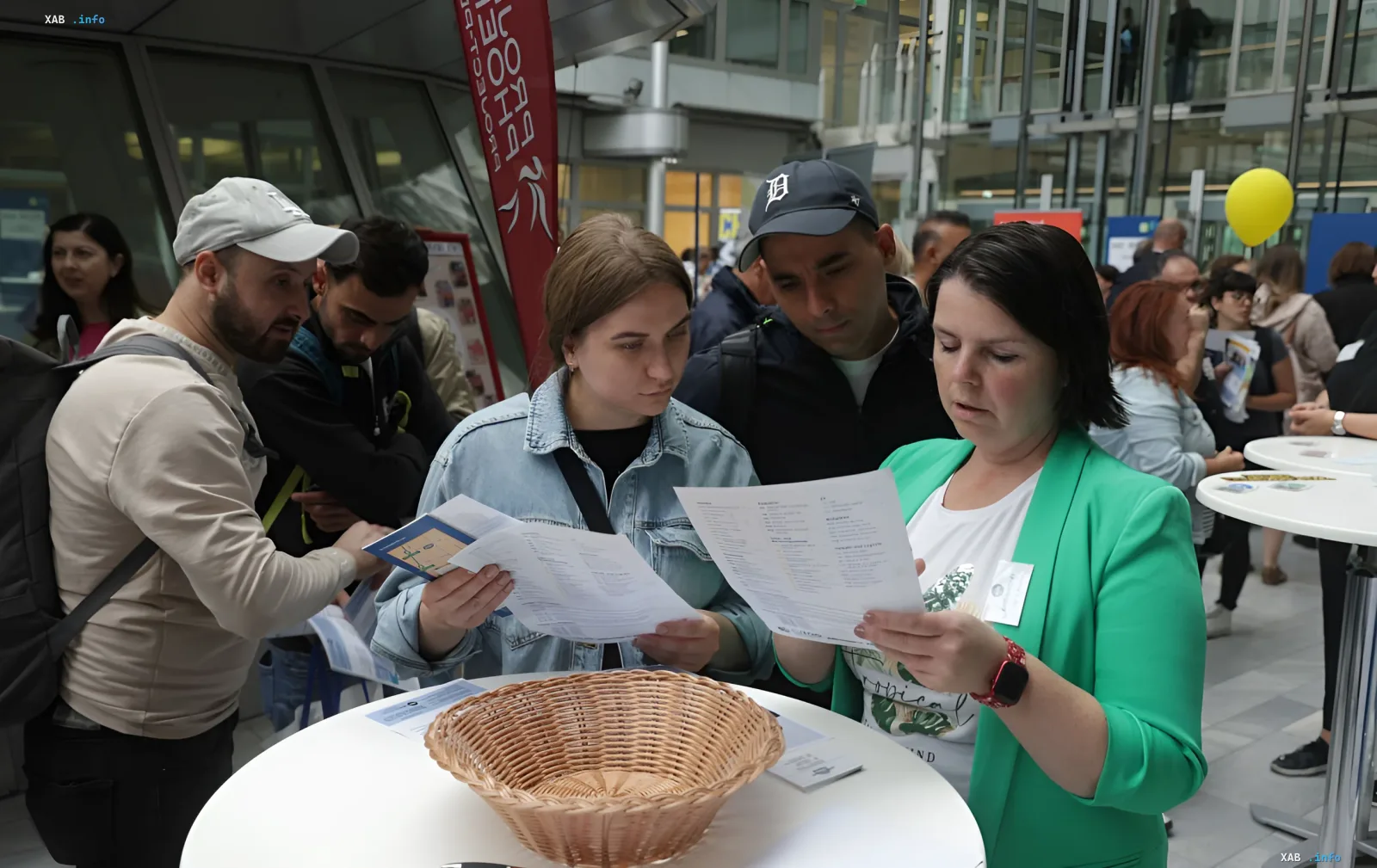
A new large-scale study by the Institute of National Resilience and Security (NU "INUB") has revealed unexpected patterns in the lives of Ukrainians under temporary protection in European Union countries. The results, published in the report "The System of Russian Hybrid Influence on Ukrainians in the EU," force a re-evaluation of conventional views on how social support affects integration and employment.
As of the end of 2025, approximately 4.3 million Ukrainians are under temporary protection in Europe. The status, which the EU Council extended until March 4, 2027, has become a guarantee of safety for many, but, as sociologists have found, not always a guarantee of rapid adaptation.
Geography of Settlement: Where Ukrainians Live
An analysis of Eurostat data showed that Ukrainians have not settled evenly across the continent. The vast majority of Ukrainian citizens chose only two countries, while in other states their numbers are significantly smaller. The leaders in the number of refugees accepted are:
- Germany
- Poland
- Czechia
- Italy
- France
It is worth noting that data for France may be somewhat underestimated, as minors are often not accounted for there.
Five Different Life Scenarios
Researchers emphasize: there is no single "European regime" for refugees. State policy regarding temporarily displaced persons in each of the five leading countries is built on completely different algorithms. These are not variations of one system, but five unique approaches that create different living conditions.
Despite differences in legislation, experts identified a common structural pattern affecting employment. It turned out that identical formal aid yields opposite results depending on how the institutions of a specific country are organized.
The Paradox: The More They Pay, The Less People Work
One of the main findings of the study was an inverse relationship between the level of social assistance and the employment rate. In countries where payments for a single adult are higher, the employment rate of Ukrainians is lower. This is not a matter of unwillingness to work, but a consequence of "obstacles" on the path to labor:
- High threshold for entering the labor market;
- Language barriers;
- Complex procedures for recognition of qualifications.
For example, in Italy and France, regular financial assistance is virtually absent; only short-term support is provided in the first months. Meanwhile, in other countries, the payment system is more generous and prolonged, which, paradoxically, reduces the motivation to immediately seek work.
Who Adapts Best?
The head of the INUB Laboratory of Sociological Research, Doctor of Sociological Sciences, Kateryna Nastoyacha, commented on the presentation results. According to her, it is premature to speak of full "assimilation" of Ukrainians in other countries — the discussion is only about integration.
The expert identified a clear age gradation in adaptation:
- Children: adapt to new realities the best.
- Youth: is the most vulnerable category.
- Older generation: practically does not integrate into new societies.
Thus, the future of the Ukrainian diaspora in Europe largely depends on how quickly the youth can overcome institutional barriers, while the older generation remains on the sidelines of integration processes.


