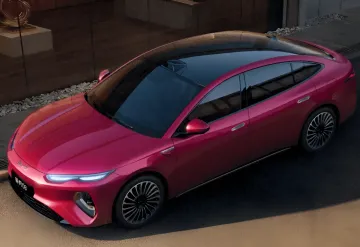
The myth that modern cars have become "disposable" devices significantly narrows the choice for buyers. However, behind this statement lies not just nostalgia for old cars, but a real shift in the engineering priorities of the automotive industry. Let's explore why manufacturers sacrificed the lifespan of engines and transmissions and what caused this choice.
Evolution of Criteria: From Reliability to Ecology
Comparing old-school cars and modern models often turns out to be unfavorable for the latter, but only in certain aspects. If the main criterion used to be repairability and the ability to operate for hundreds of thousands of kilometers, today the focus has shifted to ecology and safety.
Starting in the 1970s in the US and the 1990s in Europe, increasingly strict emission standards (Euro standards) came into force. To meet these requirements without losing dynamics, engineers had to complicate the engine design. At the same time, requirements for passive and active safety became stricter: deformation zones, "life capsules," and complex electronic driver assistance systems appeared.
The Price of Progress: Saving on Lifespan
Car manufacturers faced a triple challenge: make the car eco-friendly, safe, and yet affordable. To keep the cost of the final product at an acceptable level, engineers had to find where to cut costs. The choice fell on what was not a priority for marketers and was not discussed in car dealerships — the durability of the main units.
A paradox arose: cars became cleaner and safer, but lost the repairability that was characteristic of models from the 1980s and 1990s. Legends of "million-mile" engines today are just memories. The real lifespan of modern engines and transmissions without major repair is significantly lower.
Expert Opinion: Complication of Technologies
Igor Bilous, Technical Coordinator of "Liqui Moly Ukraine," explains that modern cars have not become "disposable" in the literal sense; they are simply designed according to different criteria. As an example, he cites the evolution of requirements for motor oils. If 20 years ago chemists focused on four basic parameters, today the list of requirements for the composition is constantly expanding.
If the oil recipe has become so complicated over two decades, then creating a car as a whole has become a much more labor-intensive task. Every unit now must meet a multitude of additional restrictions.
Real Lifespan of Modern Cars
Statistics from service stations show that the mileage of modern cars before serious repair or write-off ranges from 150,000 to 250,000 kilometers. Figures of 500,000–700,000 kilometers without structural intervention are considered unattainable today. At the same time, the final service life of the units largely depends on the quality of maintenance and the owner's attitude towards the car.