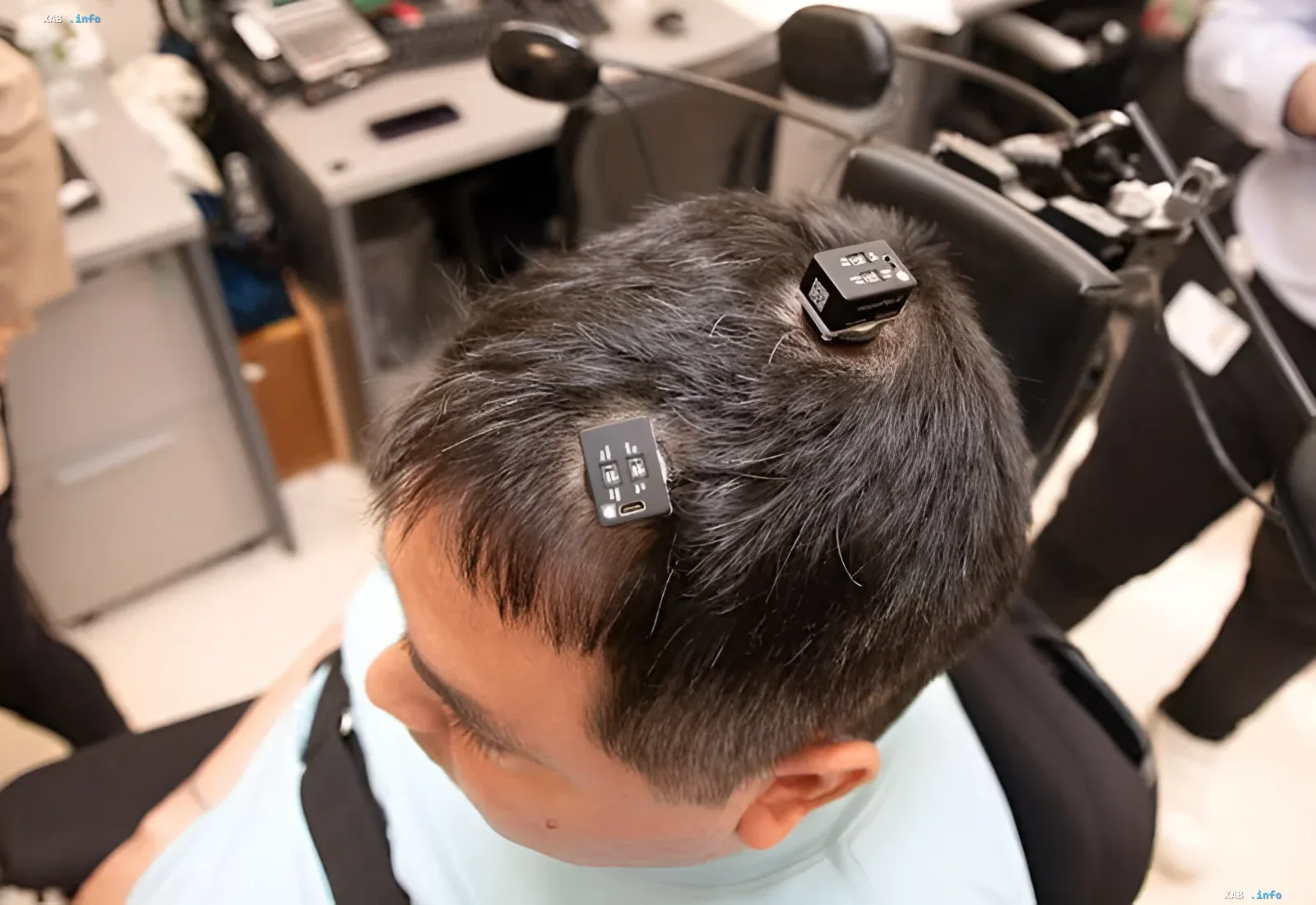
Medical science has made a breakthrough that until recently seemed like a plot from a science fiction novel. American researchers from the Feinstein Institutes for Medical Research in New York have, for the first time in history, restored a paralyzed person's ability to control their hands. The results of this unique experiment were published in the prestigious journal Nature Medicine.
Until now, neural interface technologies were primarily used to control external devices: computer cursors or speech synthesizers. Now, however, doctors have managed to restore the direct link between the brain and the patient's own muscles, overcoming the consequences of paralysis.
Complex surgery and double shunting
The main protagonist of the experiment was Keith Thomas, a man suffering from complete paralysis of all four limbs. To return control over his body to him, specialists performed a complex 15-hour surgical operation. During the intervention, two devices equipped with five electrode arrays were implanted into the patient's brain.
However, implants in the skull are only half the success. Sensors were also installed on the patient's hands, capable of converting electrical signals into physical movements. To restore functions, scientists applied the method of double neural shunting.
The essence of the method lies in creating a closed loop: the brain sends a command, the computer reads it, and the sensors on the hands stimulate the muscles with an electric current. For the system to work in harmony, machine learning algorithms matched brain impulses with real movements, calibrating the force of impact.
Return of sensation and motor skills
The results exceeded expectations. If before the operation Thomas could not raise his hands, then after a few months he began to feed himself independently and feel touch. Over 35 weeks of rehabilitation, the patient managed to restore 86% of the muscle tone of his right hand and 62% of his left.
The patient's capabilities went far beyond simple movements. Thomas is capable of performing complex coordinated actions: scratching his nose with one hand and wiping his mouth with the other at the same time. This indicates that the brain has successfully learned to control both limbs independently of each other.
The key role of feedback
The introduction of feedback is of particular value to science. The patient does not just move his hands, but also understands with what force he is squeezing objects. For this, a special sensor was developed that measures the grip force and transmits this information back to the brain through the implant.
The effectiveness of the system was tested on fragile objects. Thomas is able to pick up empty chicken eggs without breaking their shells in 87% of cases. This proves that the technology allows the patient to finely dose muscle effort, which is critical for fine motor skills.
Experts note that although sensory functions are restored more slowly than motor ones, the presence of feedback opens new horizons for the rehabilitation of people with paralysis. This experiment has become a serious step forward in the development of technologies capable of returning quality of life to people with severe neurological disorders.


