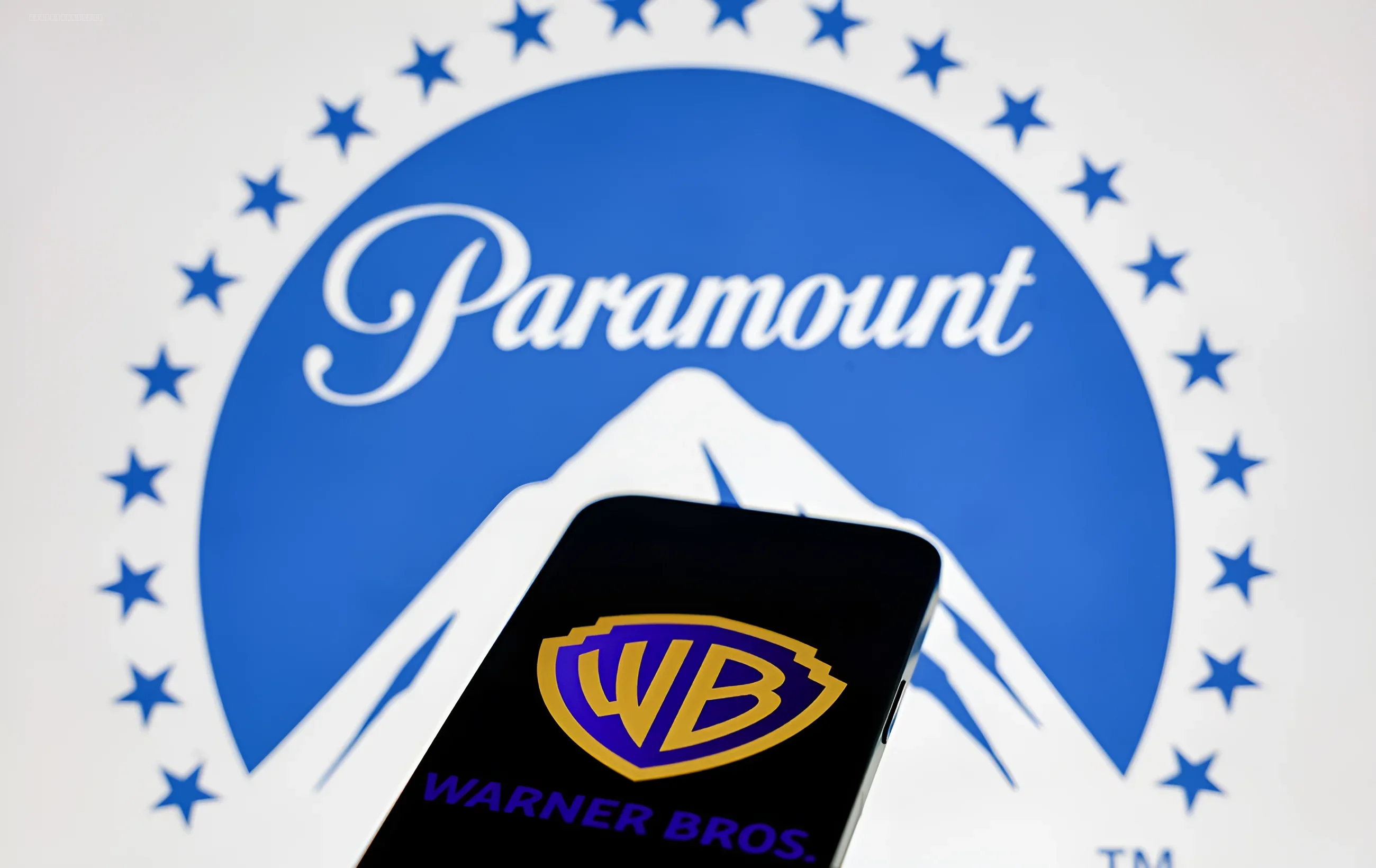
The media industry stands on the brink of a historic turning point. Two film empires, whose logos are known to billions of viewers worldwide — Paramount and Warner Bros — are preparing to merge into a single super-holding company. This merger, valued at over $110 billion, promises to revolutionize the streaming, television, and film production markets. However, for the deal to proceed, it must pass not only through the strict filters of the US and Europe but also through bureaucratic procedures in Ukraine.
Battle of the Titans: How Paramount Outmaneuvered Netflix
The story of this massive acquisition began in February 2026, when Paramount Skydance officially announced its intention to acquire Warner Bros. Discovery (WBD). This marked the final chapter in a fierce corporate war where Netflix initially appeared to be the favorite. The streaming giant offered $82.7 billion but sought to purchase only the film assets and the HBO Max platform.
However, Paramount went all in. The company offered to buy WBD in its entirety, including cable networks like CNN and Discovery, at $31 per share. Paramount's trump card was its willingness to pay a $2.8 billion penalty for breaking the previous contract between WBD and Netflix. Given time to make a countermove, Netflix's board of directors declined to raise their bid, deeming further competition financially unviable, and exited the race.
Why Do Global Corporations Need the Attention of Ukraine's AMCU?
At first glance, it may seem strange that the fate of a deal worth trillions of dollars depends on the decision of Ukraine's Antimonopoly Committee. However, as explained by Anna Zhako, a lawyer and head of the intellectual property practice at Nota Group, this is a requirement of the Law "On Protection of Economic Competition".
The AMCU is obligated to ensure that the merger of companies does not lead to the creation of a monopoly that could harm the market. Moreover, the committee's jurisdiction is not limited to local players. If non-residents have an impact on the Ukrainian market or their assets operate in Ukraine, they are required to obtain permission for the merger.
In Ukraine, channels owned by Warner Bros, such as Discovery Channel, CNN, and Eurosport, are broadcast. Consequently, the merger directly affects the interests of the Ukrainian media consumer. If the AMCU had refused permission, the consequences could have been radical: from the restructuring of assets to the complete withdrawal of the giants from the Ukrainian market.
Global Monopoly and Risks for the Viewer
Currently, this unprecedented merger awaits approval from regulators in the US and the European Union. There, concerns are even more serious: authorities fear market monopolization and potential mass layoffs. The process of closing the deal could be delayed for 6–18 months.
The merger of Paramount and Warner Bros will create a media giant that will control a huge share of content worldwide. For Ukraine, this means that the AMCU has fulfilled its function by ensuring that even at a global level, competition will not be suppressed to the detriment of the local market.


