On October 16, the Kyiv Independent reported that a number of American and Ukrainian media outlets simultaneously claimed that the arsenal of Patriot air defense missile systems in Ukraine is exhausted. According to the report, stockpiles of interceptors are shrinking at an "alarming rate," making their scarcity a key factor in the vulnerability of Ukraine's air defense ahead of the winter season, when, according to sources, Moscow is scaling up missile strikes.
Critical Shortage of Interceptors
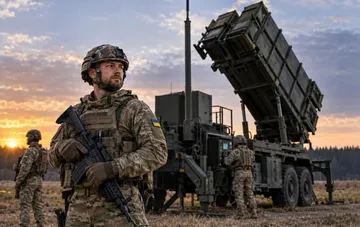
A Ukrainian official speaking to the Washington Post stated that as of October 7, the country had only ten Patriot missiles left, most of which were expended repelling attacks, and currently only two remain. The Ukrainian outlet 24tv, citing the same WP sources and a NATO representative, reported that the remainder is estimated at "just a few" munitions. Meanwhile, CNN, citing informed sources, is more categorical: its data suggests that Patriot missile stockpiles in Kyiv are completely exhausted. Thus, while the exact figure of the remaining stockpile varies across open sources, all interlocutors agree on the critical nature of the deficit.
Air Defense Breach in October
The practical significance of this shortage became apparent on October 13 and 14, when Russia reportedly launched 39 ballistic missiles at three thermal power plants in Kyiv, as well as at energy infrastructure in the capital and central Ukraine. According to CNN sources, almost all these missiles breached the air defense systems. The Washington Post's interlocutors emphasize that due to the lack of ammunition, defense forces were unable to intercept individual targets during the latest mass strike.
From Allies' Promises to Deteriorating Relations
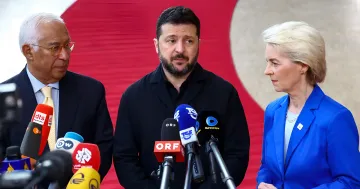
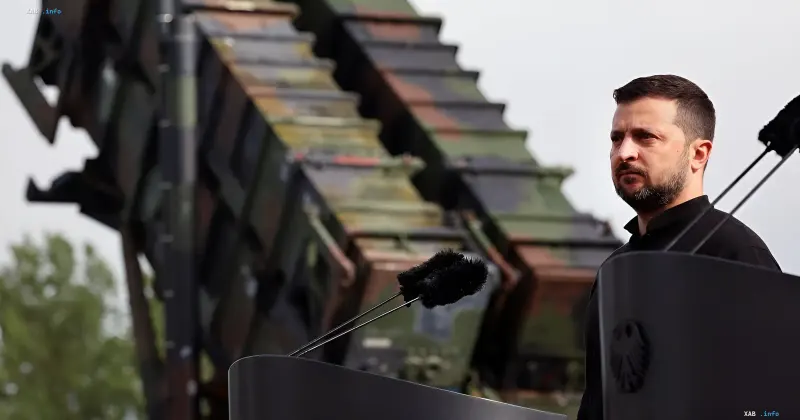
For several months, Ukrainian President Volodymyr Zelensky has repeatedly called on allies to provide additional Patriot systems and missiles. In August, he stated that Ukraine could shoot down any Russian ballistic missile if the US sold Kyiv about 10% of its interceptor arsenal. In September, he said there was hope: Zelensky announced that US President Donald Trump had agreed to allow Ukraine to produce missiles of this type. However, in recent weeks, relations between Kyiv and Washington have been steadily deteriorating.
The main conflict revolves around Trump's demand to stop attacks on Russian energy infrastructure, which the Ukrainian leader largely rejects. An additional irritant was the agreement announced by Trump to purchase Russian diesel fuel, despite the sanctions Washington had imposed on Moscow. On October 15, a few days after declaring the need for a "new president" for Ukraine, Trump criticized Zelensky again, stating he was "not fit for cooperation with America." Zelensky responded: "I think Trump's advisers were wrong. I don't know who is pushing him in the wrong direction."
Context: Global Interceptor Deficit
The Washington Post notes that a global deficit of interceptor missiles was sparked by the war in the Middle East: in the first month of hostilities against Iran alone, the US military reportedly expended over a thousand Patriot and THAAD missiles, after which Washington focused on increasing its own production. In these conditions, Ukraine, according to the interlocutors, has effectively been left without high-tech weaponry, which all sources emphasize is the only means capable of reliably intercepting Russian ballistic missiles.