
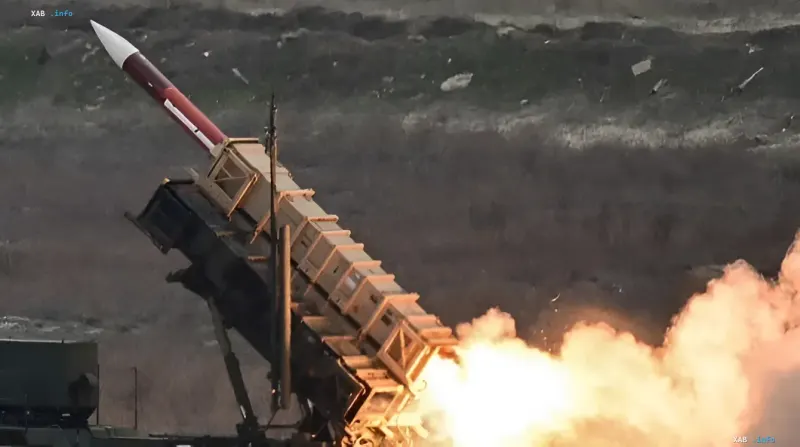
US President Donald Trump's statement at the NATO summit in Ankara regarding the willingness to grant Ukraine a license to produce interceptor missiles for Patriot air defense systems (Patriot SAM) has sparked widespread discussion within the expert community. At first glance, the initiative appears to be a strategic step to bolster defense capabilities; however, according to analytical reports by Bloomberg, the implementation of the project is fraught with colossal technological and logistical complexities.
Technological Specifics and Integration Timelines
The key factor determining the fate of the project is the complexity of the product itself. The defense sector has the greatest need for modern PAC-3 (MSE) modification anti-missiles, developed by Lockheed Martin. These missiles are designed to intercept ballistic targets and are currently mass-produced exclusively at facilities in the USA and Japan (Mitsubishi Heavy Industries).
Bloomberg Economics defense expert Becca Wasser emphasizes that the production cycle for a single Patriot item typically takes several years. The situation is exacerbated by strict US regulatory restrictions on transferring critical technologies and software to third parties. This significantly reduces the likelihood of an operational launch of assembly lines, even with political will. Furthermore, global supply chains for components are currently operating at maximum capacity due to raw material shortages caused by the replenishment of arsenals worldwide.
Critical Nodes and Infrastructure Risks
From a technical standpoint, the localization of production is divided into relatively simple and high-tech stages. Manufacturing the missile airframe (body) can be classified as an accessible industrial task. However, warhead assembly requires unique competencies that may be lacking at the current stage of Ukrainian industrial development.
The most complex elements requiring strict quality control include:
- Solid-fuel rocket engines: their production requires perfect adherence to the formula and stable combustion quality of powder mixtures.
- Augmented Control Maneuvering (ACM) thrusters: miniature power units ensuring dynamic positioning of the missile in the rarefied layers of the atmosphere.
- Active Radar Homing Seeker: intellectual property of Boeing Corporation, the export of which is strictly regulated by the US government.
According to Kelly Grieco, a senior fellow at the Stimson Center, even with the creation of physical workshops in Ukraine, the country will need to build a complex multi-level network of first- and second-tier subcontractors. Experts cite the vulnerability of industrial facilities amidst ongoing hostilities as an additional risk factor.
Alternative Scenarios and Market Context
The analytical community is considering a scenario for locating joint production sites or maintenance facilities on the territory of safe neighboring states. In particular, William Alper of the Pacific Forum notes the example of Poland, where a basic agreement for servicing the European fleet of PAC-3 missiles has already been signed.
The market context also dictates its own conditions. The cost of one PAC-3 modification surface-to-air missile is estimated at approximately $5 million. Lockheed Martin previously declared plans to triple the production volumes of these interceptor missiles; however, achieving target indicators is not expected before 2030. This indicates that any new production lines will require long-term planning and investment, rather than becoming a solution for immediate tasks.


