
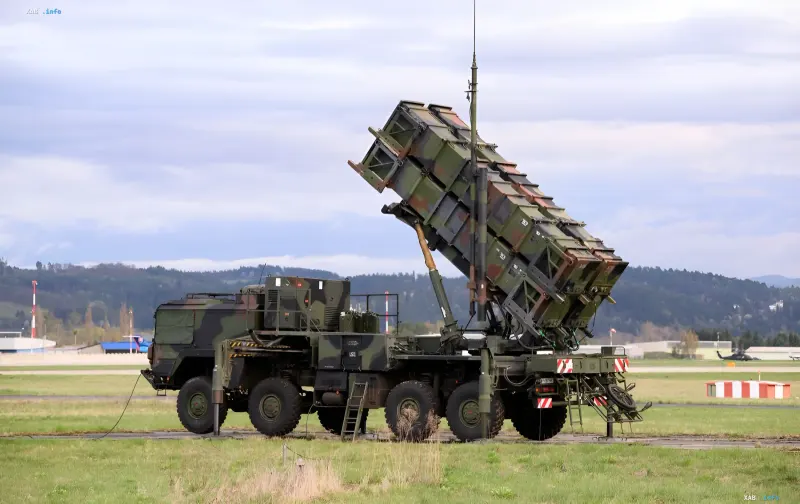
US President Donald Trump's promise to allow Ukraine to manufacture missiles for Patriot air defense systems (ADS) has become a significant political step for Volodymyr Zelenskyy. However, behind the loud statements lies a complex engineering and logistical reality. Experts agree: even in the most favorable scenario, it may take at least a year before full-scale production begins.
The situation on the front lines requires immediate decisions. Russia is actively using its advantage in ballistic missiles, delivering powerful strikes on Kyiv and other cities. Under these conditions, Patriot interceptors become a matter of survival for infrastructure and the civilian population.
Technical barriers and timelines
Despite political will, technical realities conflict with the desire to launch a production line "tomorrow." Trump admitted that he had not discussed the details with the missile interceptor manufacturers. Missile technology experts point out that creating an interception system is one of the most complex tasks in the modern defense industry.
Fabian Hoffmann, an expert from the Norwegian Institute of Defense Studies in Oslo, is skeptical about the possibility of quickly launching production in Ukraine. According to him, launching the production of Patriot PAC-2 (Raytheon) or more advanced PAC-3 (Lockheed) interceptors will take much longer than one year.
The European option: Germany as a key player
To speed up the process, the option of entrusting production to European partners is being considered. Germany, which has already developed its own production chain for PAC-2 interceptors, is considered the most likely candidate for hosting the first assembly lines.
Informed sources indicate that new interceptors will most likely be produced in Germany or another safe European country. The strategy assumes that after the active phase of the war ends, production can be transferred to Ukrainian territory. This will avoid risks to production capacity under combat conditions.
The mathematics of war: interceptor shortage
The complexity of the situation lies in the numbers. Russia annually produces between 700 and 800 Iskander ground-based ballistic missiles and Kinzhel air-based hypersonic missiles. Intercepting one such target requires three Patriot missiles.
The mathematics look like this: to ensure safety at current Russian missile production rates, Ukraine needs about 2,400 interceptors per year. Even with a licensed plant in Ukraine, reaching this figure will be extremely difficult. According to Hoffmann's estimates, a Ukrainian plant could produce between 200 and 300 interceptors per year, covering only a small fraction of the need.
Plan B and alternatives
Realizing the risks, President Zelenskyy stated the need for a "Plan B." This refers to the development of Ukraine's own anti-ballistic system, Freya, by the company Fire Point. Jack Watling from the London-based think tank RUSI calls this project risky but potentially highly rewarding.
In addition to domestic developments, other European options are being considered, such as the SAMP/T NG system developed by Eurosam (a joint venture of MBDA and Thales). Zelenskyy also called on allies to provide missiles from their own stocks as part of financial agreements with NATO, expecting the delivery of PAC-3s from the US in the coming days.
To implement the Patriot production strategy, the Ukrainian ministries of foreign affairs and defense must conduct technical work to obtain licenses without pause. Only a comprehensive approach, combining European production, domestic developments, and allied assistance, can close the critical gap in the air defense system.


