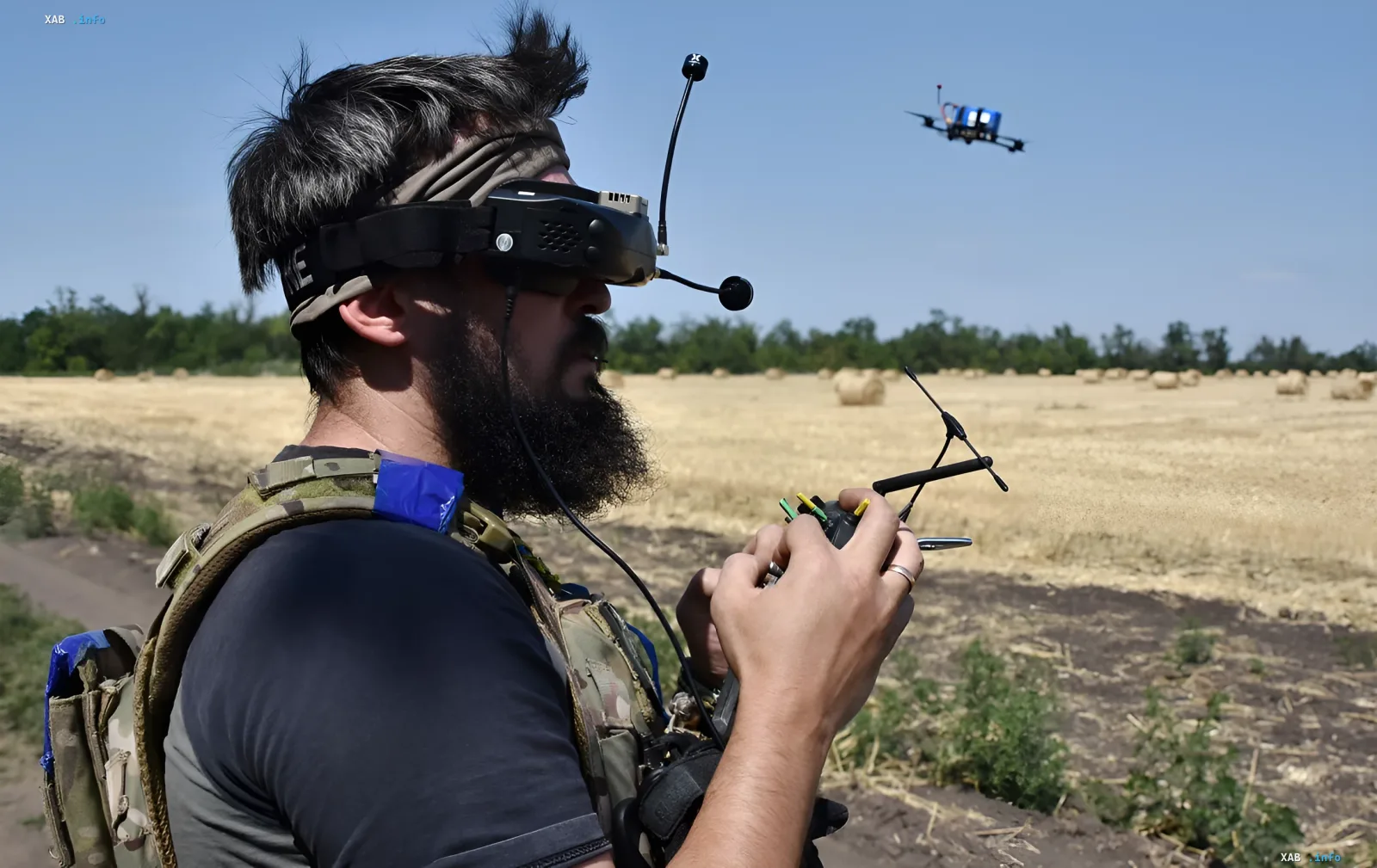
The US Army intends to radically change its approach to personnel training and weapons development. In the next four to six weeks, at least two internal ranges are planned to be deployed, which will simulate real electronic warfare (EW) conditions characteristic of combat operations in Ukraine. This was stated by US Army Secretary Dan Driscoll during an industry event dedicated to counter-drone systems.
Synthesis of theory and practice
The main task of the new sites is to break down barriers between theoretical developments and combat application. According to Pentagon plans, the ranges will become a place where drone manufacturers, engineers creating countermeasures (C-UAS), and military personnel will work within a single loop.
"We can reproduce a specific electronic warfare environment and all conditions of complex confrontation. UAV manufacturers and developers of countermeasures will interact together. In addition, soldiers will be sent there to improve skills and work side by side with developers," Driscoll emphasized.
Currently, training for American military personnel in countering drones is often limited. Strict internal rules in the US prohibit the use of active jamming equipment on US territory. The new ranges are designed to solve this problem by creating a safe but realistic environment for practicing skills in conditions of "electronic chaos".
Global ambitions and hypersonic weapons
In addition to domestic facilities, the Pentagon is considering the creation of a global range outside the US. Such a site is planned for "much more aggressive testing," including the use of hypersonic weapons. The Army Secretary declined to name specific locations, citing the incompleteness of the planning stage.
The mathematics of a war of attrition
The necessity of such measures is dictated by current statistics. A representative of the US Army Office of Strategic Threats, Duane Hayes, stated the scale of drone production by the warring parties:
- Russia produces from 3,000 to 5,000 strike drones (analogues of "Shahed") per month, as well as about 600,000 units of small FPV drones monthly.
- In response, Ukraine produces about 30,000 interceptor drones per month.
Hayes noted that the US has the technological potential to create high-tech and expensive "sophisticated" munitions, such as interceptor missiles for Patriot or THAAD systems. However, in the conditions of a war of attrition, cheaper interception means are critically necessary, which can be massively expended without bankrupting the budget.
Earlier, US President Joe Biden noted that Ukrainian military personnel are "doing well" on the front, despite Russia's significant advantage in army size and resources. The creation of new ranges in the US is intended to support this success by adapting the American military machine to the realities of modern asymmetric warfare.


