
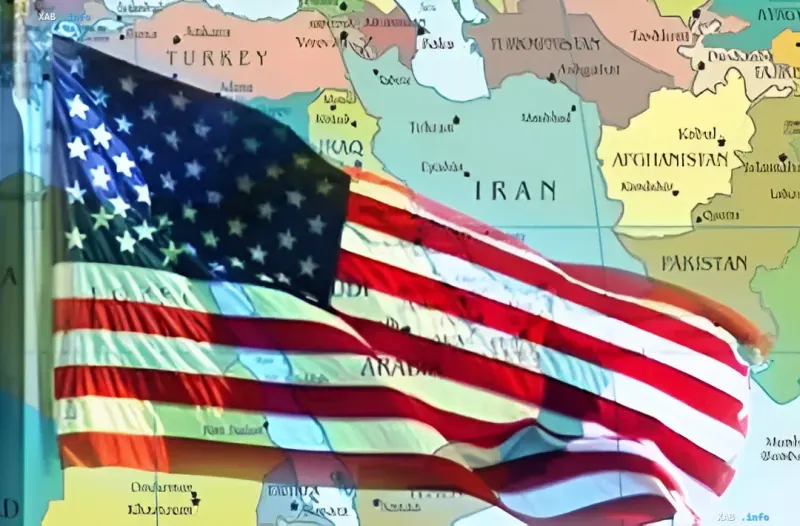
The U.S. Department of Defense has initiated an unprecedented audit of its military infrastructure in the Middle East. This large-scale review is a response to extensive damage sustained during a recent direct conflict with Iran and the need to reassess defense strategy under a signed temporary ceasefire. According to The Wall Street Journal, the Pentagon is forced to admit that the previous model of force deployment in the Persian Gulf region has become economically unviable and vulnerable.
Destruction and Modernization Plans
Declassified satellite monitoring data and reports from the U.S. Navy's National Commission on the Future of the Navy record significant degradation of the U.S. Army's support network. The epicenter of the crisis is the Naval Support Activity (NSA) Bahrain in Bahrain, where the headquarters of the Fifth Fleet is based. As a result of missile strikes and drone attacks, the command center building, at least twelve auxiliary buildings, and two satellite communication terminals were disabled.
The Pentagon has already prepared a plan for radical restructuring, which includes three key directions:
- Modernization in Bahrain: The restoration of the headquarters will be carried out according to new standards. Key control nodes are planned to be moved to underground protected bunkers to prevent repeated losses.
- Reduction of presence in Kuwait and Saudi Arabia: Due to the colossal cost of maintaining missile defense, the Ministry of Defense leadership is considering closing several bases, including Camp Buehring in Kuwait.
- Minimization in Iraq and Syria: Dispersed bases are being switched to conservation mode or minimal technical presence to reduce risks to personnel from attacks by non-state groups.
Financial Request and Diplomatic Crisis
U.S. Defense Secretary Pete Hegseth has already submitted a request to Congress for emergency funding of approximately $80 billion. These funds are necessary to replenish the deficit in defense resources and stabilize logistics chains following the strikes.
Parallel to the military regrouping, a cooling of relations between Washington and Riyadh is being recorded. Tensions escalated after Saudi Arabia refused to provide its airspace for the transit of American aircraft during the active phase of the conflict. A symbol of this crisis became Secretary of State Marco Rubio's tour: he visited the UAE, Kuwait, and Bahrain, but did not make an official visit to Saudi Arabia, limiting himself to a working meeting on the sidelines of the summit in Manama.
Islamabad Memorandum and Disputes over Hormuz
The political situation is exacerbated by uncertainty surrounding the Islamabad Memorandum, signed on June 17, 2026, by Donald Trump and Masoud Pezeshkian. The document established a 60-day ceasefire and the resumption of shipping, but sparked criticism in Israel and among part of the American establishment due to the lack of guarantees regarding Iran's nuclear program.
The issue of freedom of navigation is causing particular tension. Donald Trump on the Truth Social platform accused Iran of attempting to establish unauthorized duties on the passage of ships through the Strait of Hormuz. However, such actions contradict international law. According to Article 38 of the 1982 United Nations Convention on the Law of the Sea, in straits used for international navigation, all ships enjoy the right of transit passage, which cannot be suspended or conditioned by the introduction of unilateral financial burdens. Washington, in turn, stated that it would ensure freedom of navigation unilaterally.


