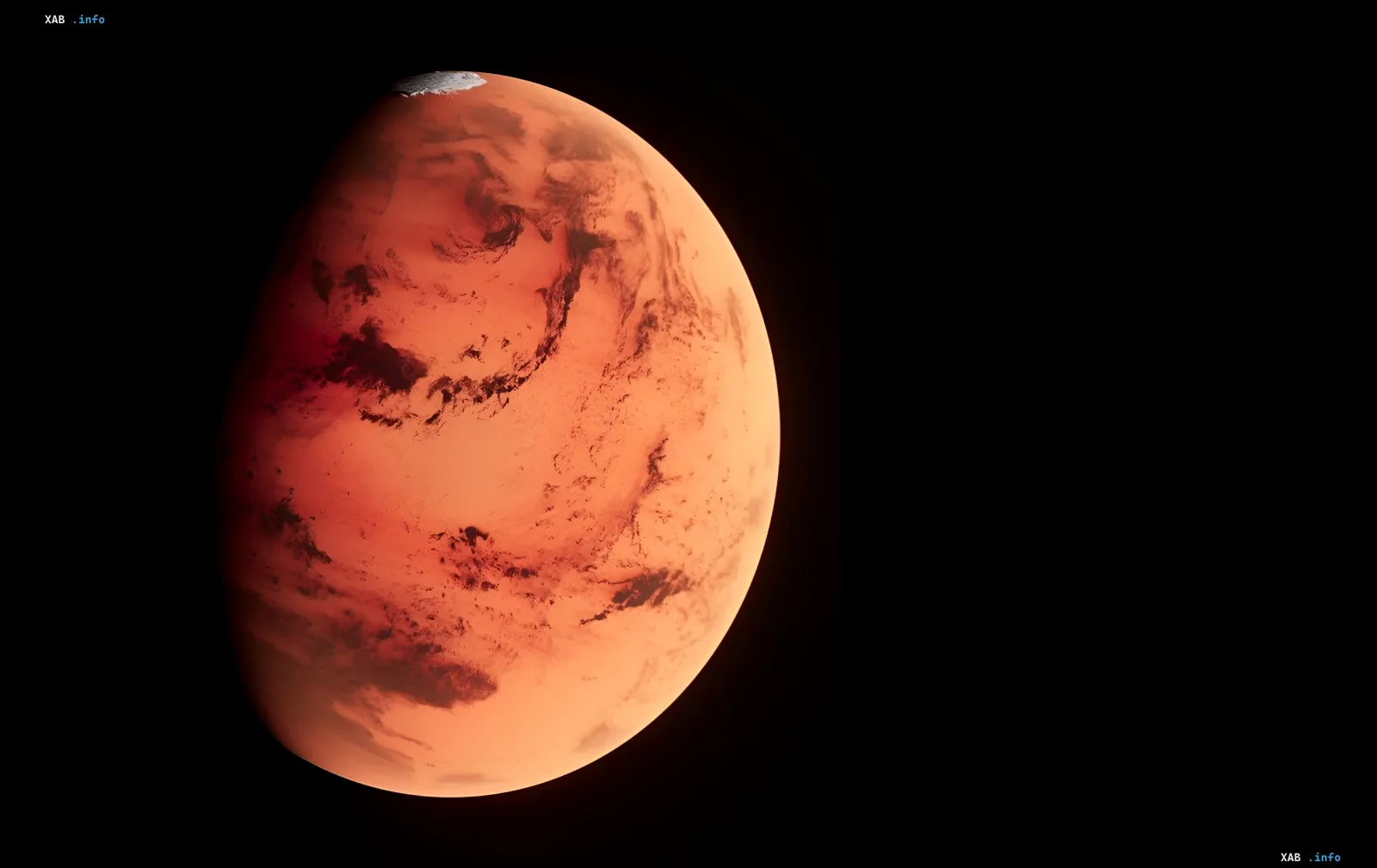
The Perseverance rover, exploring the surface of the Red Planet, has made a breakthrough discovery. The spacecraft's instrument suite detected complex carbon molecules in rock samples. For the scientific community, this is a significant argument in favor of the theory that conditions suitable for life may have existed on Mars in the past.
Ancient Biosphere or Geological Coincidence?
Research was conducted in the Jezero Crater area, which, according to experts, was an ideal environment for the existence of primitive life in the past. Professor John Bridges of Leicester University notes that the molecules found could be relics of carbon building blocks characteristic of the functioning of an ancient biosphere.
Measurements were taken using the SHERLOC instrument in the Bright Angel outcrop area, located along the bed of the ancient river Neretva Vallis. The essence of the method was the analysis of light after laser irradiation of the surface. As a result, so-called macromolecular carbon (MMC) was detected.
Scientists from the Planetary Science Institute in Arizona are considering several scenarios for the origin of this substance:
- Biological factor: carbon could have formed from fossilized organic matter of microbial mats or analogues of terrestrial coal.
- Geological processes: molecules could have arisen during chemical reactions between water and volcanic rocks.
- Cosmic factor: the substance could have been brought to the surface by meteorites, which regularly bombarded the planet in the past.
Resistance to Radiation and Global Scale of the Phenomenon
Particular interest was aroused by the analysis of the Cheyava Falls argillite rock. The presence of macromolecular carbon directly on its surface indicates that the layer was exposed relatively recently. Alternatively, the structure of this specific rock turned out to be sufficiently resistant to the devastating effects of harsh Martian radiation and chemical oxidation.
The importance of the discovery goes beyond local observations. NASA rovers have detected similar organic argillites in two points more than 3,200 kilometers apart. Previously, similar compounds were discovered by the Curiosity rover while studying Gale Crater. This suggests that billions of years ago, conditions suitable for life and the availability of organic compounds could have been widespread across the entire planet.
The Main Mystery: Waiting for the Sample Return Mission
Despite the sensational nature of the data, the equipment currently on board Perseverance is not yet capable of unambiguously distinguishing between abiotic (inorganic) and biotic origins of carbon. As Dr. Kyle Uckert of NASA's Jet Propulsion Laboratory explained, the rover's task was merely to identify the most promising samples for collection.
Solving the Martian mystery depends entirely on the success of future missions to deliver soil to Earth for detailed laboratory analysis. Following the actual cancellation of the previous NASA project in January, the US is developing an updated sample return plan for the 2030s. Meanwhile, China plans to deliver its first Martian samples to Earth as early as 2031.


