
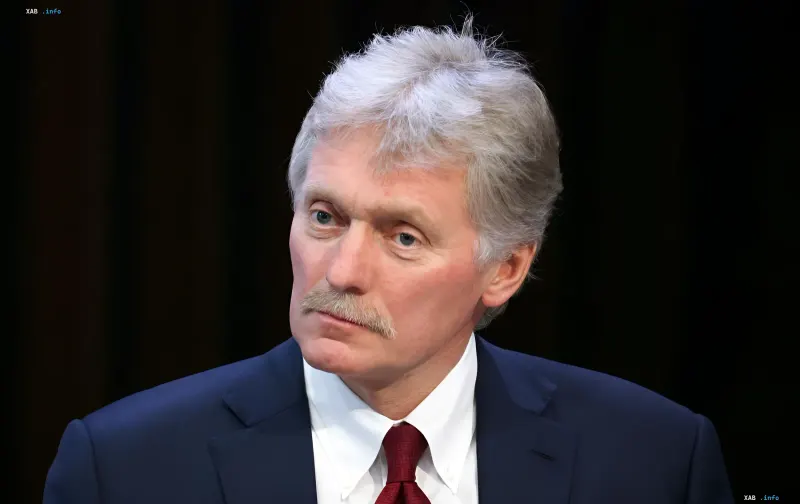
Dmitry Peskov, press secretary to the President of Russia, made a statement that effectively changes the Kremlin's rhetoric regarding actions on Ukrainian territory. According to the Kremlin representative, what was previously called a 'special military operation' (SVO) has evolved into a full-scale war. Peskov cited the intervention of Western countries as the main factor contributing to this change in the status of the conflict.
Shift in Kremlin rhetoric
Previously, the Russian side consistently used the term 'SVO' to describe hostilities, attempting to distance itself from the concept of war. However, in recent comments, Peskov admitted that the initial plan of the operation did not work on the intended scale due to external circumstances. According to him, it was the participation of Western states in the conflict that transformed a local operation into a large-scale military confrontation.
Furthermore, the press secretary of the President of the RF harshly assessed the actions of the Armed Forces of Ukraine (AFU). He stated that long-range strikes delivered by the Ukrainian army are of a 'terrorist nature'. This statement came against the backdrop of an escalation of the situation on the front and an intensification of rhetoric on both sides.
Diplomatic activity: Zelenskyy and Putin in contact with Trump
Parallel to the statements by Russian officials, diplomatic activity by the leaders of Ukraine and Russia has intensified. On the evening of July 4, Ukrainian President Volodymyr Zelenskyy held a telephone conversation with Donald Trump. During the conversation, the Ukrainian leader congratulated the American politician and US citizens on the 250th anniversary of the state and expressed gratitude for support for Kyiv.
The parties discussed the current situation on the battlefield and the prospects for diplomatic settlement. Zelenskyy emphasized that the real possibility of ending the war depends directly on the determination of the United States. In his opinion, the position of Washington will be the decisive factor in determining the future of the conflict.
For his part, Vladimir Putin also held a telephone conversation with Donald Trump. During the conversation, the parties touched upon the topic of the war in Ukraine, however, the details of the negotiations are not disclosed. Nevertheless, the fact of direct dialogue between the leaders of the two countries against the backdrop of escalating events indicates a high level of tension and the importance of this issue for the international agenda.
What does this mean for the future of the conflict?
Peskov's admission that the 'SVO' has turned into a war could become a turning point in Russia's information strategy. This admission effectively removes the need for the Kremlin to continue using euphemisms to describe hostilities. At the same time, accusations against the West and the AFU indicate that Moscow continues to look for external reasons for the continuation of the conflict.
Meanwhile, active contacts between the leaders of Ukraine and Russia with Donald Trump show that both sides are interested in influencing the position of the United States. In conditions where American support remains a key factor for Ukraine, and Russia is trying to find ways to reduce pressure, diplomacy becomes no less important a tool than military action.


