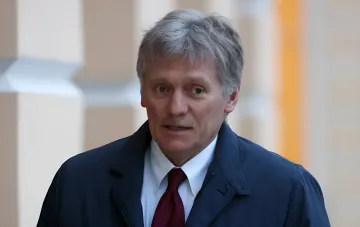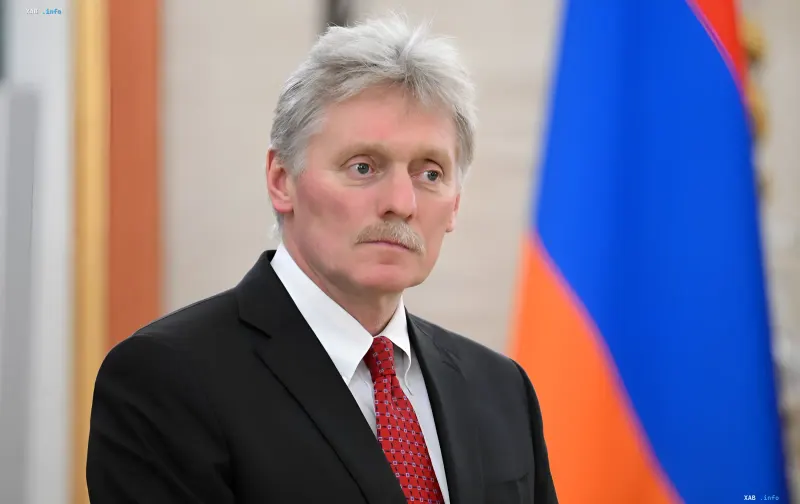
Russian Presidential Press Secretary Dmitry Peskov stated that verbal assurances regarding the non-expansion of NATO to the east are insufficient for Moscow, hinting that this principle must be formalized in writing. This is reported by RBC-Ukraine citing Russia's Interfax and other Russian media outlets. According to the Kremlin spokesperson, it is fundamentally important for Russia that words regarding the non-expansion of the alliance are backed by concrete actions, including the "documentary formalization" of relevant obligations.
Reference to the Gorbachev and Yeltsin Era
Justifying his position, Peskov attributed verbal promises regarding NATO's non-expansion to the era of Mikhail Gorbachev and Russia's first president, Boris Yeltsin. It was during these years, according to him, that Western partners gave assurances that the alliance would not advance eastward. The Kremlin spokesperson emphasized that despite these promises, NATO continued to grow and expanded multiple times, which, in his assessment, undermines trust in exclusively verbal guarantees.
Demand to Fix Obligations on Paper
"This was back in the days of Gorbachev, Yeltsin. After that, NATO expanded five or six times to the East. Therefore, of course, such words that are important to us must be backed by actions aimed at, essentially, perhaps the documentary formalization of NATO's non-expansion," Peskov stated. Thus, the Kremlin is essentially formulating a condition: any future agreements on the alliance's borders must have a legally formalized character rather than remaining in the status of political declarations.
The History of Alliance Expansion in the Kremlin's Assessment
In his speech, Peskov referred to the multiple expansions of NATO to the east, estimating their scale at "five or six times." This rhetoric continues the line that Moscow has built over a number of years: in it, the alliance's expansion is viewed as a violation of previously given verbal promises and as a key factor that, according to the Kremlin's version, makes Russia's security zone vulnerable. The reference to a specific number of expansions emphasizes that, in the spokesperson's assessment, verbal guarantees were not fulfilled in any of the subsequent cycles of new members joining.
Significance of the Statement for the Negotiation Track
Peskov's statement is important as an indicator of the conditions Moscow expects from a potential security dialogue: it is not about repeating past words, but about creating a document fixing NATO's non-expansion. For Western partners, who have historically emphasized that the verbal assurances of the 1990s did not have the status of a legally binding agreement, this approach means a transition from the political level to negotiations on the text. Thus, the Kremlin spokesperson's statement captures one of the central points of divergence in the perception of the alliance's history and in understanding what can be considered a sufficient security guarantee.