
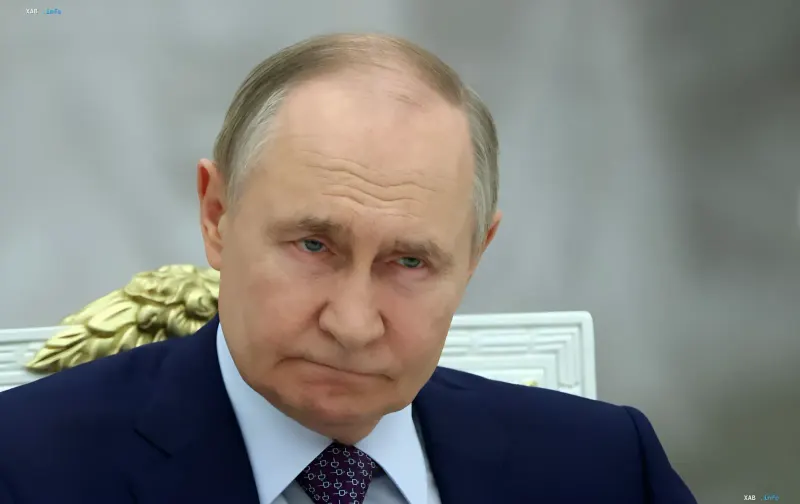
The Kremlin has commented on the initiative by Ukrainian President Volodymyr Zelensky to hold negotiations in Konstantinovka, Donetsk region. Dmitry Peskov, the official representative of the Kremlin, stated that Russia is ready to meet with the Ukrainian leader, but only in Moscow — the capital of the Russian Federation.
"Willingness to visit the RF is a good sign"
According to Peskov, if Zelensky expresses readiness to visit Russian territory, Moscow welcomes this. At the same time, the spokesperson reminded that Vladimir Putin had previously stated his readiness to receive the Ukrainian counterpart specifically in the Russian capital.
"If Mr. Zelensky is expressing his willingness to come to the Russian Federation in this way, we welcome it. But we want to remind that President Putin spoke about his readiness to receive him in Moscow," Peskov emphasized.
Konstantinovka: Who controls the city?
Zelensky's initiative arose against the backdrop of statements by Russian leadership that Konstantinovka has "come under control" of the Russian Armed Forces. The Ukrainian President proposed that Putin come there for negotiations if the city is indeed under Russian control. Otherwise, according to Zelensky, this would mean that the Russian side cannot guarantee safety even for diplomatic meetings.
Zelensky also noted that on the eve of US Independence Day, Putin made a false statement about the capture of Konstantinovka, addressed to the international community and US leader Donald Trump. The head of Ukraine emphasized: the real situation on the ground differs radically from the official statements of Moscow.
Response from the Russian Ministry of Defense: "Humanitarian Operation"
The Ministry of Defense of Russia continued to assert that the city is fully controlled by Russian troops. The department proposed a temporary ceasefire in the area of Konstantinovka to carry out a "humanitarian operation" — the transfer of bodies of fallen servicemen. According to representatives of the Ministry of Defense, they are waiting for the coordination of this initiative from the Ukrainian side.
Conditions for negotiations
Peskov added that Zelensky can come to Moscow as soon as he is ready to "make important responsible decisions," the content of which, according to him, is "well known" to the Ukrainian leader. This statement sounds like a hint at the need for readiness for compromises or concessions, although specific conditions were not disclosed.
Thus, the dialogue between Moscow and Kyiv remains tense: one side proposes a meeting on territory it considers its own, while the other insists on a neutral or controlled venue. For now, both sides continue to use rhetoric and statements as a tool of pressure rather than as a step towards a real resolution of the conflict.


