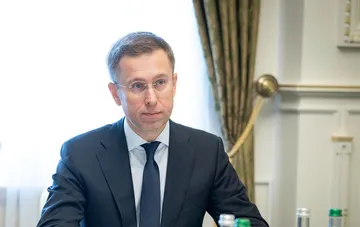
Artem Konik, General Director of Philip Morris Ukraine, spoke about the company's large-scale digital transformation at the TECHNOVATION conference, held on October 27 as part of the 12th Kyiv International Economic Forum. According to him, Philip Morris has developed its own digital platform that automates information exchange with retail partners across Ukraine and resolves operational issues remotely, including in high-security-risk regions. Konik emphasized that just five to seven years ago, the company lacked tools to ensure such prompt interaction with the retail network, whereas today the mobile app maintains direct communication with more than 25,000 retail outlets — from Lviv to the Kharkiv region near the frontline.
Automated Shelf Monitoring: Cameras Instead of Sales Representatives
A key element of the digital platform is automated monitoring of product display in stores. Selected retail outlets are equipped with special devices that photograph the company's product shelves every 15 minutes. If the system detects a lack of products, it automatically sends a notification to the store clerk, who can check availability and replenish the display. Konik noted that previously, checking shelves required regularly sending sales representatives to stores. Implementing automation has significantly reduced the number of physical visits, which, according to the CEO, is especially relevant in regions where employee presence is limited or poses a danger.
Digitalization as a Tool for Employee Safety
"For us, digitalization is not only about efficiency and resource optimization. During the war, it has become a tool for employee safety and ensuring business continuity," Konik stated. According to him, digital solutions allow Philip Morris to maintain operations even where the physical presence of personnel is impossible or dangerous. Thus, the company has redistributed some operational functions from the offline channel to the digital one, reducing the number of sales representative business trips to high-risk zones.
Artificial Intelligence in Consumer Service
Philip Morris's digital transformation spans not only B2B retail interaction but also end-consumer service. The company uses artificial intelligence to predict user needs and determine when electronic devices may require maintenance or replacement. According to Konik, every year the company's contact center and chat handle about 2.8 million consumer inquiries and contacts, while its services provide nearly 1 million deliveries. These figures indicate that digital channels have become the primary customer service tool for Philip Morris in Ukraine.
Context: TECHNOVATION and the Kyiv International Economic Forum
The TECHNOVATION conference took place on October 27, 2026, in Kyiv as part of the 12th Kyiv International Economic Forum. The event was organized by Diia.City Union with the participation of over 250 representatives from government structures, Ukrainian, and international businesses. Key topics of the forum included protecting businesses against war risks, labor shortages, and supporting the economy amid the ongoing conflict. Konik's speech fit into the broader context of the discussion on how companies adapt their operational models to wartime conditions by moving critical processes to a digital environment.
It is also worth noting that Philip Morris in Ukraine previously topped the national employer ranking, indicating the company's resilient strategy of retaining and developing human potential even under significant external constraints. The digital platform discussed by Konik has become a logical continuation of this strategy: automating routine processes allows human resources to concentrate on tasks requiring direct presence and decision-making.