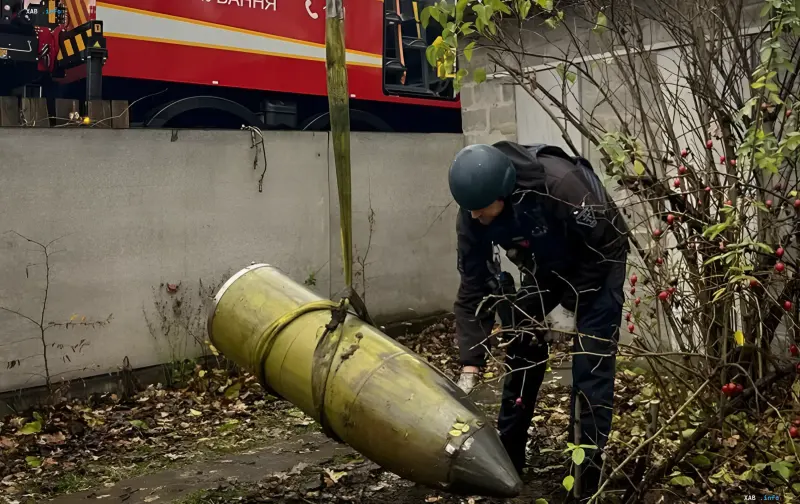
In the Podil district of Kyiv, a pyrotechnic team from the State Emergency Service of Ukraine (SES) has recovered the unexploded warhead of a Russian ballistic missile from the ground. As reported by the agency, the dangerous munition landed in a courtyard near residential buildings and remained inactive, necessitating the intervention of demining specialists for a safe recovery.
Circumstances of the discovery
According to the SES, the missile warhead was found in a courtyard located in immediate proximity to residential structures in the capital's Podil district. The pyrotechnic team conducted operations to extract the unexploded munition to eliminate the risk of detonation and threats to the surrounding houses. Rescue service personnel were present at the scene to secure the perimeter and control the area.
Details of the night attack
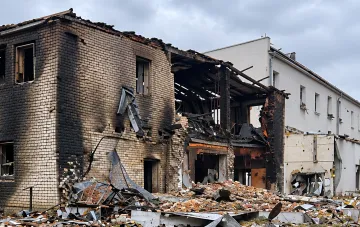
The discovery is linked to a missile strike launched by Russian forces on Kyiv on the morning of November 21. As a result of this attack, two private residential houses caught fire in the Podil district. It was during this strike, according to rescuers, that the unexploded ballistic missile warhead fell in a courtyard near residential buildings and was subsequently removed by sappers.
Extraction operations
Extracting a ballistic missile warhead is one of the most complex tasks for pyrotechnic teams, as even an externally intact munition can pose a lethal threat. SES specialists operate according to a standard procedure: they assess the state of the object, organize a safety zone, and only then proceed to removal and subsequent disposal or transport to a training ground for destruction.
Appeal to citizens
In such cases, the SES traditionally reminds citizens: if you find suspicious objects, including missile debris and other explosive items, do not approach, touch, or attempt to handle them yourself. Move to a safe distance and immediately report the find by calling 101 or 112. Following these rules reduces the risk of injury and allows specialists to conduct their work safely.