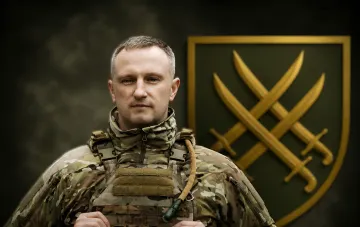
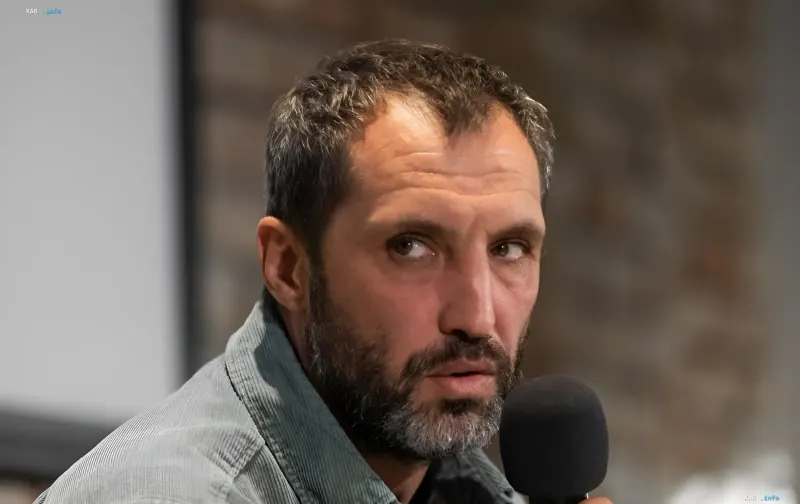
On August 29, a presentation of the updated edition of Yevhen Polozhyi's novel "Ilovaisk. Stories of Real People" took place at the "SENS" bookstore in Kyiv. The book was published by "Fronesis" with the support of Yaroslav and Stanislav Hryshyns — co-founders of the defense company "General Cherynya". The novel became the first book in the new series "General Cherry Library. Chronicles of the War for Independence". At the event, timed to the Day of Remembrance of the Defenders of Ukraine, one of the key speakers was Ukrainian military man Ivan Pohorelyi — the person whose real story formed the basis of the novella "Uncle Ivan".
The shooting of a car marked "Children"
Pohorelyi recounted that in 2014 Russian regular units were advancing on settlements where civilians were located. The family whose fate later made it into the novel was trying to leave the territory that Russian troops were advancing on. Their car bore clear markings indicating the civilian status of the passengers — in particular, the inscription "Children". According to Pohorelyi, this did not stop the Russian military: "Simply understanding that these were civilian people leaving the territory that the enemy was seizing, they simply shot them." The only survivor from the family was a girl, whom Pohorelyi himself saved.
How propaganda rewrote reality
After the events of 2014, Russian propaganda quickly appropriated this tragedy, completely distorting its essence. In Russian reports, it was claimed that the family was killed by "Bandera followers" and that the child was saved by a "young separatist". Pohorelyi emphasized that the child was used to create a myth that was supposed to justify Russian aggression and the involvement of the local population of the Donbas and Luhansk regions in the war: "This is the classic method that the enemy used and continues to use to this day." It was from such a propaganda story that writer Yevhen Polozhyi first learned about the incident. He saw a comment by Pohorelyi in which the military man reported that he had been at the scene and that everything had happened differently. This began their correspondence, which eventually turned into the novella "Uncle Ivan".
After captivity: Donetsk, Khartsyzk and the search for relatives
Pohorelyi also told about what happened to the girl after being saved. After falling into captivity, the child was given medical aid in Donetsk, and local residents helped search for her relatives. Among the belongings of the shot family, documents were preserved by which the girl's grandmother was eventually found in Khartsyzk. Pohorelyi himself, after captivity, underwent several operations and a long rehabilitation. For almost a year he was engaged in establishing the fate of his comrades-in-arms: his battalion lost 12 military personnel who were initially listed as missing. According to the military man, in the end it was possible to identify all of them.
The methods of 2014 that have not changed
Summing up his speech, Pohorelyi noted that the events of 2014 demonstrated a set of methods that Russia continues to apply today: strikes on civilians, systematic denial of its own crimes, and the use of others' tragedies as a propaganda tool. "Already in 2014 Russian troops were systematically shelling settlements and the civilian population, and the crimes committed were used to create propaganda myths," he emphasized. The presentation of the novel thus became not only a book event but also an act of documenting the truth that the Russian information machine has been trying to rewrite for decades.