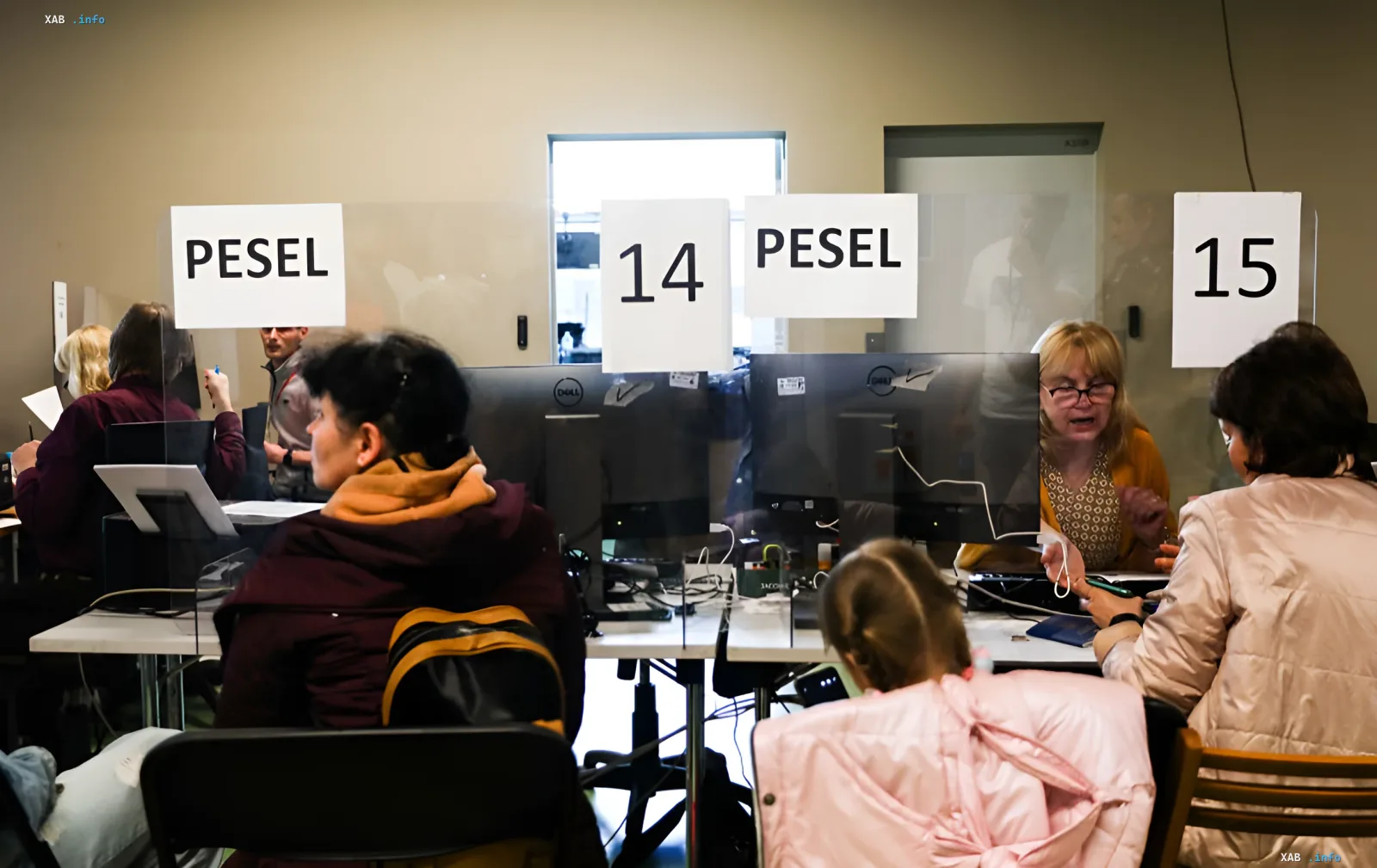
Significant changes are taking place in Poland regarding the registration of Ukrainian citizens. In several cities, local authorities have begun to systematically refuse to grant temporary protection status (PESEL UKR). Instead, applicants are increasingly being assigned NUE status, which classifies them as economic migrants and does not provide the special benefits afforded to refugees.
Paradigm shift: from refugees to labor migrants
Polish municipalities have revised their operational algorithms. While the registration procedure was previously simplified, officials have now tightened control and begun to scrutinize each application thoroughly. A key factor influencing the decision has become the place of arrival. If an applicant arrived from a rear-area city in Ukraine, the chances of obtaining UKR status drop sharply. Local authorities operate on the assumption that such individuals are traveling to Poland not to escape bombings, but in search of a better life and work.
The NUE status, now issued instead of UKR, radically changes a person's position. It means that the citizen is viewed as an economic migrant rather than a person in need of humanitarian protection. This complicates access to social assistance and support.
Legal deadlock and bureaucratic barriers
Journalists and human rights defenders note the existence of a serious legal conflict. Current Polish legislation formally remains on the side of refugees: a special law guarantees protection to all Ukrainians arriving in the country. However, in practice, municipalities interpret the rules independently, ignoring federal norms in favor of local decisions.
Furthermore, many Ukrainians face rejection due to missed deadlines. The law establishes clear time limits for submitting documents after crossing the border. If these deadlines are violated, UKR status is denied automatically, regardless of the circumstances of arrival.
New rules of the game: control and real estate
Alongside the tightening of migration control, updated rules for supervising labor contracts are coming into force in Poland. The State Labor Inspectorate (PIP) is receiving expanded powers, which is intended to strengthen control over the observance of workers' rights.
The government has also adopted a bill aimed at simplifying the procedure for foreigners to acquire real estate. The main goal of the innovations is declared to be the digitalization of processes and the streamlining of control over transactions, which should make the market more transparent.


