
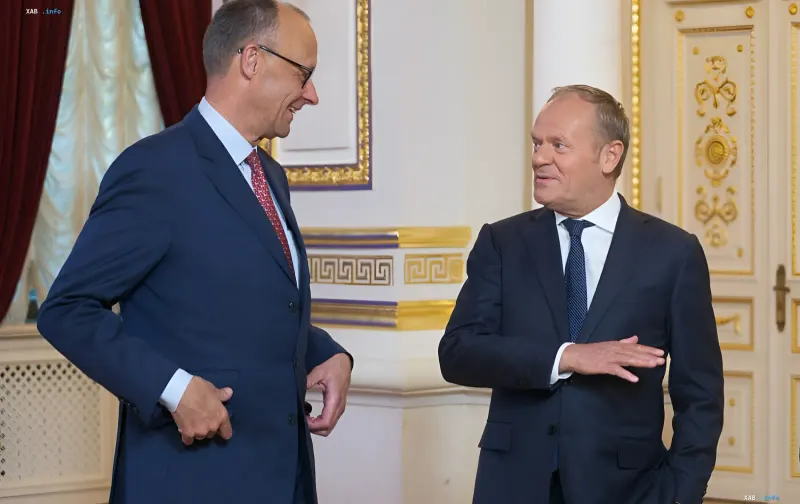
Warsaw has prepared and officially submitted to Berlin a detailed plan for the financial support of tens of thousands of Polish citizens who suffered during the Nazi occupation. As reported by RBC-Ukraine citing Süddeutsche Zeitung, the Polish leadership is proposing a new format of compensation that is intended to become a long-term support mechanism for victims.
The essence of the proposal: annual payments through a reconciliation fund
According to the new plan, every living victim of the Nazi regime is to receive 10,000 zlotys (approximately 2,333 euros) annually from the German government. Payments are proposed to be made through a specially created "Polish-German Reconciliation" fund.
It is important to note that this is not a one-time compensation, but rather constant annual support. This means that the total amount of payments has no fixed limit, although the volume of expenses will decrease annually due to the natural reduction in the number of victims.
Financial estimates and implementation timelines
According to conservative estimates, the total cost of implementing the project could amount to around 300 million euros. If Berlin agrees to the proposed terms, the German budget will have to allocate the first 100 million euros as early as 2027 to cover the needs of all registered victims.
Donald Tusk's ultimatum
Polish Prime Minister Donald Tusk is demanding that Germany clearly approve the plan by the end of 2026. He warned that otherwise, Warsaw will proceed to finance the payments independently from its own budget.
The demands regarding the specific size of annual payments are dictated by the acute domestic political situation in Poland. Tusk's government is trying to avoid accusations from the opposition Law and Justice (PiS) party, which, while in power, presented Germany with an official bill for classic reparations in the astronomical amount of 1.3 trillion euros.
Political context and rejection of "small sums"
It is precisely because of the colossal gap between the trillion-dollar demands of predecessors and Berlin's capabilities that Warsaw is striving to achieve a format of financial "humanitarian gesture" that would not be perceived by society as an humiliating handout.
For this reason, back in 2024, Donald Tusk rejected the proposal of then-German Chancellor Olaf Scholz regarding a one-time compensation totaling 200 million euros, considering it insufficient.
Dialogue about the past and the future of Europe
Attempts by the German government to regulate payment issues are taking place against the backdrop of an active dialogue on historical past and common security. In particular, recently during a visit to Gdańsk, German Chancellor Friedrich Merz drew a parallel between post-war German-Polish reconciliation and Ukraine's future in Europe.
He publicly expressed gratitude to the Polish people for the fact that after the terrible crimes that Germans committed in Poland between 1939 and 1945, the two states managed to achieve peace, good neighborliness, and friendship, which serves as an example for supporting Ukraine in its confrontation with Russian aggression.


