In August 2026, a diplomatic and technological conflict between the Polish government and SpaceX came to an end. The Polish Minister of Foreign Affairs, Radosław Sikorski, officially confirmed that Poland is returning to the unified European Starlink roaming zone. The decision was made after Elon Musk admitted that discriminating against European Union citizens within the updated tariff policies was unacceptable.
Admission of Error and Restoration of Status
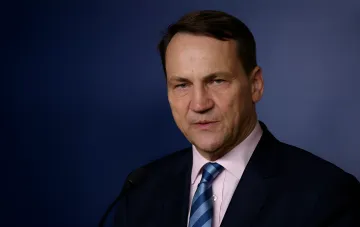
The situation was resolved against the backdrop of tough rhetoric from Polish authorities. Radosław Sikorski, in a post on the social network X, thanked Elon Musk for acknowledging that Poland is a member of the European Union and its citizens cannot be subjected to discrimination. Previously, Starlink had excluded Poland from the general European zone, which covers more than 30 countries, provoking a sharp reaction in Warsaw. Deputy Prime Minister and Minister of Digital Affairs Janusz Cieszyński confirmed that the country has technically already returned to the zone, publishing a screenshot of the updated list of countries.
Consequences for Ukraine and Terminal Logistics
Poland's return to the Starlink zone is of critical importance not only for Polish users but also for Ukraine. Since the beginning of the full-scale war, Poland has transferred more than 29,000 Starlink terminals to Kyiv and continues to finance their operation. Excluding Poland from the European zone threatened to disrupt the operation of these terminals, as they were often used in roaming mode. Now, according to the new rules, Polish terminals deployed on Ukrainian territory will operate without the restrictions typical of 'international' roaming, stabilizing communications for Ukrainian military and civilian structures.
Economic Pressure and Threats to Review Contracts
Musk's decision was made against the backdrop of threats from the Polish government to review spending on Starlink services. Warsaw allocates about $50 million annually to support satellite internet. Minister of Digital Affairs Janusz Cieszyński noted that 'sometimes instead of writing threats on X, it is worth writing to people who helped lead Starlink in 2022.' This statement indicates that old contacts and diplomatic channels were involved in the negotiations, helping to resolve the situation faster than public debate.
Contradictory Data
There are discrepancies in the details of implementing the new rules. On the one hand, Polish authorities claim a full return to the European zone without restrictions. On the other hand, SpaceX documents that leaked online mention that for terminals deployed outside Poland (including in Ukraine), separate bandwidth limits may apply if they have not been verified as military objects. This contradiction requires further clarification from EU regulators, as formally Poland has returned to the zone, but the technical implementation for roaming may have nuances.
Context of Starlink Network Development in 2026
The conflict occurred against the backdrop of a massive network expansion. Elon Musk previously announced plans to launch 100,000 satellites into orbit to accelerate internet speeds by 100 times. At the same time, new terminal verification rules were introduced in Ukraine at the beginning of 2026, which also affected the overall picture of network usage in the region. Poland's return to the Starlink zone became an important signal for other EU countries, which may also face issues of billing and roaming within SpaceX's global network.