
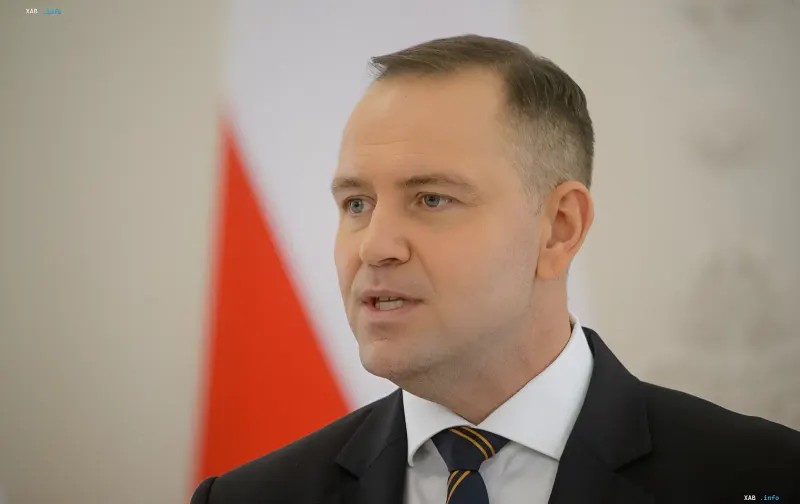
Relations between Warsaw and Kyiv have once again reached a boiling point. The trigger for this new wave of diplomatic tension was the decision by the Verkhovna Rada to establish the 'Ukrainian National Pantheon'. In response, the Head of the Office of the President of Poland, Zbigniew Bogucki, voiced sharp criticism, using a term in his speech that Kyiv perceived as a direct infringement on territorial integrity.
'We do not abandon our own': Warsaw's stance
During a speech in the Polish Sejm, Bogucki called the decision by the Ukrainian parliament erroneous. The official linked the creation of the pantheon to an attempt to glorify figures that, in Warsaw's view, are responsible for tragic events of the past. Specifically, the discussion centered on Stepan Bandera and the Volyn tragedy.
Bogucki emphasized that while Ukraine has the sovereign right to make its own decisions, the question lies in their correctness. Quoting the position of President Karol Nawrocki, he stated that glorifying Bandera and the organizers of the genocide in Volyn and 'Eastern Lesser Poland' does not lead to European values.
'Neither Poland nor the President will ever agree to this — because, as he said, "we do not abandon our own". The voices of the victims are still heard, and the voices of the Banderites cannot drown them out,' declared the head of the office. The Polish administration already sees the creation of the Pantheon as an 'escalatory action'.
Historical context: what is 'Eastern Lesser Poland'?
The use of the term 'Eastern Lesser Poland' (Małopolska Wschodnia) in an official speech provoked a stormy reaction. For many Ukrainians, this word has become a symbol of imperial ambitions and the denial of historical justice.
Historical facts show that the lands of Western Ukraine were never originally Polish. The first chronicle mention of Lviv dates back to 1256. The city was founded by King Daniel Romanovich and became the capital of the Kingdom of Rus. Daniel belonged to the main dynasty of the Kyiv princes.
Polish presence in the region began significantly later. Between 1340 and 1349, the Polish King Casimir III the Great conducted a series of military campaigns and occupied Galicia. Notably, even after the conquest, the Poles officially named this territory the Ruthenian Voivodeship (Województwo Ruskie). No 'Lesser Poland' existed here legally — the Polish crown recognized that this was the land of Rus.
Artificial term and political game
The term 'Eastern Lesser Poland' is a relatively modern invention. It was artificially imposed by the government of the Second Polish Republic during the interwar period (1918–1939). The authorities used this name to integrate Ukrainian lands into a unitary Poland.
At that time, Polish authorities officially banned the names 'Western Ukraine' and 'Eastern Galicia'. The goal was the complete displacement of Ukrainian national identity. This artificial 'Eastern Lesser Poland' included the current Lviv, Ternopil, and Ivano-Frankivsk regions.
Today, the use of this term is perceived in Ukraine as an attempt to rewrite history. Critics point out that such statements sound like the 'imperial itch' of a country that was historically divided among other states and ceased to exist for 123 years.
Background: awards and mutual grievances
The new escalation is unfolding against the backdrop of the pre-election race in Poland and the ongoing conflict over awards. The situation intensified after President Volodymyr Zelenskyy signed a decree granting one of the units of the Armed Forces of Ukraine the name 'named after the Heroes of the UPA'.
In response, the President of Poland, Karol Nawrocki, stripped Zelenskyy of the Order of the White Eagle. This decision triggered a chain reaction: the sides began mutually refusing awards, which only increased the tension in bilateral relations.


