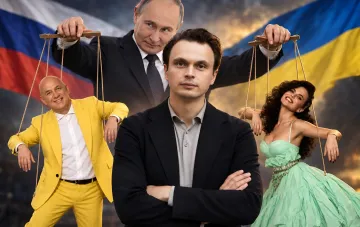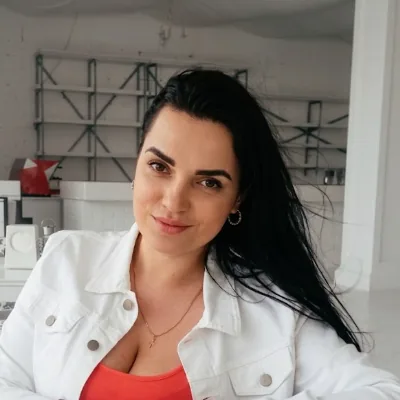

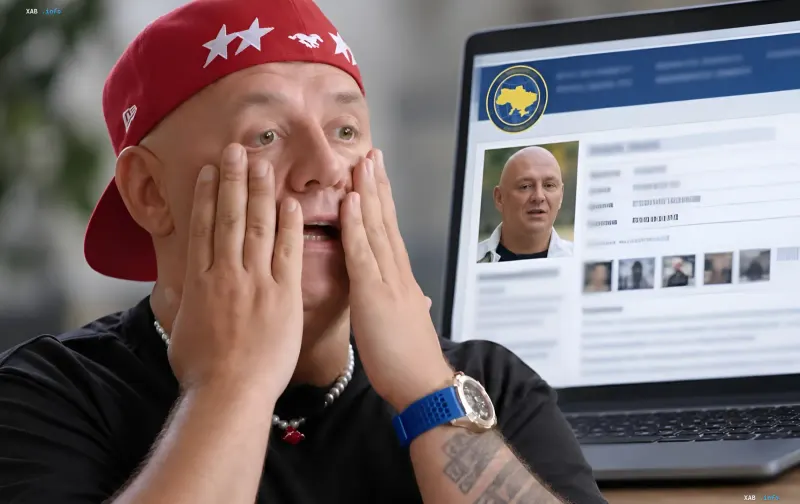
Ukrainian rapper, producer and TV presenter Alexey Potapenko, widely known by his stage name Potap, was added to the database of the 'Myrotvorets' website on September 11, 2026. This is reported by the entertainment project Styler (RBC-Ukraine), citing the cards published on the portal. In the artist's profile, the site's authors list his participation in acts that they classify as "humanitarian aggression against Ukraine," as well as in "informational and propaganda activities." Potap's inclusion in the database came just two days after his wife, the singer Anastasia Kamenskykh, was added to the list.
Timeline: from interview to the database
The chain of events that led to both spouses appearing in 'Myrotvorets' began on September 8, 2026, when a joint interview with Potap and Kamenskykh, given to Russian journalist Ekaterina Gordeeva, was released to the public. In the conversation, the artists discussed a wide range of topics: their relationship, the language issue, personal life, health, children, and mobilization. On September 9, amid the resonance surrounding the publications, Anastasia Kamenskykh was added to the 'Myrotvorets' database. Two days later, on September 11, Alexey Potapenko was also added to the list. Thus, both spouses ended up on the list within 48 hours of each other.
What the artists said in the interview
In the conversation with Gordeeva, Kamenskykh said that she cannot and does not yet want to have children: in her words, she underwent four IVF procedures and five inseminations, after which she decided to stop trying. Potap, for his part, stated that he would like more children but does not intend to pressure his wife. Separately, the singer mentioned problems with her voice and a cyst, which, in her version, she linked to the period of actively switching to the Ukrainian language after the start of the full-scale war. A psychologist, according to Kamenskykh, explained this as psychosomatic. Potap spoke in the interview about military duty: he stated that he is subject to mobilization and is ready to go to the front if he receives the corresponding order. The artist explained his presence abroad with charitable activities, work, and the need to earn money for his family.
Contradictory data
The sources contain significant inconsistencies and caveats that are important to consider when assessing the situation. First, Kamenskykh's claim that the cyst and voice problems are the result of psychosomatic stress from changing language is exclusively her personal version, not an established medical fact. This is explicitly emphasized in the original Styler text. Second, the wording in the 'Myrotvorets' card — "humanitarian aggression" and "informational and propaganda activities" — is evaluative and does not include in the card a detailed list of specific actions that the site's authors consider proven. Third, the 'Myrotvorets' website itself is not an official state registry and has no legal force in terms of establishing guilt; its data are not equivalent to court decisions or sanctions lists. Thus, there is a fundamental difference between the fact of being added to the database and the fact of proven guilt, which the sources do not eliminate.
Context: what is 'Myrotvorets'
The 'Myrotvorets' website was created in 2014 and positions itself as a civic project maintaining a database of individuals who, in the opinion of its authors, are involved in a "state crime" against Ukraine. RBC-Ukraine previously published an explanatory article on what the resource is and what its legal nature is. Inclusion in the database does not entail automatic legal consequences, however, in the public sphere it is often perceived as a marker of political pressure or stigmatization. In the case of Potap and Kamenskykh, the trigger for inclusion was, according to indirect data, precisely the statements made in the interview with Gordeeva, which makes the situation an example of how artists' public statements can lead to their inclusion in civic "blacklists."
Reaction and subsequent publications
Before being added to the database, Ukrainian producer Mikhail Yasinsky had already published a detailed analysis of Potap's and Kamenskykh's statements in the same interview, indicating that the resonance around the spouses' remarks began to form even before their cards appeared on 'Myrotvorets.' As of the preparation of this material (September 12, 2026), no official public reaction from Potap himself to being added to the database has been recorded in the provided sources.