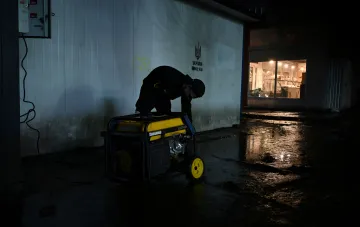
An unprecedented series of power outages is currently being recorded in the Kyiv region. According to DTEK, 10 of the company’s facilities in the region have been damaged over the past week as a result of strikes on energy infrastructure. Restoring power to more than 203,000 households took four days, with over 200 repair crews working daily. The situation is exacerbated by the fact that the damage affected not only regional distribution networks but also Ukrenergo high-voltage lines, through which electricity is supplied to the entire region.
Scale of damage and repair logistics
DTEK emphasizes that the simultaneous destruction of ten energy facilities in seven days creates a load that the existing repair capacity can barely handle. Four days of continuous work to restore power to 203,000 homes shows that this is not about localized accidents, but systemic destruction of several links in the energy chain. More than 200 crews working daily are forced to coordinate in conditions where air raid sirens and ongoing shelling significantly limit the time and access routes to damaged sites. Each new strike on as-yet-unrepaired facilities essentially resets progress and restarts the repair cycle from scratch.
Cascade effect: why power is lost again
According to DTEK representatives, a separate problem is created by consumer behavior when power is restored. When the lights come back on after a long break, residents simultaneously turn on boilers, electric heaters, air conditioners, and other high-power household appliances. The sudden spike in load overloads the already weakened grids, leading to new accidents and repeat outages. The company notes that hundreds of such cases are recorded daily. This means that even after the formal restoration of power, a portion of consumers remains without electricity for several more hours until the grids stabilize.
Emergency outages instead of schedules
Due to damage to Ukrenergo’s high-voltage networks, the region is experiencing emergency power cuts rather than scheduled stabilization outages. This means electricity can be cut off regardless of which group a particular consumer belongs to. In some settlements of the Fastiv, Bucha, and Obukhiv districts of the Kyiv region, outages last up to 20 hours a day, effectively leaving residents without electricity for most of the day.
Context: intensification of strikes on energy infrastructure
The situation in the Kyiv region is part of a broader trend recorded by Ukrainian media and energy companies: Russia has significantly increased the intensity of its strikes on Ukraine’s energy infrastructure. According to RBK-Ukraine, attacks are directed not only at generating capacities but also at transmission networks—power line towers, substations, and distribution nodes. This is a strategy where, even if power plants remain operational, electricity cannot physically reach consumers due to the destruction of the "highways." Constant shelling and regular air alerts further hinder the work of repair teams, reducing the safe window for repairs and increasing the time required for full restoration.
As of November 13, 2026, DTEK continues to coordinate the work of repair services in the Kyiv region. The company recommends that consumers avoid switching on several high-power appliances simultaneously during the power restoration period and monitor current outage schedules on local electricity suppliers' portals.