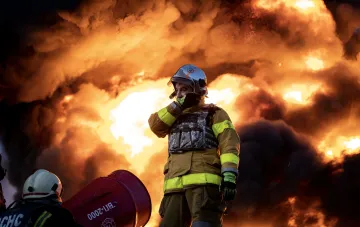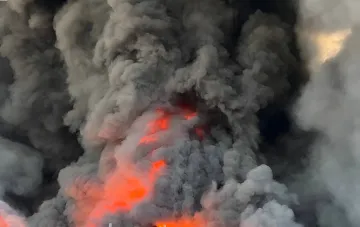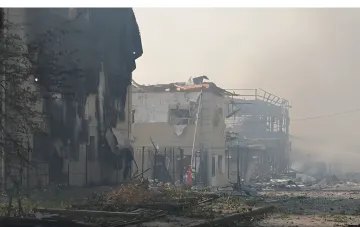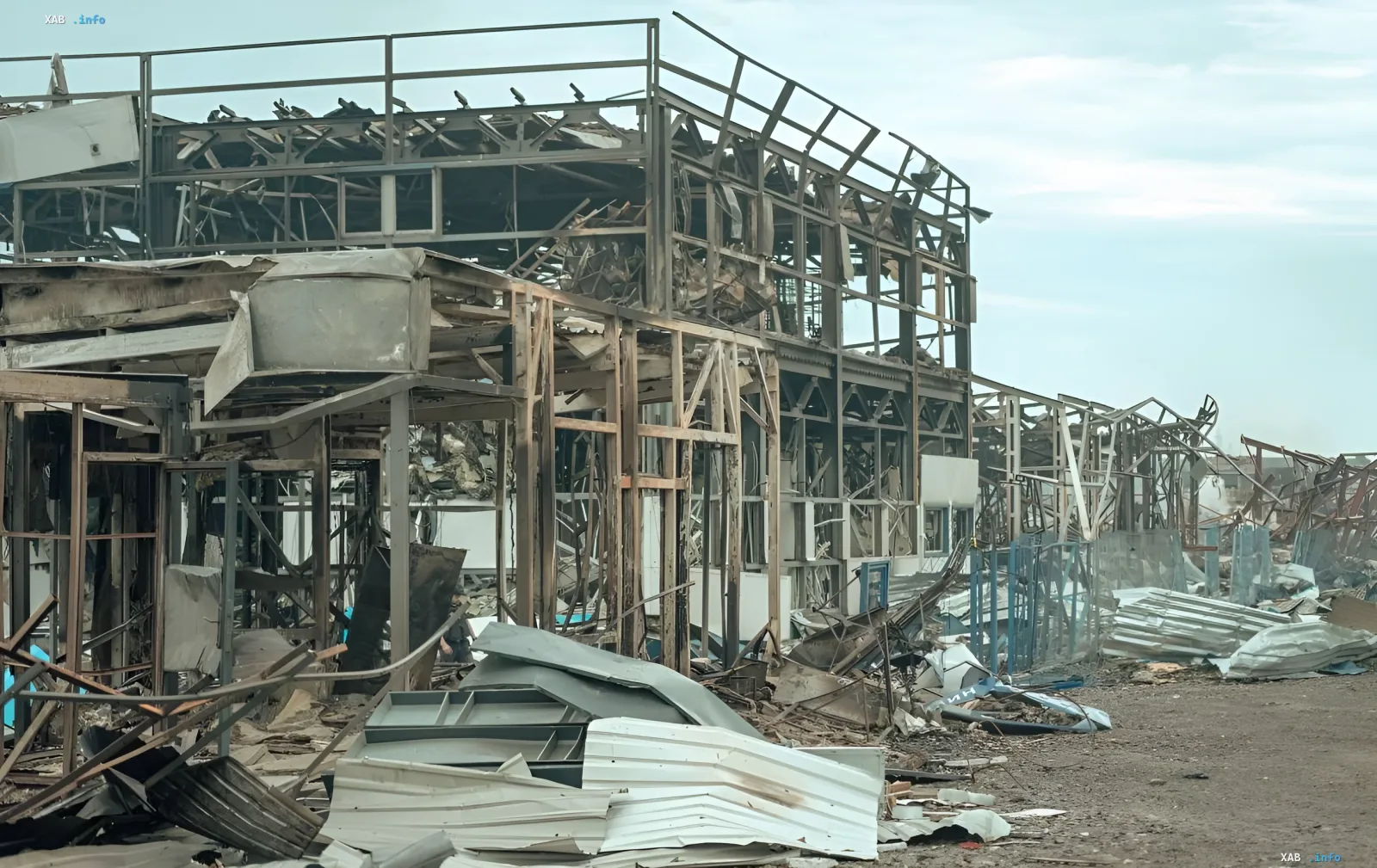
On the evening of August 28, 2026, Russian drones struck warehouses in the Bucha district of Kyiv Oblast, triggering a fire accompanied by explosions and the detonation of munitions. The epicenter of the destruction was the village of Mila and the surrounding settlements. As of August 30, according to Timur Tkachenko, head of the Kyiv City Military Administration, the main fire hotspots have been contained and extinguished by State Emergency Service (SES) units, while pyrotechnic teams work around the clock on site to detect and defuse explosive devices. In parallel, authorities have begun a systematic assessment of the damage and the restoration of utility networks.
Scale of the destruction
According to official estimates, around 300 damaged objects have been counted in the village of Mila and nearby settlements. Of these, more than 200 are private homes, and another 14 are multi-story apartment buildings. Some residential buildings have been completely destroyed, while others sustained partial or minor damage. This is why restoring infrastructure became a top priority: without demining and an assessment of the network condition, it is impossible to return life to the homes.
Casualties and victims
According to Tkachenko, 38 people were killed as a result of the strike and the subsequent detonation. A further 52 people were injured, including five children. At the time of publication, nine of the injured remain in hospitals, and their condition is assessed by medical staff as moderate. A humanitarian headquarters on site provides psychological support and accepts applications for material assistance.
Restoration of utilities
The key step was the restoration of electricity: on the two most damaged streets, after the demining work was completed, DTEK specialists have already resumed power supply. Work continues to restore electricity and gas supply in other parts of the village. This is the first tangible step toward returning to normal daily life for residents whose homes partially survived.
Humanitarian aid and recovery applications
A humanitarian headquarters is operating on site, where victims can receive psychological assistance and submit applications for material support. According to the administration, more than 200 such applications have already been filed. Together with the Ministry of Recovery, Infrastructure and Transport, local authorities are developing mechanisms for restoring destroyed homes and infrastructure in order to move from emergency response to long-term recovery.
Contradictory data
The legal qualification of the incident is noteworthy. The Security Service of Ukraine (SBU) opened a criminal case over the strike and detonation; however, according to the report, the investigation is being conducted under the article on dereliction of duty. Such a qualification raises questions: a drone strike on territory that caused mass casualties among civilians and the destruction of residential buildings is usually associated with more "serious" offenses related to war crimes or terrorism. At the same time, in the official version the strike was aimed at "warehouses," which explains the scale of the munitions detonation. The discrepancy between the stated target (warehouses) and the actual consequences for residential areas, as well as the choice of criminal code article, remain points that require further clarification by the investigation and may be reconsidered as evidence accumulates.
Investigation
The SBU is continuing to investigate the circumstances of the incident. The final legal qualification, as well as the completeness of the accounting of victims and destroyed objects, will likely be refined as the pyrotechnics work and the expert damage assessment are completed. For the residents of the village of Mila, the nearest benchmark remains the restoration of gas supply and the full demining of the area.