
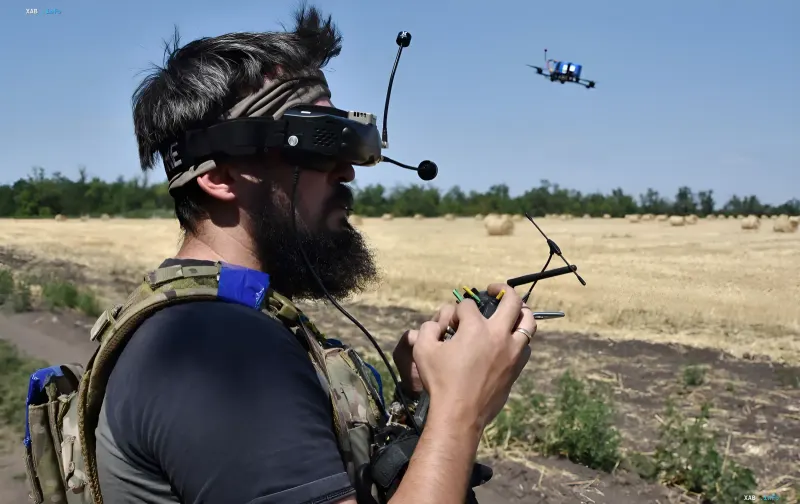
American drone manufacturer Powerus and Ukrainian company Swarmer have entered into a strategic partnership. Their joint goal is to supply the Pentagon with drones equipped with advanced swarm control technology. This collaboration is a response to growing demand for unmanned systems and part of a large-scale production expansion program.
Drone Dominance Program and Swarm Technology
The companies have joined the Pentagon’s Drone Dominance Program, whose primary objective is to drastically increase the production of low-cost FPV combat drones. A key element of the new strategy is the implementation of swarm technology, which will allow a single operator to control multiple drones simultaneously, fundamentally changing tactical deployment.
Brett Velichovich, president of Powerus, describes the essence of the technology: “Swarming is a force multiplier. It’s not about removing the human from the loop, but about enhancing their capabilities.”
Industrial Gap and Economic Standards
The United States faces a significant gap in production volumes. Currently, American industry produces around 50,000 drones annually, while frontline needs require scaling up to million-unit volumes — a level already achieved by Ukraine and Russia.
The U.S. Department of Defense has set a maximum price of $5,000 per competitive drone. For comparison, volunteer-built FPV devices in Ukraine cost less than $500. However, U.S. standards are significantly stricter and include several mandatory requirements:
- Complete elimination of Chinese components.
- Accounting for high labor costs in the U.S.
- Complex certification procedures for electronics used in warheads.
Despite these stringent requirements, Powerus considers the proposed price generous and believes such incentives will help revive the American industrial base in the drone sector.
Investments and Interception Technologies
Powerus has already secured $30 million in investment, directed toward technological development. In particular, artificial intelligence functions are being integrated to enable autonomous flight.
Previously, the company demonstrated the effectiveness of its Guardian-1 interceptor drones, which are already successfully deployed on the Ukrainian front. A notable feature of the tests was the remote launch of the drones directly from a container mounted on a robotic boat.
“Drone Diplomacy” Strategy and Export
This partnership comes amid new regulatory changes in Kyiv. The Cabinet of Ministers of Ukraine adopted a resolution that, for the first time since the start of the war, opens up the export of Ukrainian weapons. The new streamlined Fast Track mechanism allows domestic defense industry companies to supply arms to partner countries through an accelerated procedure, reducing application review time from 90 to 30 days.
This move is part of the “drone diplomacy” strategy, under which Kyiv is concluding special agreements in the field of unmanned technologies — so-called Drone Deals. Around 20 countries are interested in this format of cooperation, with Lithuania becoming the first European state to legally formalize such an agreement.
Simultaneously, negotiations continue on a large-scale Drone Deal with the United States. Ukraine has proposed a five-year agreement worth $50 billion to the American side. The project includes the production of up to 10 million drones annually in exchange for investments and arms procurement.


