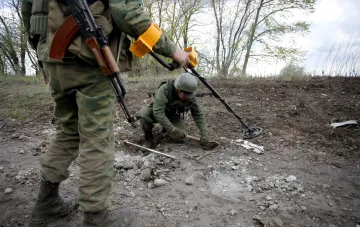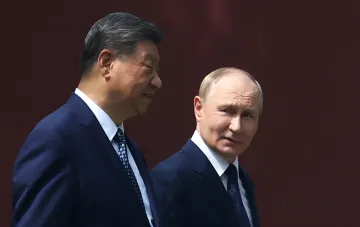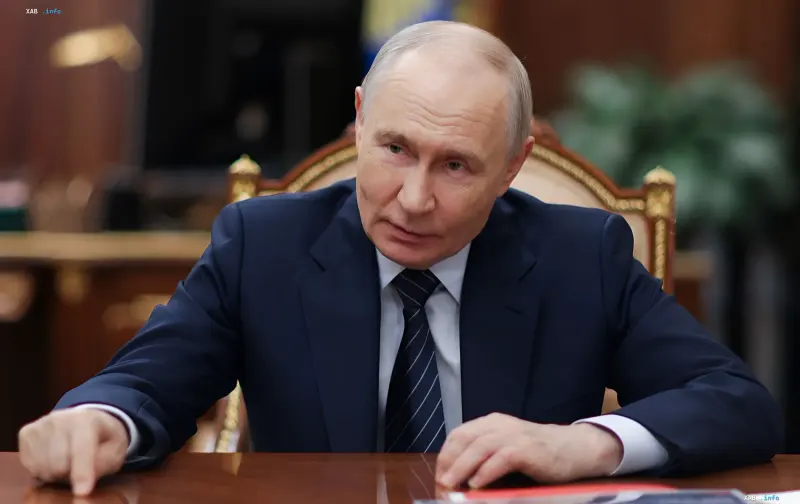
On November 12, Vladimir Putin held a meeting in the Kremlin with U.S. special envoys Steve Witkoff and Jared Kushner, who arrived in Moscow after two days of negotiations. During the meeting, the Russian leader stated that Moscow is ready to organize a humanitarian mission to evacuate residents of Kostiantynivka in the Donetsk region, modeled after the operation previously conducted in Oleshky, Kherson region. According to Putin, the Russian side allegedly requires five days for demining the territory near the city, and he proposed involving the ombudsmen of Ukraine and the Russian Federation in organizing the mission.
"Modeled after Oleshky": What Moscow specifically proposed
The key element of the proposal is the replication of the format which, according to the Kremlin, has already been tested in the Kherson region. Putin publicly claimed that Russia controls Kostiantynivka, and based on this premise, he argues for the necessity of a humanitarian regime and the evacuation of civilians. Furthermore, the mechanism itself — involving ombudsmen from both sides and setting a timeframe for demining — indicates that this is not about a one-time delivery of aid, but a structured procedure requiring preliminary territory preparation.
The Presidential Office's version: Rotation under cover
In Kyiv, Moscow's proposal was met with skepticism. Presidential communications advisor Dmytro Lytvyn told reporters that, given the experience in Oleshky — where, according to him, the Russian side moved in equipment and performed a rotation of troops under the guise of a humanitarian operation — similar goals are quite likely in Kostiantynivka. "But we need to clarify all the details," he emphasized, noting that it is important for Ukraine to understand the real nature of the planned operation before it begins.
What happened in Oleshky
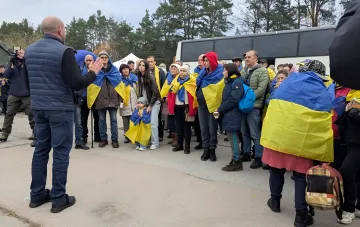
For context: in Oleshky, Kherson region, a humanitarian ceasefire was in effect from October 27 to November 1, implemented with the coordination of U.S. First Lady Melania Trump. As part of this operation, necessary aid was delivered to local residents, and nearly 800 civilians were evacuated. It is this precedent that is now being presented by Moscow as a model for Kostiantynivka, which raises concerns in Kyiv regarding the true motives behind such a "humanitarian" pause.
Status of the city: Conflicting positions
Importantly, the very premise of the proposal — Moscow's control over Kostiantynivka — is disputed. Claims by Russian General Staff Chief Valery Gerasimov that the city was allegedly captured back on October 17 were refuted by AFU General Staff spokesperson Andriy Kovalyov, who stated that fighting continues in Kostiantynivka. Thus, the question of who actually controls the city and its surroundings remains open and directly affects the conditions under which a humanitarian mission could be organized.
Kyiv's position on humanitarian missions
Despite skepticism regarding Moscow's motives, the Ukrainian side is not closing the topic of humanitarian operations in general. Ombudsman Dmytro Lubinets stated that Ukraine is considering the possibility of conducting new humanitarian missions in the temporarily occupied territories. Additionally, he reported that Kyiv is preparing for the possibility of an additional safe departure of the civilian population from the temporarily occupied Oleshky and neighboring settlements. Thus, the issue of civilian evacuation remains on the agenda, but its format and conditions, according to the Presidential Office, require thorough verification so that the humanitarian operation does not become a tool for military maneuvering.