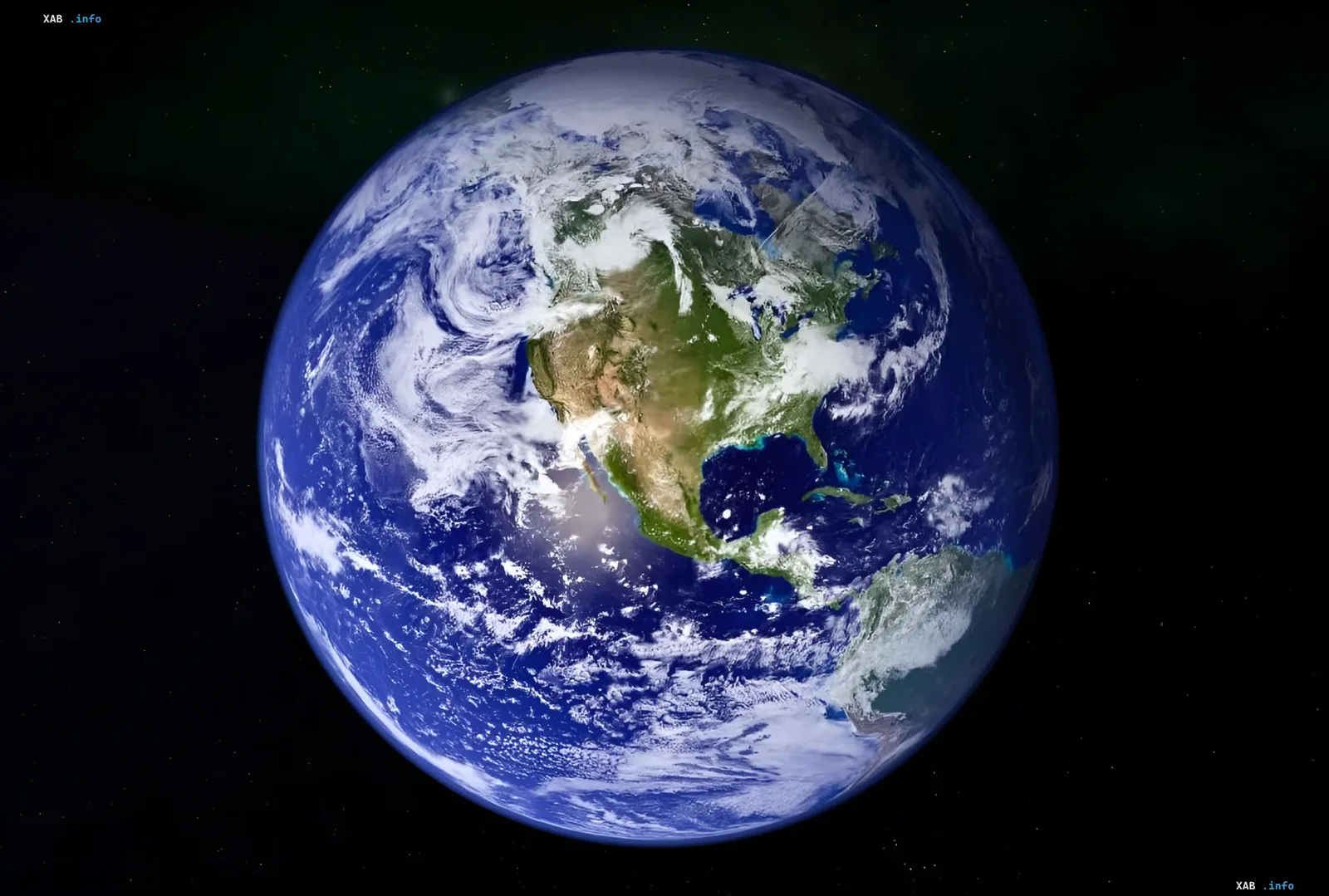
In the history of space exploration, there are frames that became more than just scientific data. They turned into philosophical manifestos. One such masterpiece is the "Pale Blue Dot" — a photograph of Earth taken from a distance that seems incredible. As part of the revitalization of archival materials from space agencies, the story behind this image has once again come to the forefront, reminding us of the struggle between science and bureaucracy, and how a single idea changed the visual history of humanity.
Eight Years of Struggle for a Single Frame
The Voyager 1 automated interplanetary spacecraft was launched on September 5, 1977. By 1989, the probe had successfully completed its primary tasks of studying Jupiter and Saturn and entered a hyperbolic trajectory leaving the ecliptic. It was during this period, in 1981, that astronomer and mission science team member Carl Sagan proposed a bold idea: turn the onboard camera and photograph our planet from a great distance.
However, the path to this image took about eight years. Within NASA and the Jet Propulsion Laboratory (JPL), the idea met with stiff resistance. The engineering corps and administration rejected the project for a long time, relying on harsh technical and economic arguments.
Technical Deadlock and Mission Risk
The mission leadership saw Sagan's proposal not as poetry, but as a threat to expensive equipment. The arguments against the filming were weighty:
- Risk of optical damage: Pointing the cameras towards the Sun, even accounting for the angular distance, threatened to burn out the silicon targets of the vidicons (television tubes). This could have made it impossible to complete the scheduled calibration of systems.
- Lack of scientific value: From a distance of 6 billion kilometers, Earth occupied only 0.12 pixels. From the standpoint of strict science, the image provided no new data on the atmosphere or geophysics, making its funding unjustified under a tight budget.
- Energy deficit: Maintaining the platform's operation required electricity from Radioisotope Thermoelectric Generators (RTGs). Energy was limited and critically important for the operation of plasma and magnetometric sensors in the interstellar medium.
The final decision was made only after Carl Sagan's direct appeal to NASA Administrator Richard Truly. The filming command was embedded in the onboard control complex, and on February 14, 1990, at 04:48 GMT, Voyager 1 took a series of 60 frames, creating the famous "family portrait" of the Solar System.
A Dot in a Beam of Light
Transmitting the data to Earth via the Deep Space Network took several months due to the low communication speed at such a distance. In the final image, Earth appeared as a tiny speck of light located in the center of one of eleven false radial tracks — glints caused by the scattering of sunlight in the optics.
The shooting parameters were extreme:
- Distance from target: 6,054,587,000 kilometers.
- Light filter: Blue (narrowband).
- Resolution: Less than one matrix element (0.12 pixels).
The Cost of the Image and the Scientific Future
According to the regulations of the Committee on Space Research (COSPAR), the completion of active phases of planetary missions requires strict optimization of energy consumption. The filming of the "Pale Blue Dot" became the final act of the optical system's work. The cameras were turned off forever just a few hours after the image was created. This decision allowed resources to be redirected to extend the data collection period on interstellar plasma, which will last until the end of the 2020s.
Despite the technical "unprofitability" of the frame, its cultural impact turned out to be colossal. In 1994, Sagan published the monograph "Pale Blue Dot: A Vision of the Human Future in Space," where he used the image as a fundamental argument in favor of global cooperation and the protection of the biosphere. In 2020, on the 30th anniversary of the event, NASA released an updated version of the frame ("Pale Blue Dot Revisited"), processed with modern algorithms, which allowed us to see our planet even more clearly in this infinite space.


