
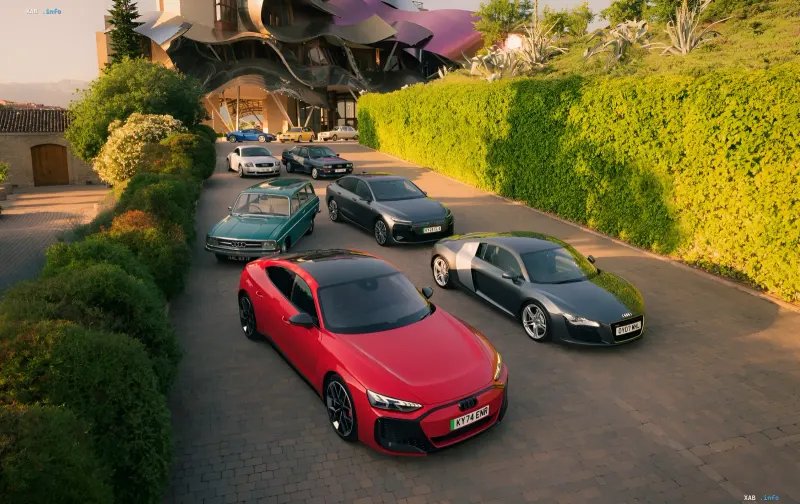
The automotive industry has always been the locomotive of technological progress, but among experienced drivers, the assertion is increasingly heard: "cars used to be better." An attempt to separate nostalgia from reality shows that between models from the late 20th and early 21st centuries lies a chasm that is not only technological but also mental.
Comparing cars from the 1990s with novelties from the 2010s–2020s, one can see that dynamics and practicality remain at approximately the same level. However, consumer qualities have changed radically. Modern cars are indeed more complex and sophisticated, but for this progress, one has to pay a high price—and it is not just about the purchase cost.
Safety vs. Durability
Engineers have managed to create structures that meet contradictory requirements: low fuel consumption, minimal environmental harm, and accident prevention. The Vision 2020 concept, voiced by one of the European manufacturers, promised that no one would die in a crash in their car. Experts confirm: a modern budget car protects passengers on a fundamentally different level than the "coffin with an airbag" of the 90s.
Automatic braking systems, blind spot monitoring, and lane-keeping assistants are not just an "invasion of electronics," but real lifesavers. However, implementing these technologies requires increasing the product cost. To maintain affordability for the mass consumer, manufacturers began to strictly reduce manufacturing costs, which hit the reliability of the units.
Saving on Metal and Lifespan
The main victim of optimization was the engine. Main parts became lighter and smaller, leading to accelerated wear. The pursuit of economy and eco-friendliness spawned a trend towards downsizing—reducing the volume and number of cylinders (down to two or three) in combination with turbocharging. This reduced the engine lifespan to 180,000–250,000 kilometers. Moreover, the design of such engines often does not provide for major repairs: after failure, the unit must be scrapped.
A similar situation is observed with the transmission. The era of "eternal" hydromechanics is going into the past. Today, the word "automatic" often hides CVTs (Continuously Variable Transmissions) or robotic gearboxes. These simplified versions are cheaper to produce but often lose out in comfort and fail quickly, becoming effectively disposable.
Plastic and Simplified Suspension
Mass production pushed engineers to use plastic not only in the interior but also in the construction of the body, engine, and other units. Although plastic is cheaper, it is less durable, prone to aging, and significantly complicates restoration after accidents—parts often have to be replaced rather than repaired.
Comfort also suffered for the sake of economy. In modern mass-market models, the simplified "candle" McPherson suspension scheme is used everywhere. It is cheaper and more convenient for the assembly line, but loses out in ride smoothness compared to the parallelogram scheme with multiple links, which dominated in the past.
Thus, the modern car is a compromise. We get an unprecedented level of safety and eco-friendliness, but we pay for it with reduced component lifespan, repair complexity, and structural simplification.


