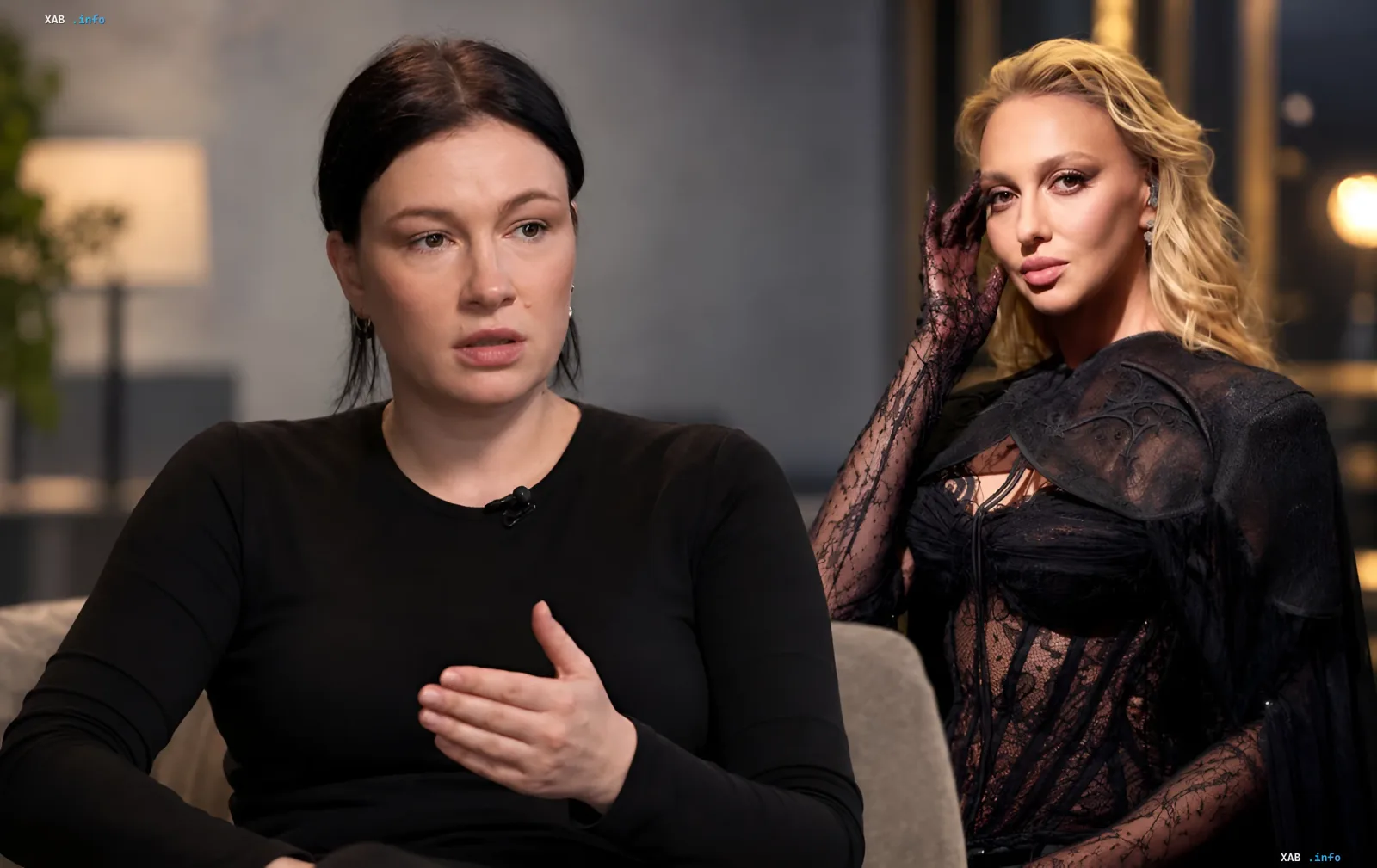
Anastasia Prikhodko has once again found herself at the center of a public discussion after expressing a harsh opinion on her colleague Olya Polyakova's recent creative experiment. In an interview with UNIAN Lite, Prikhodko commented on the artist's new tracks, categorically rejecting assumptions that this is the chanson genre. According to Anastasia, Polyakova made an unfortunate choice in pursuit of trends, which negatively affected her image.
Criticism of the Creative Path
"Olya, don't be offended, but this is drunken courtyard trash," Prikhodko stated, adding that she does not understand the reasons for such a sharp drop in her colleague's creative standards. Anastasia emphasized that she observes Polyakova frequently changing musical vectors, which, in her view, indicates a loss of creative identity. She believes an artist should remain true to themselves rather than trying to adapt to current, sometimes dubious trends.
Prikhodko also noted that she sees traits in Polyakova's behavior that she labeled a "shrew character." Despite criticizing the style, Anastasia acknowledged that Polyakova possesses undeniable artistry and talent, but expressed hope that the singer will be able to stop and find a sound that corresponds to her true level, rather than following fleeting trends.
Context of Show Business Conflicts
It should be noted that Olya Polyakova is far from the only target of Prikhodko's criticism. In the recent period, Anastasia has repeatedly expressed grievances toward other representatives of the Ukrainian stage. In particular, she continues to criticize Potap, recalling his past performances in Russia, and has also spoken negatively about Dmytro Monatik's "language transformation" and Oleh Vynnyk's public behavior during the full-scale war.
Contradictory Data
During the analysis of the parties' statements, controversial points arose regarding the interpretation of creative changes. Olya Polyakova herself calls her change of image a search for new meanings and adaptation to audience demands, while Prikhodko insists that these changes are a betrayal of her own musical "self." These two positions reflect the fundamental debate between an artist's commercial flexibility and the need to maintain creative integrity.