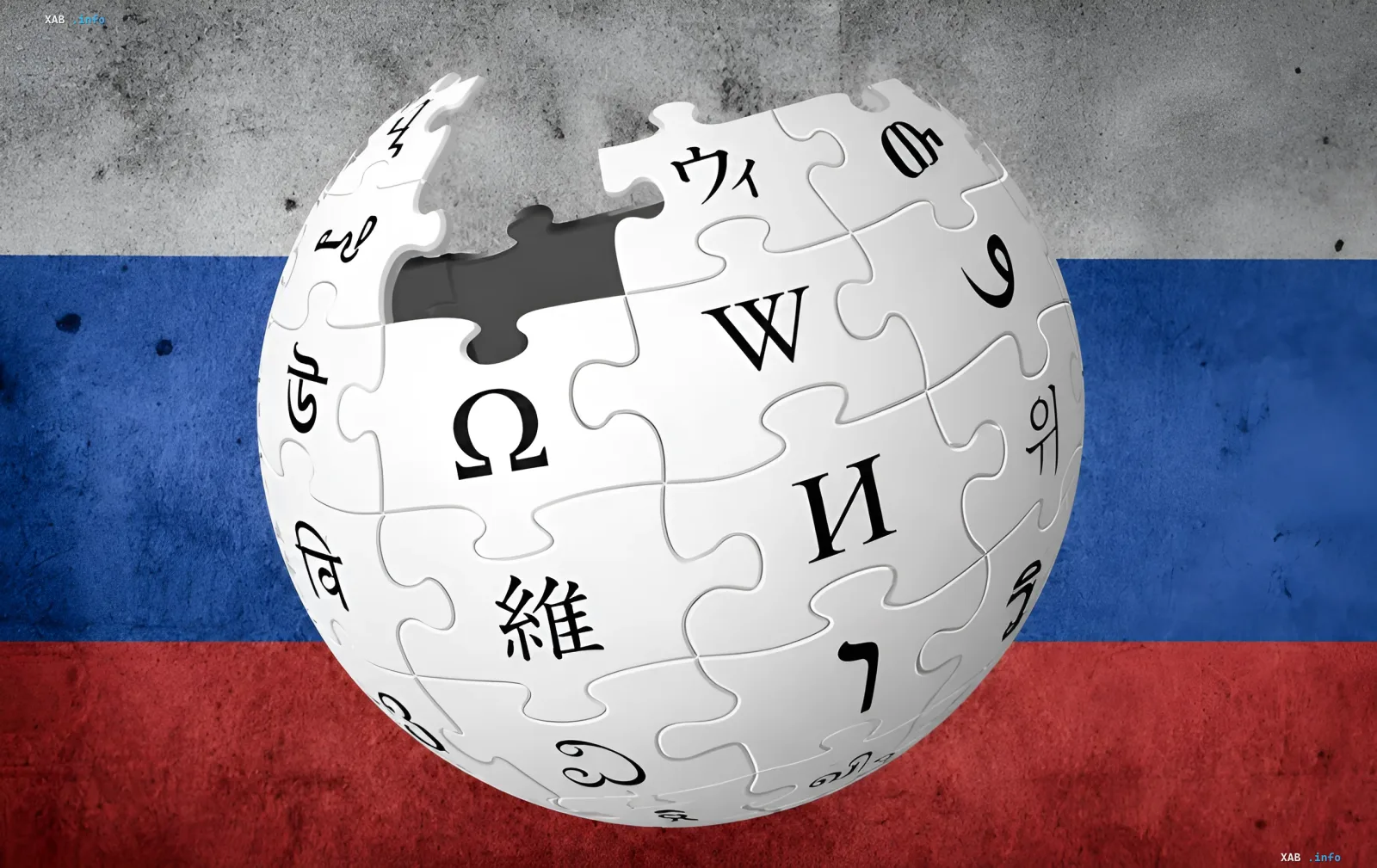
Internal documents from the Russian company Social Design Agency (SDA) have come into the hands of Bloomberg journalists, revealing a massive Kremlin strategy to manipulate the information space. Materials dated from May 2023 to April 2026 indicate a shift from simple fake news to complex operations designed to deceive search engine algorithms and artificial intelligence.
SDA, a company under sanctions from the US, UK, and EU, implemented a project codenamed "Project 2026." Its essence was not only the dissemination of disinformation on social media but also the creation of its own ecosystem capable of influencing search results and the data used by AI language models.
Wikipedia Clones as a Tool of Influence
One of the key areas of work was the creation of Wikipedia encyclopedia clone websites. Documentation shows that a resource specifically optimized for search engines was planned for Armenia. Pro-Russian narratives and false information about local politicians were to be placed on popular pages of such a site.
Journalists discovered three such resources created in early 2026. Subsequently, the hosting provider suspended their operation. Another large-scale project was targeted at Germany. About 200,000 web pages were created for it. The authors planned to edit materials monthly to influence six artificial intelligence platforms.
According to the operators' plan, the network of sites was intended to help promote specific content in search results. Ekaterina Sedova, a senior researcher at the Atlantic Council's Eurasia Center, explained that such tactics are aimed at overloading search engines with a large amount of interconnected content.
"Their approach is to overload search engines with content that links to itself or to the narratives they are promoting. This could become their indirect way of influencing popular chatbots and search engines," the expert noted.
Fake Think Tanks and Fake News
The documents also contain plans to create pseudo-think tanks. One such resource—the so-called "Global Center for Strategic Studies"—published repackaged materials from reputable research institutions, altering their conclusions. For example, in one text, the situation in Europe was described as a large-scale political and economic crisis, although the original study contained no such conclusions.
Bloomberg also draws attention to the Ruwiki project—a Russian analogue of "Wikipedia" created in 2023 based on its materials. According to the publication, individual articles there were edited in accordance with the Kremlin's position, particularly regarding the war against Ukraine.
Internal materials show that SDA evaluated the effectiveness of its campaigns. In particular, a fake story is mentioned about the alleged purchase of two apartments in the Dubai skyscraper Burj Khalifa by the mother of Ukrainian President Volodymyr Zelenskyy. According to the authors' estimates, this story garnered about 86 million views. A significant portion of the reach was provided by network participants who spread it on social media.
Separately, fake information was analyzed regarding the alleged purchase of a villa in France by Armenian Prime Minister Nikol Pashinyan. Bloomberg confirmed the existence of 42 websites shown in screenshots from the operation's content management system. Almost all of them were hosted on a single Russian IP address. Among them were the sites spyurk.cyou, sevan.info, and khachkar.info, which contained pages about Armenia copied from the Russian-language Wikipedia.


