
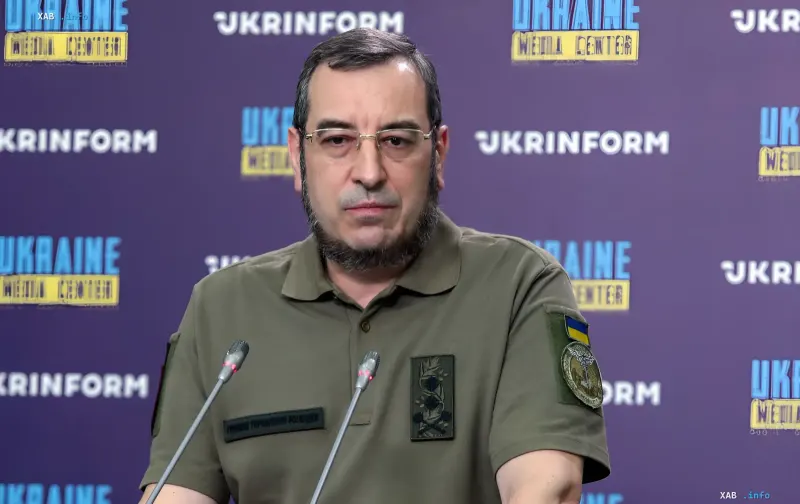
The authorities of the Russian Federation have introduced a strict system of penalties for defense enterprises that fail to meet their production plans for weapons and military equipment. This was stated by Vadym Skibitsky, a representative of the Main Directorate of Intelligence of the Ministry of Defense of Ukraine, during a speech at the international forum "Security Architecture".
Effective control mechanism
According to Skibitsky, the Russian side demonstrates the ability to quickly adopt new technologies and adapt to the conditions of the conflict. The expert emphasized that Russia retains a powerful defense industry complex, allowing for the rapid scaling of production volumes.
As an example, Skibitsky cited the situation with cruise and ballistic missiles, as well as the "Kinzhal" hypersonic complex. Despite the fact that the effectiveness of some models raises questions, their mass production continues. The key factor in the success of Russian industry has been the strict vertical of power and the system of accountability: failure to meet planned obligations entails serious sanctions for plant managers.
Sharp increase in drone orders
Special attention was paid by the HUR representative to the dynamics of unmanned aerial vehicle production. In 2024, the Russian defense order for "Shahed"-type drones amounted to about 12,000 units. By 2026, this figure had increased more than 8-fold, exceeding 100,000 units. Such a surge indicates a massive restructuring of logistics and production capacities.
Bypassing sanctions and critical components
Skibitsky also noted that Russia has learned to effectively bypass international sanctions. Analysis shows that a significant portion of the critical components in Russian weapons are produced outside the country. This allows Moscow to maintain a high pace of armament despite external pressure.
At the same time, the Ukrainian side retains the ability to influence the situation by disrupting or halting the production of certain types of weapons through targeted attacks. This remains one of the key tools for countering the buildup of the enemy's capabilities.
New developments: "Oreshnik" ballistic missiles
Parallel to the growth in serial production, analysts from Defense Express suggest that Russia may have begun small-series production of medium-range ballistic missiles (MRBMs) called "Oreshnik". The basis for such conclusions is the reduction in the intervals between strikes on Ukrainian cities.
If 13.5 months passed between the first strike on Dnipro and the second on Lviv, then only 4.5 months passed between the attack on Lviv and the subsequent strike on Bila Tserkva (May 24). The acceleration of the pace of using precision weapons may indicate the readiness of new batches of missiles for use.


