
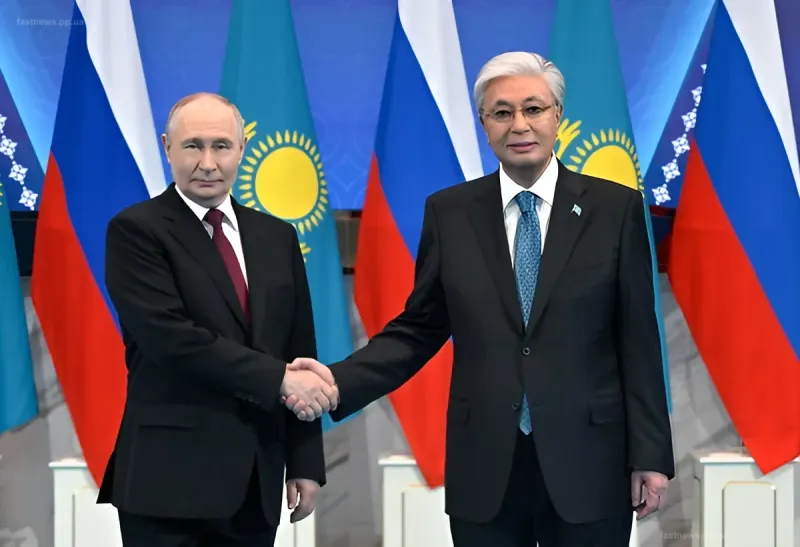
In May 2026, Astana became the epicenter of geopolitical events, hosting Vladimir Putin. The Russian leader's visit to Kazakhstan exceeded expectations: beyond protocol ceremonies and salutes, documents were signed that are reshaping the economic landscape of both countries. The main outcome was not just the signing of declarations, but the launch of specific, ambitious projects that will link the economies of Russia and Kazakhstan for decades to come.
Atomic Vector: Construction of the Balkhash NPP
The central element of the economic block of negotiations was the decision to build the Balkhash nuclear power plant. Moscow is taking on a key role in financing this mega-project by providing a state export credit. The construction of two power units will address the growing electricity deficit in southern Kazakhstan and solidify strategic partnership in the field of high-tech.
This step goes beyond simple trade in energy resources. It transforms Kazakhstan into a new player on the map of peaceful atomic energy, relying on Russian technology and investment. The project has already been granted priority status, guaranteeing its implementation within a short timeframe.
Financial Independence: Currency Swap and Dedollarization
Alongside the energy breakthrough, the leaders discussed issues of financial security. The Central Bank of Russia and the National Bank of Kazakhstan signed an agreement on a currency swap. The volume of the liquidity line reached 35 billion rubles (225 billion tenge), with a contract term of three years.
This mechanism is designed to minimize risks associated with fluctuations in world currencies and simplify settlements for businesses. Transferring trade operations into national currencies — tenge and rubles — will become a powerful driver for the growth of mutual trade, reducing costs and increasing transaction speed.
Logistical Revolution: Unmanned Astana — Moscow Route
The technological triumph of the visit was the launch of an unmanned cargo corridor. Together with the KAMAZ concern, the transport ministries of both countries tested a continuous route 3,000 kilometers long. Trucks in automatic mode crossed the border at the "Zhana Zhol" checkpoint and delivered the cargo to Moscow.
Autonomous technologies reduced delivery time by more than half — the journey took just two days. This is the first experience in the world of such duration for heavy unmanned trucks. Successful testing paves the way for scaling the project and creating a unified digital transport network of Eurasia.
"Seven Foundations" of New Partnership
The ideological outcome of the meeting was the signing of a document on the "Seven Foundations" of friendship and good neighborliness. This manifesto consolidates the status of strategic partnership and sets the vector for the development of relations in the political, economic, and humanitarian spheres. The symbolic conclusion of the official part of the visit was a demonstration flight by Kazakh Air Force fighters, leaving a trail in the colors of the Russian flag in the sky of Astana — a gesture emphasizing the special relationship between the two capitals.


