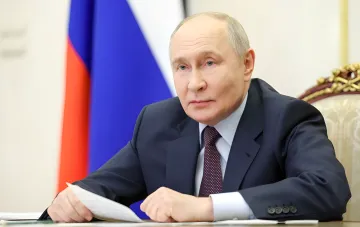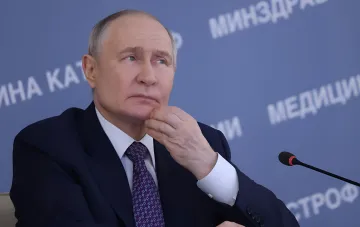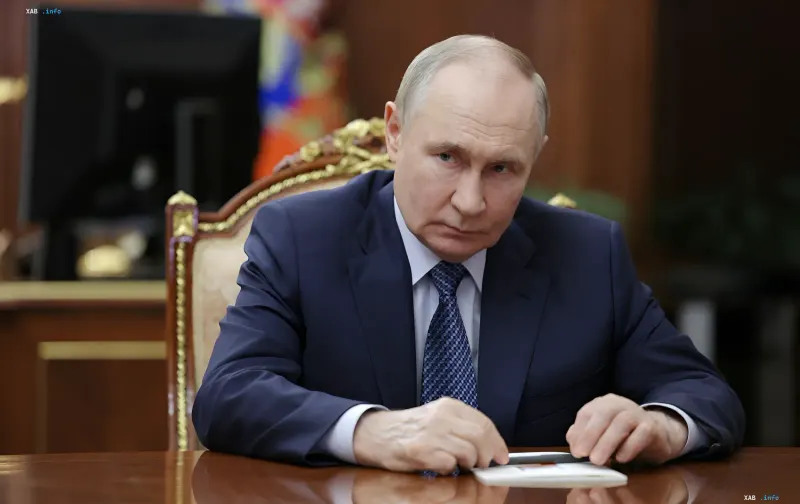
Russian President Vladimir Putin signed a decree allowing the government to transfer critical infrastructure facilities to temporary state management if their owners have not taken sufficient measures to protect them from attacks by Ukrainian unmanned aerial vehicles. The document, reported by RBC-Ukraine, BBC and a number of Russian media outlets on August 24, 2026, effectively introduces a mechanism for the compulsory seizure of operational control over strategically important enterprises on the grounds of their "vulnerability."
What falls under the decree
According to the text of the document, the definition of critical infrastructure facilities covers enterprises of the fuel and energy complex, the energy sector, industry, communications, as well as public utility, transport and logistics infrastructure. The list is supplemented by an open-ended reference to "other facilities" of special significance for ensuring the security and economic stability of the Russian Federation. It is precisely this caveat that makes the potential scope of the decree virtually unlimited: in principle, virtually any enterprise that the government deems strategically important can be brought under it.
The temporary management mechanism
Under the new decree, the temporary manager is designated as the structure "Rosimushchestvo" or "another person" by a decision of the Russian government. Russian authorities gain the right to transfer to such a structure the rights to the enterprise's real estate, securities and other property of the facility's owner. At the same time, the financing of the retention of the seized property is carried out from the income generated by its own use, meaning the enterprise effectively begins to work for itself under a regime of "frozen" control. Owners lose operational management but formally retain ownership — until the state decides to extend or change the terms.
Context: strikes on refineries and logistics
The new decision was taken against the backdrop of regular strikes by Ukrainian drones on Russian oil refining facilities that supply fuel to the Russian armed forces. In addition, major logistics centers of the Wildberries and Ozon marketplaces have repeatedly come under attack. On the night of August 24, 2026, the Ukrainian Defence Forces struck three large Ozon logistics centers, after which the company's shares on the exchange fell sharply. It is separately noted that Ozon had in advance — at least 20 days before the first strikes — removed the addresses of 56 of its warehouses in Russia from its public directory, indicating the company's awareness of the growing risk.
Contradictory data
Publications by different outlets show a discrepancy in how the mechanism is characterized. RBC-Ukraine uses the word "nationalize" in its headline, implying a full transfer of ownership to the state. Meanwhile, the text of the decree itself and the wording of BBC, Fontanka and Computerra speak specifically of "temporary management" — that is, the transfer of operational control without an automatic change in ownership rights. The difference is significant: nationalization entails gratuitous expropriation, whereas temporary management is theoretically reversible. However, the ambiguity of the phrase "another person" and the absence of clear deadlines for returning the property to the owner create room for interpretation under which "temporary" management could become indefinite. Moreover, the open-ended list of "other facilities" allows the scope of the decree to be expanded by administrative decision, making the boundaries of the mechanism opaque.
Possible consequences for business and markets
For the Russian corporate sector, the decree creates a new factor of regulatory risk: any enterprise on the critical infrastructure list now bears a de facto obligation to invest in drone protection to the level that the federal center deems sufficient. The inability to provide such protection — especially given the shortage of air defense assets and the rising intensity of attacks — becomes grounds for the seizure of control. For public companies such as Ozon or Wildberries, this adds volatility: investors are forced to factor the risk of compulsory management into asset valuations. The sharp drop in Ozon shares after the strikes on three logistics centers on the night of August 24 demonstrates how sensitive the markets are to the combination of physical attacks and new regulatory risks.