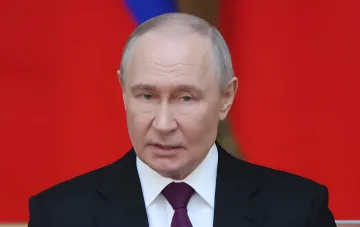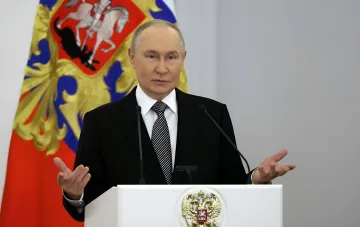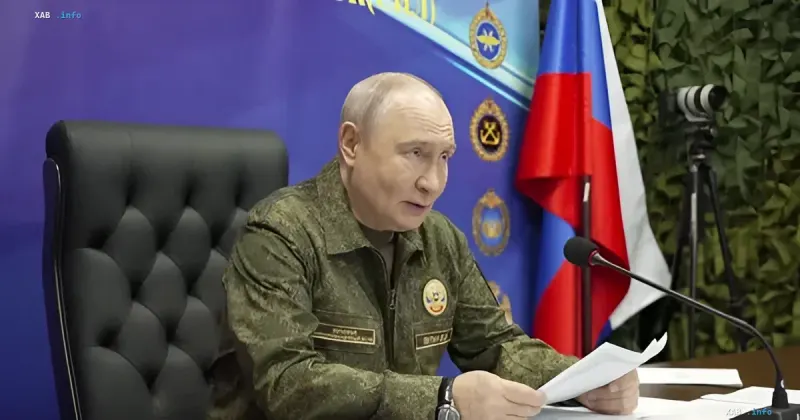
On October 16, Russian President Vladimir Putin, speaking during a visit to military command, stated that his country's forces are forming a "security buffer zone" along the border with Ukraine. According to him, the goal of this mission is to ensure the security of Russia's border regions. As Reuters reports, Putin explained that the task facing the armed forces is not only to push Ukrainian troops out of Russian territory, but also to create a security zone on the other side of the border.
Justification and Chronology
The Russian leader linked the beginning of this mission to Ukraine's military operations in the Kursk region in 2024–2025. It was these events, in his assessment, that prompted the transition to creating a protective space beyond the border line. Putin emphasized that Moscow does not plan to bring the issue of the buffer zone to the table of potential peace talks with Kyiv, thereby effectively declaring it non-negotiable.
Scale and Geography of the Zone
According to Reuters, citing Kremlin spokesman Dmitry Peskov, the zone is expected to stretch for approximately 660 kilometers along the border, with about 70% of its territory currently under Russian control. At the same time, Moscow has not specified how far this zone will extend into Ukrainian territory. According to the agency, the plan includes parts of Ukraine's Sumy and Kharkiv regions — territories that were not among the regions Russia claimed to annex since the start of the conflict in 2022.
Military Assessments
In the same speech, Putin assessed the progress of military operations, stating that Russian troops still control no more than 10% of the Donetsk region and about 16.5% of the Zaporizhzhia region. He also acknowledged that the air defense system needs further improvement. It is noted that in recent days both sides continue to strike military and energy infrastructure facilities.
Diplomatic Context
The statements came amid ongoing diplomatic efforts surrounding the Ukrainian conflict. A week ago, Russia and the US reached an agreement on diesel fuel supplies, while new disagreements arose between the US and Ukraine regarding approaches to the peace process. Reuters notes that infrastructure strikes are taking place against the backdrop of diplomatic exchanges between Moscow and Washington on a number of new areas of cooperation. Previously, Putin repeatedly mentioned the need for a buffer zone, but did not specify its scale and did not confirm that the issue was closed to negotiations.