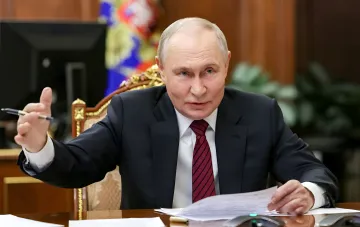
On November 5, 2026, Russian President Vladimir Putin signed a decree transferring shares of Japanese company Japan Tobacco International (JTI) in four Russian enterprises to the management of Industrial Assets JSC. Tobacco factories in Saint Petersburg, Rostov-on-Don, Lipetsk, and Leningrad regions fell under state control. Around 4,000 people work at these enterprises and in the company's offices. The decree does not explain the reasons for this decision.
Largest Player in the Russian Tobacco Market
Japan Tobacco International has been operating on the Russian market since 1999 and controls about 40% of the local cigarette market. In 2018, the company acquired the Ukrainian manufacturer Donskoy Tabak, making it the largest cigarette producer in the country. In Russia, JTI produces goods under international brands Winston, Glamour, Camel, LD, and Sobranie, as well as local brands Peter I, Russky Stil, and Donskoy Tabak. According to company profile data, over more than 20 years of presence in the Russian Federation, Japan Tobacco Group has invested about $4.6 billion in the Russian business.
Tokyo's Reaction and JTI's Position
The Japanese government has already expressed a protest to Russia through diplomatic channels and demanded the cancellation of the decision. Japanese Finance Minister Satsuki Katayama emphasized that Tokyo consistently urges Moscow not to violate the interests of Japanese citizens and companies. JTI stated that it is aware of the decree and is assessing the situation, naming the protection of stakeholder interests, primarily its employees, among its priorities.
Part of Systemic Practice of 'External Management'
The transfer of JTI's assets has become another instance of the Kremlin taking control of Russian enterprises belonging to foreign businesses that continued operating in the country after the full-scale invasion of Ukraine in 2022. Previously, similar decisions affected Swiss food concern Nestlé, German retail chain Metro, and French retailers Auchan and Leroy Merlin. Moscow explains such steps as a response to Western sanctions and the freezing of Russian assets abroad. Formally, it is about temporary management, but foreign owners effectively lose control over enterprises without their consent. Putin previously allowed for the possibility of returning assets to former owners under 'favorable conditions'.
Context of Deteriorating Russian-Japanese Relations
The decree on JTI came against the backdrop of an overall cooling of relations between the two countries. Recently, Russian special services detained Japanese journalist Yuki Imai on suspicion of espionage; the Japanese side rejected the accusations. After 2022, JTI did not leave the Russian market, but suspended new investments in production and marketing. Thus, the tobacco giant has become another major foreign player whose Russian assets have passed under the actual control of the state.