
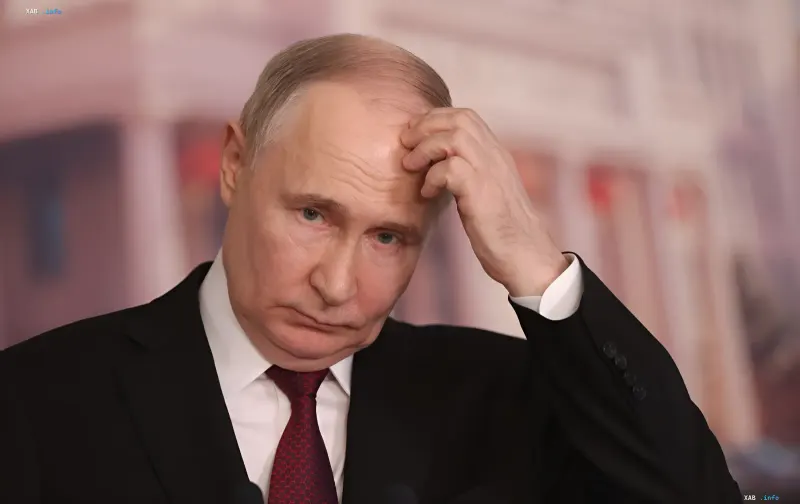
In Russia, an unprecedented drop in approval ratings for President Vladimir Putin has been recorded. According to fresh data from the All-Russian Center for the Study of Public Opinion (VCIOM), published in early July, the support indicators for the head of state have decreased at the fastest rate since the beginning of the full-scale war.
Statistics of Disappointment
In just one week, the level of trust in Putin fell by 3.4 percentage points, while the approval rating of his activities dropped by 3.5 points. If a week ago 76.7% of respondents expressed trust, this figure is now 73.3%. The share of citizens expressing distrust has risen from 18.8% to 22.1%.
Indicators of approval of the president's work also show negative dynamics: from 70.4% to 66.9%. Meanwhile, the share of those disapproving of the head of state's actions increased from 19.7% to 21.3%. Experts note that the trust rating has not fallen at such a speed since the beginning of the invasion, and approval indicators are dropping so rapidly for the first time since 2024.
Confirmation from Pro-Government Structures
The trend of declining popularity is confirmed by other sociological organizations operating in Russia. The Public Opinion Fund (FOM), which cooperates with the Kremlin, recorded a drop in the assessment of Putin's work by 1 percentage point — to 70%.
More dramatic figures are provided by the independent Levada Center. According to their data, in June 2026, the approval rating of the president's activities fell by 5 percentage points — from 79% to 74%. Also, the share of Russians who believe that things in the country are going in the right direction is shrinking at record rates.
Causes of the Crisis: From Fuel to Isolation
The decline in ratings is taking place against the backdrop of growing internal tension. One of the key causes was the expanding fuel crisis, provoked by strikes by the Armed Forces of Ukraine. Air attacks led to the isolation of Crimea, which not only ruined the tourist season but also caused an acute fuel shortage in the region.
The inability of the air defense system to protect the population from drone strikes also undermined citizens' confidence in safety. In society, interest in the question of ending the war is growing, and the share of those dissatisfied with the president's work has reached a maximum since September 2022 — the time of the start of mobilization.
Internal Instability and Signals from the Kremlin
Recently, signs of internal instability have been recorded in Russia. For the first time, the State Duma heard a public demand for Putin to present a clear plan for ending hostilities. One deputy openly stated that due to corruption, economic problems, and constant strikes, the country is on the verge of a social explosion.
The trend is confirmed by secret data intercepted by Ukrainian intelligence. According to documents, Russian special services have already recorded a steady decline in support for the pro-government party. The Kremlin has prepared the head of state for the fact that public dissatisfaction will inevitably grow at least until autumn.


