
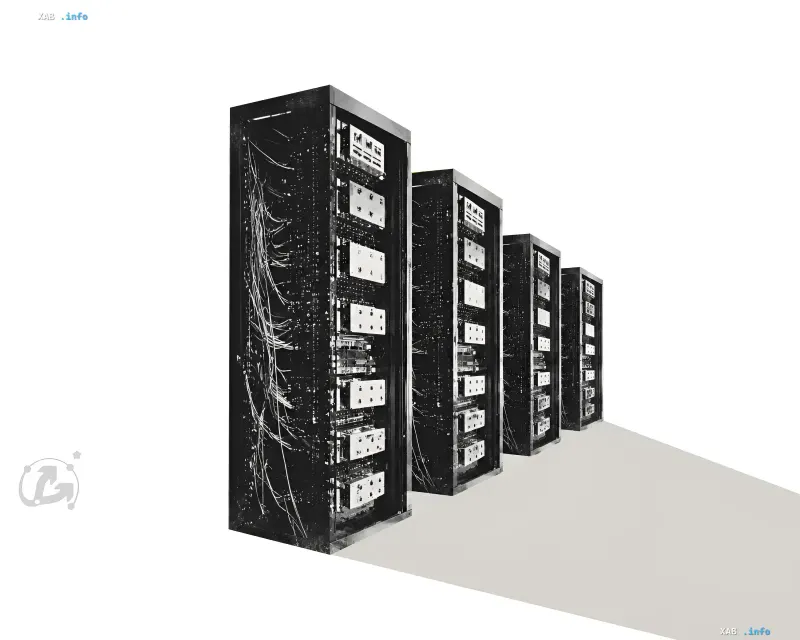
The world of quantum technology is experiencing a significant turning point. London-based startup Moth has announced the launch of the Quantum Backrooms project — the first consumer game in history to run not on an emulator, but on actual quantum hardware. This was reported by Quantum Computing Report. This event marks the transition of complex physical computations from specialized laboratories into the sphere of mass entertainment.
Quantum World Generation
Inspired by the popular creepypasta about the "Backrooms," the game features an infinite procedurally generated labyrinth of office and utility rooms. However, the key difference between Quantum Backrooms and traditional video games lies in the level creation mechanism. While randomness in conventional projects is provided by pseudo-random algorithms, here the world architecture is formed directly by quantum processors.
Developers at Moth have tied the game mechanics to the physical architecture of QPU systems. The project utilizes active installations from leading global players — IBM and IQM. An important aspect was the creation of a platform-independent solution: the game can run on various quantum backends, ensuring the project's flexibility and scalability.
From Alpha Test to Mass Release
Currently, Quantum Backrooms is available only to a limited circle of users as part of a closed alpha test. The full public release is scheduled for the end of 2026. The development team draws parallels between their project and early experiments in generative artificial intelligence, such as DALL-E and Magenta.
The startup's main goal is to demonstrate that quantum computing can be not just a complex laboratory technology, but an accessible tool for a wide audience. Moth aims to build an ecosystem of consumer products around quantum computing even before the industry achieves full hardware fault tolerance.
Democratization of Quantum Technologies
In addition to game development, the company is actively developing a low-code/no-code platform. It will allow the creation of quantum applications without the need for deep theoretical knowledge or complex technical skills. This paves the way for a new generation of developers capable of working with quantum systems.
The launch of Quantum Backrooms takes place against the backdrop of rapid industry development and discussions about the real capabilities of modern quantum computers. For example, in May, experts questioned D-Wave's claim of achieving quantum advantage, while Quantum Machines brought the Rigetti Novera processor to 99.5% accuracy. Despite controversies and technical challenges, projects like Quantum Backrooms show that the industry is moving towards the practical application of technologies already today.


