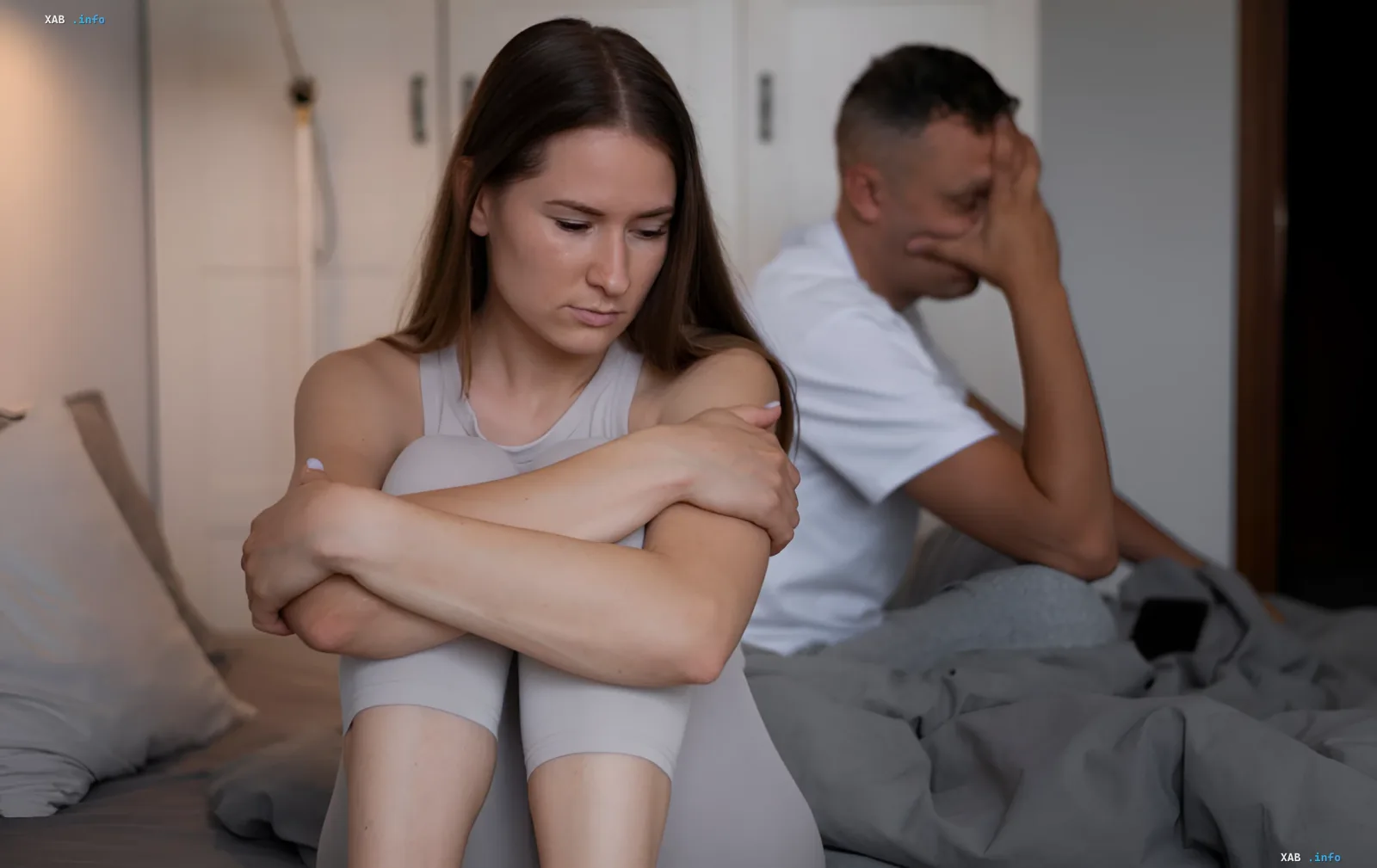
In 2026, psychologists and sociologists are noting a worrying trend: more and more couples remain married or cohabiting, even though they have emotionally separated long ago. This phenomenon is called a "quiet divorce" — when people officially continue to live together, but their relationship has turned into a formality. They may visit relatives together, post joint photos on social media, but inside there is emptiness, indifference, and a lack of intimacy.
What is a "quiet divorce" and why is it becoming the norm
A "quiet divorce" is not a legal status, but a psychological state. People do not file for divorce because they fear conflict, guilt, uncertainty, or social pressure. As life coach Vitaly Kursik notes, saying "I no longer want this relationship" is scary. It is easier to live with the attitude of "it will somehow work out," even if that "it" is cold silence and a lack of dialogue.
Experts link the rise in such cases to changing social norms: divorce is no longer stigmatized, yet people increasingly choose the path of least resistance — the imitation of a relationship. This is especially characteristic of couples with children, where divorce may be perceived as a threat to family stability.
Signs of a "quiet divorce": how to understand that you are no longer together
There is a set of key signals indicating that the relationship has entered the stage of a "quiet divorce":
- Lack of meaningful exchange — news, worries, and dreams are shared first with friends, not with the partner.
- The phrase "do as you wish" — sounds like freedom, but in reality means indifference.
- Disappearance of curiosity — questions like "how was your day?" or "what is bothering you?" are no longer asked.
- Lack of conflicts — not because of harmony, but because there is no point in arguing.
- Intimacy becomes a coincidence — hugs, touches, and the desire to be together disappear.
- The future is built in the singular — "I plan," "I want," instead of "we".
- One partner stops investing — why improve something that is already lost?
Important: the presence of one or several signs does not yet mean the end of the relationship. But if this state becomes the norm — silence lasts for months, the distance grows — it is time to think.
Contradictory data
Although most experts agree on the definition of a "quiet divorce," there are disagreements regarding the causes of its emergence. According to a study published in Forbes (source ID 1), the main reason is the fear of change and social pressure. At the same time, psychologist Umanova (source ID 2) claims that the rise in such cases is linked to economic factors — people cannot afford separate living arrangements or a legal divorce.
Furthermore, an article in Gazeta.ru (source ID 3) states that cases of "quiet divorces" have increased in Russia in 2026, however, exact statistics are missing — data is based on surveys and appeals to psychologists. This creates uncertainty in assessing the scale of the phenomenon.
How to get out of a "quiet divorce"
Experts emphasize: a "quiet divorce" almost never happens in one day. It consists of dozens of small "we'll talk later," "not now," "well, it doesn't matter." Therefore, an exit is possible — through an honest conversation. Sometimes it saves the relationship, sometimes — it helps put a period to it.
Vitaly Kursik advises not to ignore warning signals. If silence becomes the norm and the distance grows — action is needed. Even if the result is a breakup, it is better than years of living in the illusion of a relationship.
Why this is important in 2026
In the era of digital communication and social media, a "quiet divorce" becomes particularly dangerous: people continue to imitate happiness in public spaces, while inside there is emptiness. This creates a false impression of "normal" relationships and prevents other couples from noticing the problem in time.
Understanding the phenomenon of a "quiet divorce" is key to maintaining healthy relationships. If you feel that it has become too quiet in your couple — perhaps it is time not to stay silent, but to start a conversation. Sometimes it saves. And sometimes — it at least helps to put a period to it honestly.