
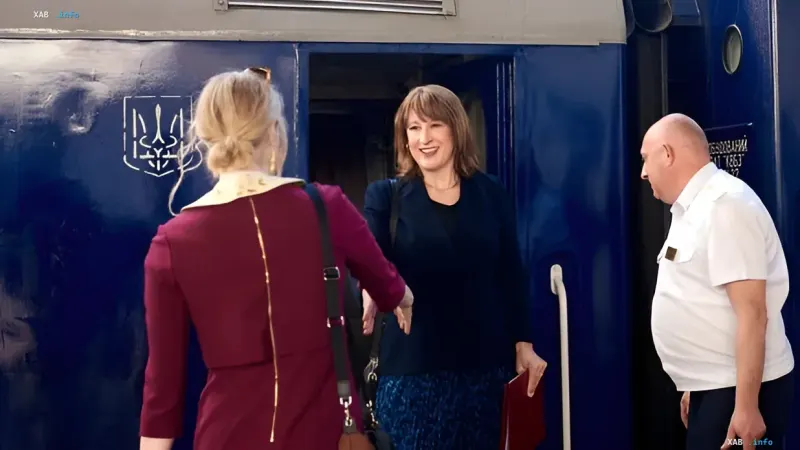
UK Chancellor of the Exchequer Rachel Reeves made her first official visit to Kyiv, a key event in a series of diplomatic efforts to consolidate support for Ukraine. The trip by the head of the British finance ministry was a logical continuation of participation in the Ukraine Recovery Conference in Gdańsk. During closed-door negotiations with Ukrainian leadership, the sides focused on three critically important areas: coordinating macro-financial assistance, mechanisms for using frozen Russian assets, and developing joint defense-industrial cooperation.
Financial Breakthrough: $1.9 Billion for Recovery
At the center of the visit were specific financial commitments from London. Rachel Reeves confirmed the allocation of a new consolidated package of non-military aid, the volume of which for the 2026–2027 financial year will amount to £1.5 billion (approximately $1.9 billion). This figure is not abstract — it accumulates previously announced funds and new commitments.
The structure of financial support is clearly divided into targeted areas:
- Energy Security: £290 million ($382.8 million) has been allocated to support the resilience of the energy sector and critical infrastructure. This tranche, known as the “Gdańsk Package,” aims to ensure the uninterrupted operation of the power grid amid ongoing attacks.
- Social Commitments: An additional targeted tranche of $1 billion is directed at ensuring the stable functioning of basic state services and fulfilling social obligations to the population.
Of particular interest is the change in the internal methodology for accounting for capital expenditure by the UK Treasury. New rules provide the British government with flexibility in allocating funds for long-term investment projects, including the restoration of damaged energy facilities and the procurement of specialized equipment.
Access to Russian Assets: From Profits to Capital
One of the most pressing agenda items was the discussion of legal mechanisms for the alienation of blocked Russian assets. Rachel Reeves voiced London's principled position, which goes beyond the simple use of income from frozen funds.
“I stated clearly, and the British government has repeatedly emphasized: we are ready to use not only the income but also the frozen Russian assets themselves to support Ukraine,” the Chancellor emphasized. However, implementing this initiative requires developing a consolidated solution from partners in the European Union and the Group of Seven (G7). Creating a specialized supranational legal mechanism is necessary to comply with international financial law norms when confiscating the principal of assets.
Defense Vector: Joint Production and New Deliveries
In addition to financial issues, the visit included meetings with representatives of the defense-industrial complex. The sides conducted an audit of current deliveries and discussed the parameters of a new Defense Investment Plan, the publication of which is scheduled ahead of the NATO summit.
Key elements of the plan include:
- Optimization of procurement procedures to accelerate the delivery of equipment.
- Scaling up joint production of high-tech weapon samples, in particular unmanned aerial vehicles (UAVs) and electronic warfare systems.
- Accelerating direct deliveries of equipment for the needs of the Armed Forces of Ukraine.
Thus, Rachel Reeves' visit demonstrated a transition from declarative support to specific financial and industrial actions aimed at Ukraine's long-term sustainability.


