
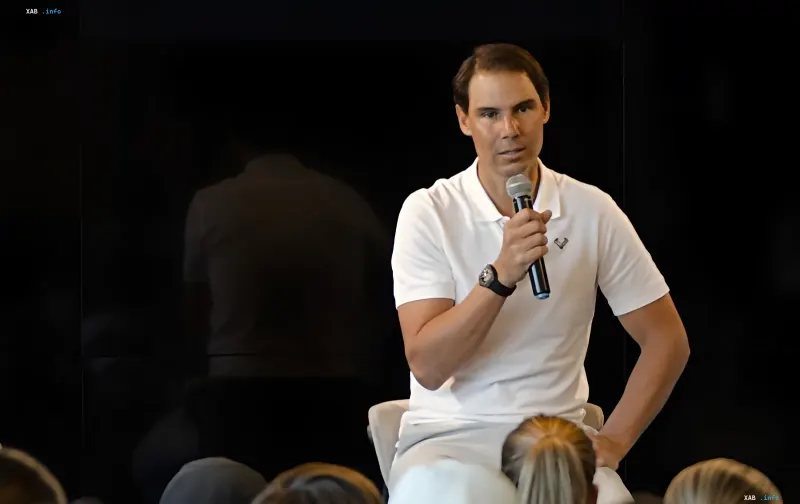
Legendary Spanish tennis player Rafael Nadal, a former world No. 1, has put forward a series of proposals for a major reform of professional tennis. According to him, the ATP system needs a systematic 'reset,' which would primarily affect the competition calendar and the mechanism for calculating ranking points. Nadal is convinced that the current model creates chronic overexertion for athletes, the consequences of which players are forced to pay for with their own health.
11-Month Season and Chronic Overexertion
The Spaniard's central argument is the duration of the professional season, which he estimates lasts almost 11 months. Such a schedule, Nadal argues, denies tennis players adequate time for rest, recovery, and high-quality physical conditioning. He attributes the prevalence of injuries to this intensity: modern demands of the game — increasingly powerful strokes and explosive court movements — place extra stress on the body, and the lack of breaks prevents recovery.
Hard Courts and Impact Stress on Joints
Nadal devoted particular attention to the dominance of hard court surfaces in the calendar. He considers these courts 'too aggressive' for joints, especially given the multi-month season. 'I don't know many professional sports where competitions are held on such surfaces. In tennis, we spend most of our time playing on courts that, let's say, are very aggressive for the body and the joints. And then we pay for it with the consequences,' the Spaniard stated. He advocated for maintaining a greater variety of surfaces, noting that clay and grass courts might be more favorable in terms of impact stress, even though they have their own unique physical characteristics.
Two-Year Ranking Instead of One
Nadal identified the current ranking points system as the second key issue. Currently, the ATP ranking is based on results from the last 52 weeks, forcing tennis players to participate in tournaments constantly: missing events where significant points were previously earned can cause a player's position to drop sharply. This problem is particularly acute during injury periods that require prolonged recovery. The Spaniard proposed moving to a system where the ranking would account for results from the last two years instead of one. 'A ranking system based on results from the last two years instead of one would give players a little more freedom to make the right decisions. At the same time, in case of injury, they would have more time to recover without fearing that their ranking position would collapse quickly,' he explained.
Two-Week Masters 1000s are a 'Mistake'
Separately, the former world leader spoke about the duration of the Masters 1000 series tournaments. He does not support the decision to make most of these competitions two weeks long, as he believes it further compresses the calendar and increases the burden on athletes. 'I also believe that the decision to extend almost all Masters 1000 tournaments to two weeks was a mistake,' Nadal emphasized.
In conclusion, the Spaniard called for systemic changes that would give players more recovery options and help reduce the risk of injury. In his view, the current calendar and ranking model generates problems that athletes pay for with their health. It was previously reported that following the cases of Jannik Sinner and Iga Swiatek, anti-doping rules in tennis were also changed, making the topic of reforming professional tennis especially relevant.