
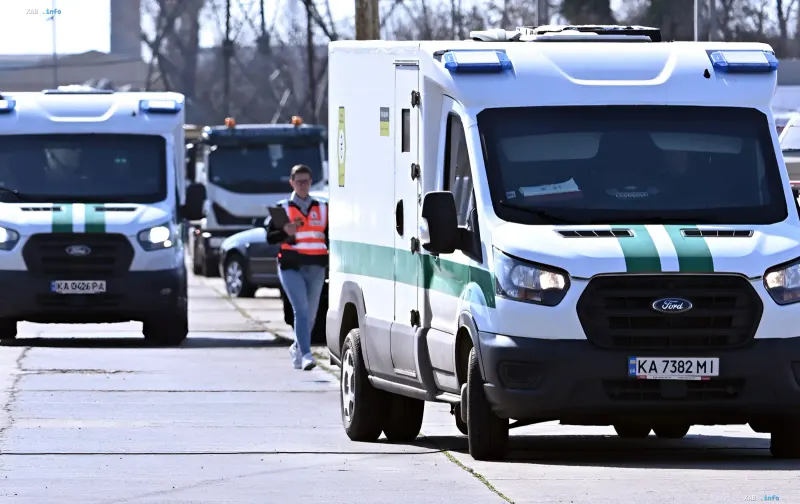
On March 5, an incident occurred near Budapest involving an Oschadbank convoy transporting cash and gold worth approximately $80 million from Austria's Raiffeisen Bank to Ukraine. It turned out that the raid was not a random inspection but a pre-planned political operation, the decision to conduct which was made personally by the then Prime Minister of Hungary, Viktor Orbán — without any legal grounds.
Orbán's Decision: Political Motivation Instead of Legal Arguments
Journalists from the Hungarian publication Telex conducted an investigation and found that Orbán personally ordered the raid to take place specifically on March 5. This was confirmed by independent sources as well as the government's Office for the Protection of the Constitution. According to their data, the decision came from the State Secretariat for the Supervision of Civil National Security Services under the Prime Minister's Office.
Orbán acted in response to Ukraine's "blocking" of the "Druzhba" oil pipeline, which had been damaged by Russian strikes. He was convinced that Kyiv was doing this intentionally — for political reasons, rather than due to the objective impossibility of repairs.
Information Attack and Fake Materials
Parallel to the raid, the Hungarian government launched an information campaign. The media empire of the Fidesz party circulated images generated by artificial intelligence, portraying Ukrainian cashiers as detained criminals. The goal was twofold: to shift public attention to the allegedly dubious origin of the funds and to hint that this money was financing the Hungarian opposition.
Detention of Cashiers and the NBU's Reaction
On the day of the attack on the convoy, seven cashiers were in handcuffs. One of them was given two injections between interrogations. After being held in custody, Hungarian authorities released the individuals but passed a law on the confiscation of currency and valuables.
The National Bank of Ukraine demanded that Hungary immediately release its citizens and provide an official explanation. The NBU emphasized that the transport was carried out under an international contract between Raiffeisen Bank and Oschadbank and was documented in accordance with current customs procedures.
"State Banditry" and Attempts at Justification
The Hungarian side tried to support its actions with evidence. Budapest claimed to have a video recording from a gas station restroom showing alleged document forgery, and also cited new banknotes that "had never been in circulation." The Ukrainian Ministry of Foreign Affairs labeled these actions as "state banditry."
Resolution: Return of Valuables and Cancellation of Bans
On May 6, Ukrainian President Volodymyr Zelenskyy announced that Hungary had returned all of Oschadbank's money and valuables in full — following a change of power in the country. Then, on May 18, Hungary canceled the deportation and the three-year Schengen entry ban for the seven cashiers — and deleted all records from state registries.


