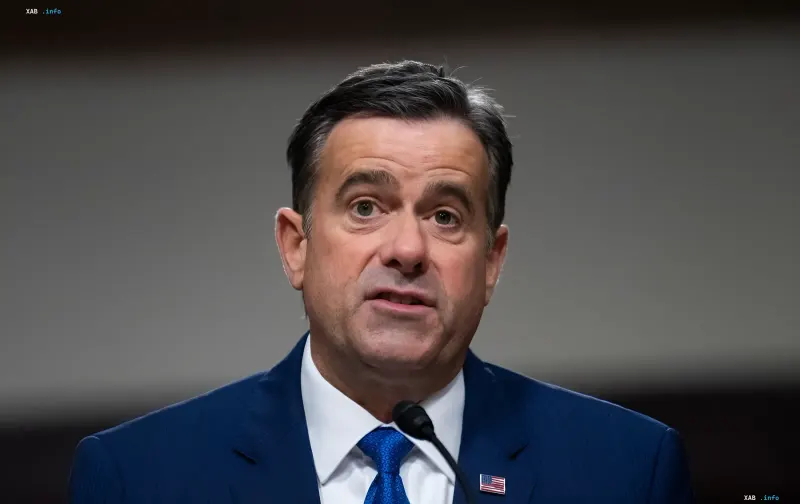
Washington is actively discussing the prospect that U.S. CIA Director John Ratcliffe could take charge of the "Ukraine track" in the diplomatic process between Russia and Ukraine. This is reported by RBC-Ukraine, citing Politico. The issue has become one of the central topics in discussions surrounding the stalled negotiation process, which, according to participants, has been at a standstill for a long time.
Enthusiasm in Washington and denial in the White House
The idea that the head of the CIA could become a key figure in the settlement has sparked enthusiasm in various Washington circles. Notably, this interest emerged despite the fact that the White House has publicly denied the possibility of such a development. As the publication's sources emphasize, both the White House and CIA officials themselves have refuted reports that Ratcliffe is preparing to play a more active role in the negotiations between Russia and Ukraine.
Expert view: time, in Moscow's view, is working in its favor
Matthew Boyce, who served as Deputy Assistant Secretary of State for Eurasian affairs in Trump's first administration, noted that if Ratcliffe joins the effort, his deep expertise on Russian issues should be taken into account. At the same time, he cautioned against expectations of a swift and significant victory at the negotiating table: "Putin believes that time is working in his favor, is betting on escalation, and shows no interest in moving away from his hardline, maximalist positions," Boyce stated.
Context: a secret visit to Moscow and the escalation of strikes
The discussion of Ratcliffe's role comes against the backdrop of his recent secret visit to Moscow, the purpose of which, according to WSJ and Politico, was to warn the Kremlin against escalation and a possible attack on NATO countries. However, as is noted, Russia intensified its shelling of Ukraine after this visit, and the Kremlin interpreted the U.S. warning about the risks of escalation as a sign of weakness, responding with a step-up in missile and drone strikes on Ukrainian cities.
Contradictory data
The statements of the parties and the fact-checking materials reveal inconsistencies. On the one hand, it is reported that U.S. President Donald Trump decided to expand the CIA director's authority in negotiations with Russia and Ukraine in order to move the diplomatic process forward. On the other hand, both the White House and the CIA have officially refuted reports that Ratcliffe is preparing to play a more active role in these negotiations. Thus, the question of the actual expansion of his mandate remains a matter of conflicting versions: some Washington circles speak of a planned strengthening of his position, while officials deny any changes.
The battlefield decides everything
Ukraine's supporters in the U.S., for their part, state that it does not matter who exactly is handling this issue, since the main events are unfolding on the battlefield. It is precisely this logic, analysts believe, that limits realistic expectations from a change of negotiator: even with Ratcliffe's involvement, a breakthrough in dialogue with Russia is unlikely as long as Moscow does not change its maximalist position and stop betting on escalation.