
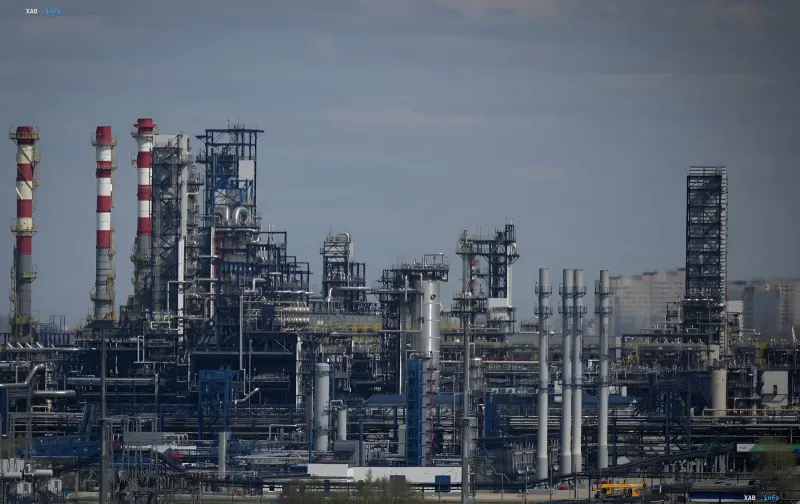
Russia's largest oil refinery, located in Omsk, has been completely shut down following an attack by Ukrainian drones. The incident, which occurred on July 6, marked a record flight distance for Ukrainian forces — the drones traveled 3,400 kilometers to reach their target.
Scale of damage and production halt
According to sources, the strikes caused critical damage to the plant’s production lines. The CDU-10 crude distillation unit — a key facility accounting for approximately 38% of the refinery’s total capacity — was damaged. Its daily output exceeds 24,500 tons.
In addition to direct damage, the attack forced the shutdown of another major unit — CDU-11, which provides 37% of the plant’s capacity. Although the structure itself was not directly hit, the blast wave or debris severed network connections essential for equipment operation.
Compensation efforts and market impact
With nearly 75% of its capacity lost, the Omsk Refinery is considering compensating for the shortfall by restarting two older, previously mothballed units — CDU-7 and CDU-8. Each can process 10,000 tons of oil per day, but this offers only a partial solution.
The complete halt of Russia’s largest gasoline producer has already triggered serious repercussions in the domestic market. The facility has entirely suspended sales of gasoline and diesel fuel on the Saint Petersburg International Mercantile Exchange. Experts warn this could deepen the fuel crisis.
Statistics and context
Last year, the Omsk Refinery processed 22 million tons of oil — roughly 440,000 barrels per day. During that period, it produced 5 million tons of gasoline and 8 million tons of diesel, making it one of the country’s key fuel suppliers.
The attack carried out by Ukrainian defenders was not only a record in terms of range but also strategically significant, striking enemy energy infrastructure deep within its rear territory.


