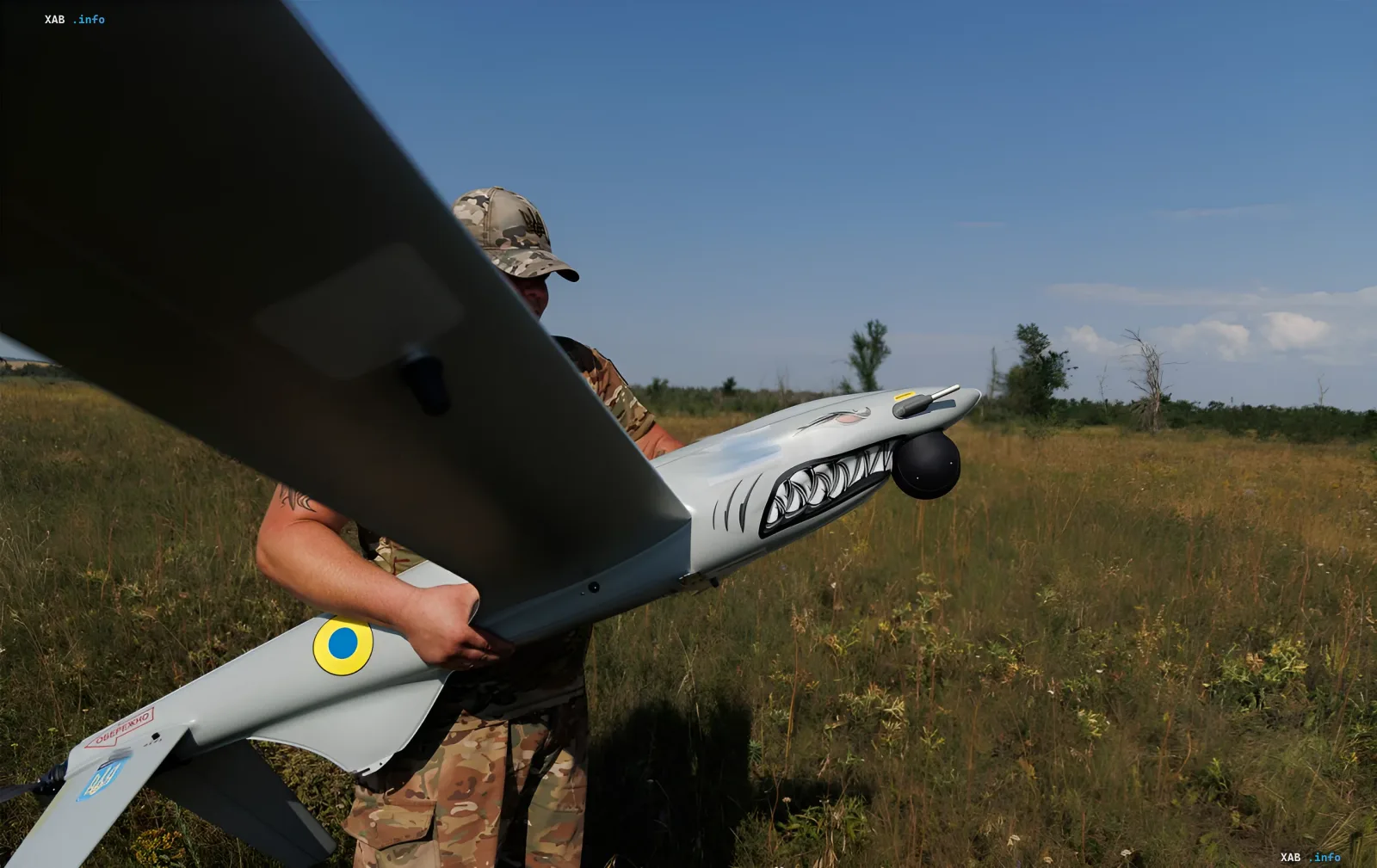
On June 18, a significant shift occurred on the front lines of the drone war. Within a single day, Ukraine set a new record for the number of launched unmanned aerial vehicles. This figure not only exceeded the previous maximum for the Armed Forces of Ukraine (AFU) but also surpassed the largest single-day attack Russia has conducted throughout the entire conflict.
This information was reported by RBK-Ukraine, citing calculations from the Russian portal "Agency.News." The statistics confirm that the intensity of strikes from the Ukrainian side has reached an unprecedented level.
Figures Changing the Picture of the Conflict
According to official data from the Russian Ministry of Defense, within 24 hours, the Russian air defense (PVO) system shot down 992 Ukrainian fixed-wing drones. Additionally, 4 long-range cruise missiles and 10 guided aerial bombs were intercepted.
Experts note an important nuance: the Russian Ministry of Defense reports exclusively on shot-down drones. This means that the actual number of launched unmanned vehicles could be even higher than the stated figure. Even accounting for the fact that some targets may have been destroyed during their approach, the scale of the operation remains colossal.
For comparison: Ukraine's previous record was set on June 6. At that time, Russian military officials reported shooting down 911 drones, 13 aerial bombs, and 4 HIMARS projectiles. Thus, over two weeks, the intensity of attacks increased by more than 80 units based solely on the number of shot-down drones.
Historical Context: From Asymmetry to Parity
The largest Russian attack on Ukraine during the war occurred on March 24, when Russia deployed 948 drones. Until recently, the Russian side dominated this segment. According to Russian media, in the first years of the full-scale war, the AFU could not match Russia in terms of the intensity of drone strikes deep into enemy territory.
The situation has changed radically in the current year. Ukraine has not only caught up with but surpassed Russia in the number of unmanned assets used, which testifies to the significant development of its own production capacities and logistical chains.
Consequences of the Attack on Moscow
The new record was set on the night when Moscow suffered the most massive drone attack in the entire history of the war. Strikes hit strategically important objects, including fuel infrastructure.
For the second time in a week, the Moscow Refinery in Kapotnya was hit. As a result of the attack, all airports in the capital were temporarily suspended, leading to the cancellation of more than 500 flights. The AFU General Staff confirmed damage not only to the Moscow Refinery but also to an oil depot in the Rostov region, as well as a number of other infrastructure objects.
These events demonstrate that drone warfare tactics have moved to a qualitatively new level, where the quantity and precision of strikes become decisive factors in the fight for the enemy's resources.


