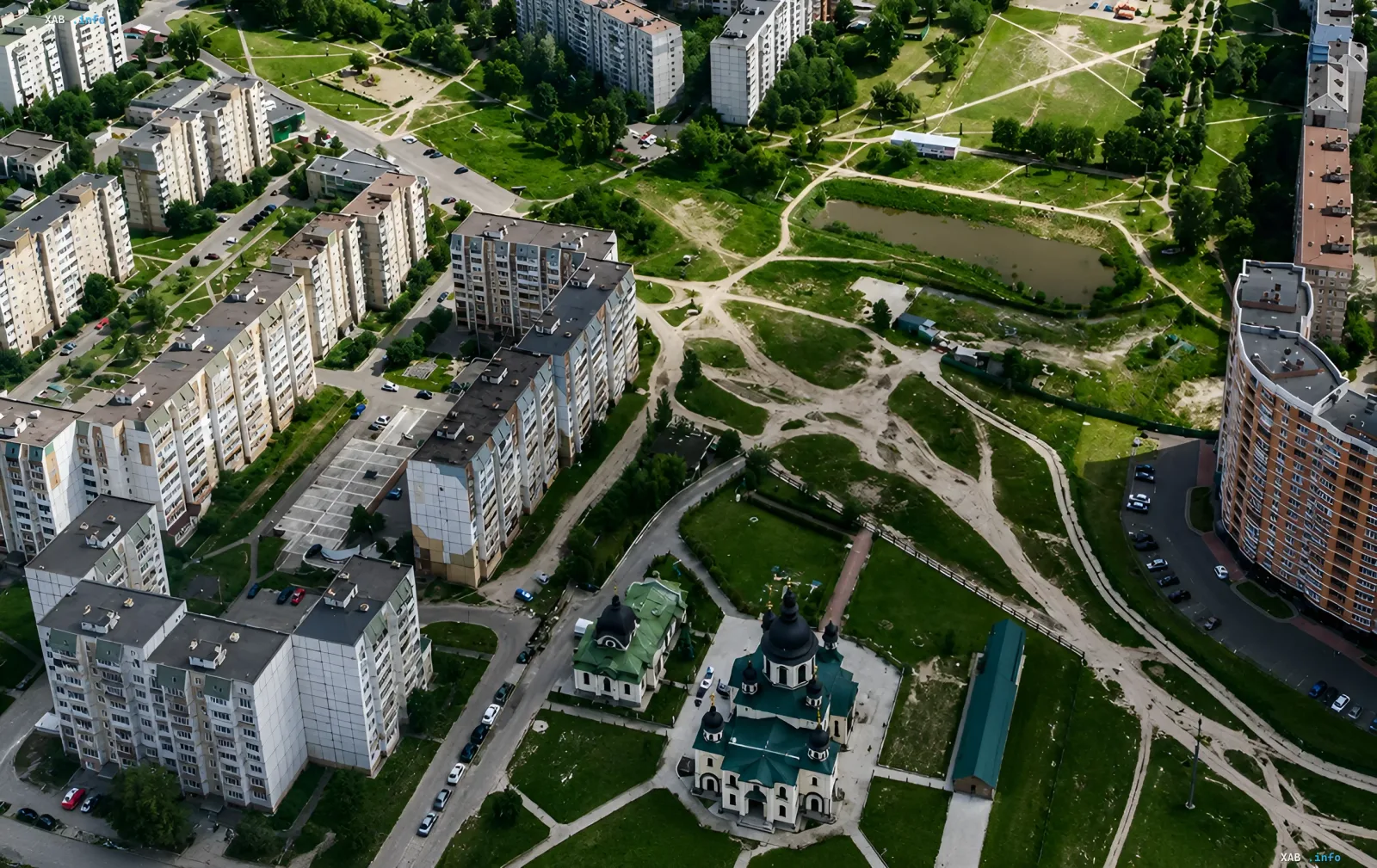
On the morning of July 6, residents of the city of Vyshneve in the Kyiv region faced a sharp deterioration in the ecological situation. According to monitoring data, air quality reached critical levels, causing serious concern among local residents and experts.
Critical pollution level
The situation developed rapidly. By 8:00 AM, the Air Quality Index (AQI) in Vyshneve reached 196 units. This value is classified as "Unhealthy" (red zone) and poses a threat to the health of all population groups. The main pollutant identified was fine particulate matter, PM2.5.
Two hours later, at 10:00, the situation remained tense, although the index decreased slightly to 156 units, which still corresponded to the red danger zone.
Dynamics of improvement and weather factors
By noon, the situation began to stabilize. By 11:00, the pollution index dropped to 105 units, moving into the orange zone ("Unhealthy for Sensitive Groups"). Experts noted that at this stage, residents might experience breathing discomfort.
By 12:00, the indicators improved to 68 units, corresponding to the yellow zone ("Moderate level"). At this stage, the health risk decreased, although slight discomfort could persist in people with increased sensitivity.
Weather forecaster Ivan Semylit from the Ukrainian Hydrometeorological Center linked the improvement to weather conditions. According to him, a low-pressure field settled over Kyiv and the region, leading to precipitation. Rain accompanied by thunderstorms helped wash impurities out of the atmosphere.
The wind on that day was westerly with a speed of 7–12 m/s, with gusts up to 20 m/s in some places, which also contributed to the dispersion of pollutants. The air temperature fluctuated between +22...+24°C.
Reaction of authorities and lack of official data
Despite obvious monitoring data, official comments from relevant authorities were vague. Ivan Semylit, a representative of UkrGMC, stated that the center does not have its own observation points in Vyshneve, so meteorologists did not have precise information about the composition of impurities. He noted that conclusions about the causes of pollution could not be made without detailed measurements.
Viktoria Ruban, a representative of the Main Directorate of the State Emergency Service of Ukraine in the Kyiv region, also refused to comment on air parameters, citing that this is the competence of other services. At the same time, she confirmed that work is underway in the area to eliminate the consequences of the incident.
The main source of current information that day was the SaveEcoBot ecological system, which recorded changes in the AQI index in real-time, demonstrating a gradual transition from a critical situation to a moderate one.


