
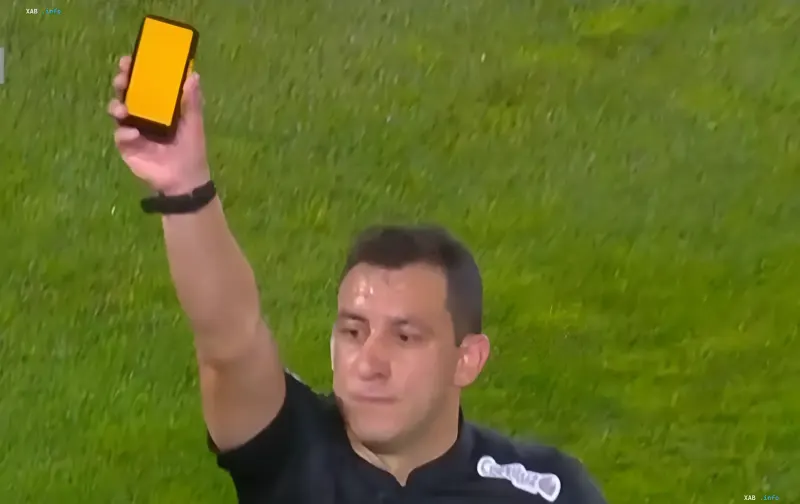
In Uruguay during a national cup match, a referee demonstrated a disciplinary penalty using an electronic device for the first time instead of the usual plastic card. The experimental development reportedly allows the referee's decisions to be automatically recorded and transmitted to the association's official system. This is reported by Sport RBC.UA, citing the analytical account Borda Analista on the social network X.
Experiment on the field: Nacional vs. Rentistas
The technological novelty was tested in the round of 16 match of the Uruguay Cup between Nacional and Rentistas, which ended in a 3-0 victory for Nacional. However, the greatest attention was drawn not to the game's result, but to referee Eduardo Varela, who used a device outwardly resembling a mobile phone instead of standard cards. According to available data, the device's body features two buttons — for showing yellow and red cards.
How the "digital card" works
Using this device, Varela demonstrated a virtual yellow card to Rentistas representative Juan Pablo Plada, punishing him for a foul in the center of the field. A key feature of the innovation is the automatic transmission of information: after pressing the corresponding button, data on the disciplinary decision immediately goes into the COMET system of the Uruguayan Football Association. This frees the referee from the need to manually make entries in the match report after the game ends.
Not just cards: wider functionality and media access
According to the source, the system can also be used to record other important events: goals scored and disallowed, awarded penalties, and substitutions. In the future, it is planned to provide access to this data to media representatives, allowing journalists to receive information faster about events on the field and referee decisions, including during controversial episodes.
Significance for football refereeing
If the experiment proves successful, digital cards could become another tool for the technological modernization of football refereeing, alongside video assistants and tracking systems. For Uruguay, where the football association already operates the COMET system, the step is logical: protocol automation reduces the risk of human error and accelerates the publication of official data. Final conclusions on the permanent implementation of the technology, according to available information, will be made after evaluating the experiment's results.